Thermally Activated Sliding of C60 on Gold
Matteo Pierno, Lorenzo Bruschi, Guido Paolicelli, Alessandro di Bona, Stefania Benedetti, Nicola Manini, Andrea Vanossi, Giampaolo Mistura

TL;DR
This study shows that C60 molecules can slide on gold surfaces when heated, revealing insights into the slipperiness of gold-carbon interfaces.
Contribution
The paper demonstrates thermally activated sliding of C60 on gold electrodes using a quartz crystal microbalance.
Findings
C60 molecules are pinned on gold at room temperature.
Sliding of C60 molecules on gold begins above 320 K.
The sliding behavior is explained by a diffusive model.
Abstract
Gold nanoclusters are known to slide easily on a graphite surface. In this study, we confirm the slipperiness of the gold–carbon interface by studying the sliding behavior of fullerene adsorbates on gold by using a quartz crystal microbalance (QCM). More precisely, we transfer high-quality gold electrodes deposited on an atomically flat mica substrate to the QCM. By means of an effusion cell, we deposit C60 molecules on the QCM gold electrode kept in ultrahigh vacuum. We observe the pinning of the fullerene adsorbates at room temperature. As the temperature increases above 320 K, the fullerene adsorbates begin to slide. This thermally activated sliding is explained in terms of a simple diffusive model.
Genes, proteins, chemicals, diseases, species, mutations and cell lines named across the full text — each resolved to its canonical identifier and authoritative record.
Click any figure to enlarge with its caption.
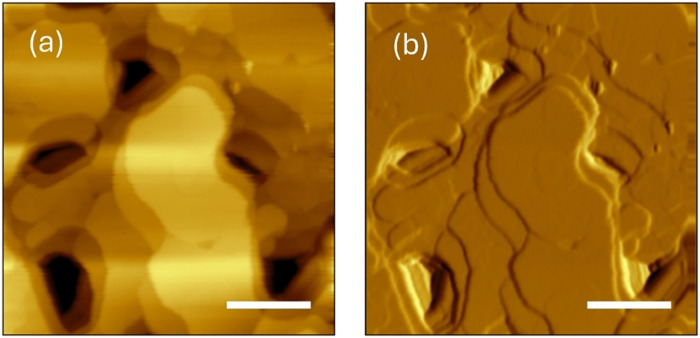 Figure 1
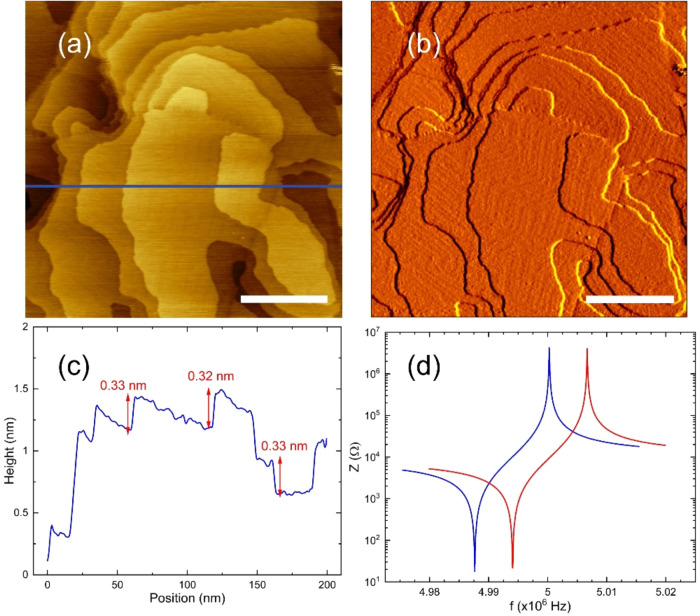 Figure 2
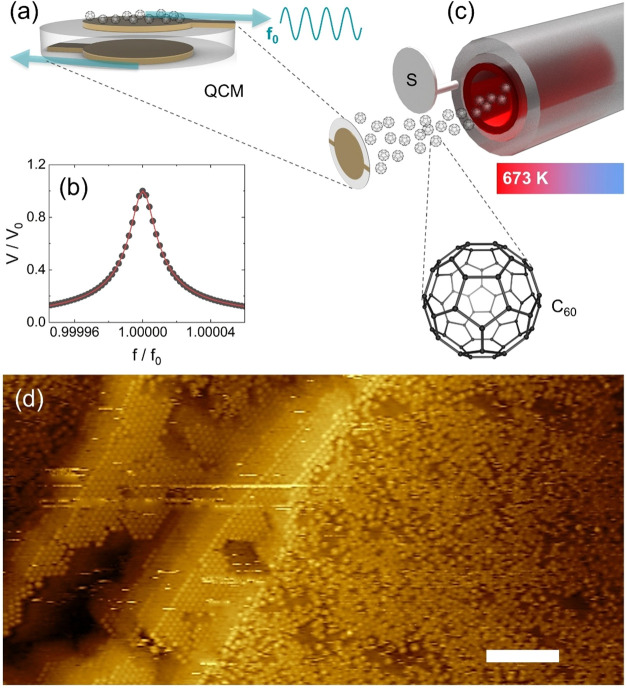 Figure 3
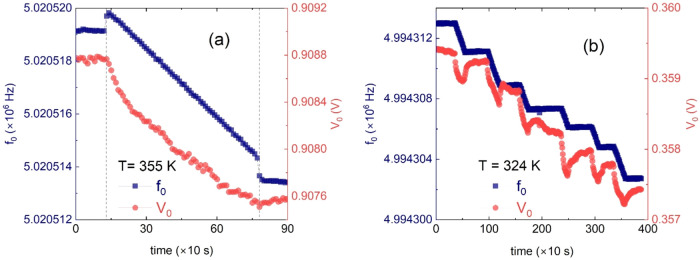 Figure 4
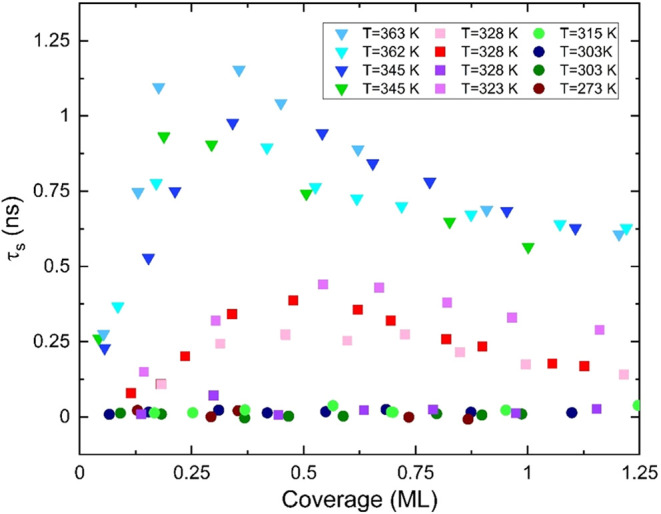 Figure 5
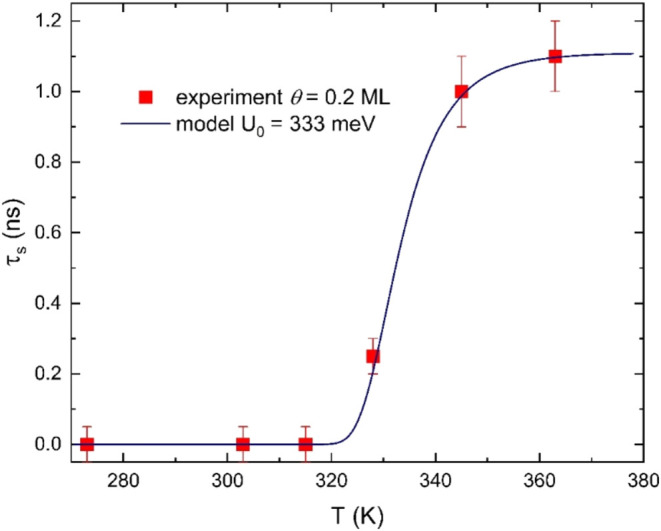 Figure 6
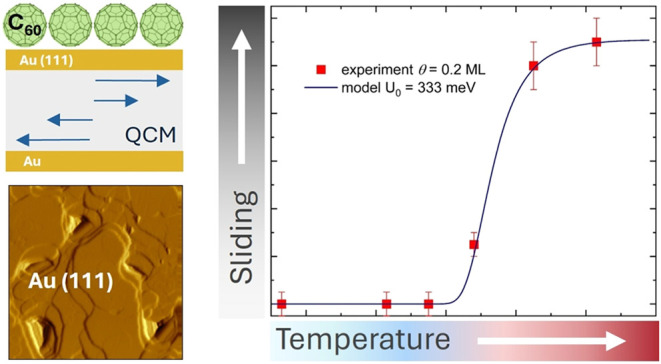 Figure 7
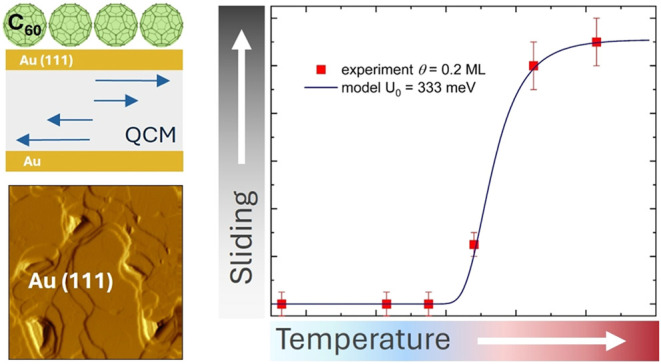 Figure 8
 Figure 9
 Figure 10
 Figure 11
 Figure 12
 Figure 13
Peer Reviews
No public reviews on file for this paper yet. If you reviewed it on a platform where reviews are public (OpenReview, ICLR, NeurIPS, ICML), you can paste yours below so the community can read it here.
Videos
No videos yet. Explain this paper in a talk, walkthrough, or lecture? Add one.
Taxonomy
TopicsForce Microscopy Techniques and Applications · Diamond and Carbon-based Materials Research · Molecular Junctions and Nanostructures