Depletion of UNK-1 affects head locomotive behaviors in Caenorhabditis elegans
Lexin Gitler, Callista Yee

TL;DR
This study shows that reducing UNK-1 in C. elegans affects head movement, linking it to motor control in the worm's nervous system.
Contribution
The novel contribution is linking UNK-1, an RNA-binding protein, to head motor control in C. elegans through functional analysis.
Findings
UNK-1 is expressed in many head neurons of C. elegans.
Depletion of UNK-1 increases head oscillations, suggesting a role in motor control.
UNK-1 is a conserved RNA-binding protein regulated by EGL-43.
Abstract
During development, transcription factors execute genetic programs to define and shape the nervous system. We previously reported the transcription factor EGL-43 /Mecom regulates expression of numerous genes important for neuronal development in C. elegans . Here we characterized the function of one EGL-43 target, UNK-1 /Unkempt, a conserved RNA-binding protein. Using genome editing, we introduced an auxin-inducible degron tag and mNeonGreen into the unk-1 locus. We observed cytoplasmic expression of UNK-1 in many head neurons. Depletion of UNK-1 resulted in increased head oscillations, a phenotype typically associated with defects in neurotransmitter synthesis. Our study links UNK-1 to head motor control in C. elegans .
Genes, proteins, chemicals, diseases, species, mutations and cell lines named across the full text — each resolved to its canonical identifier and authoritative record.
Click any figure to enlarge with its caption.
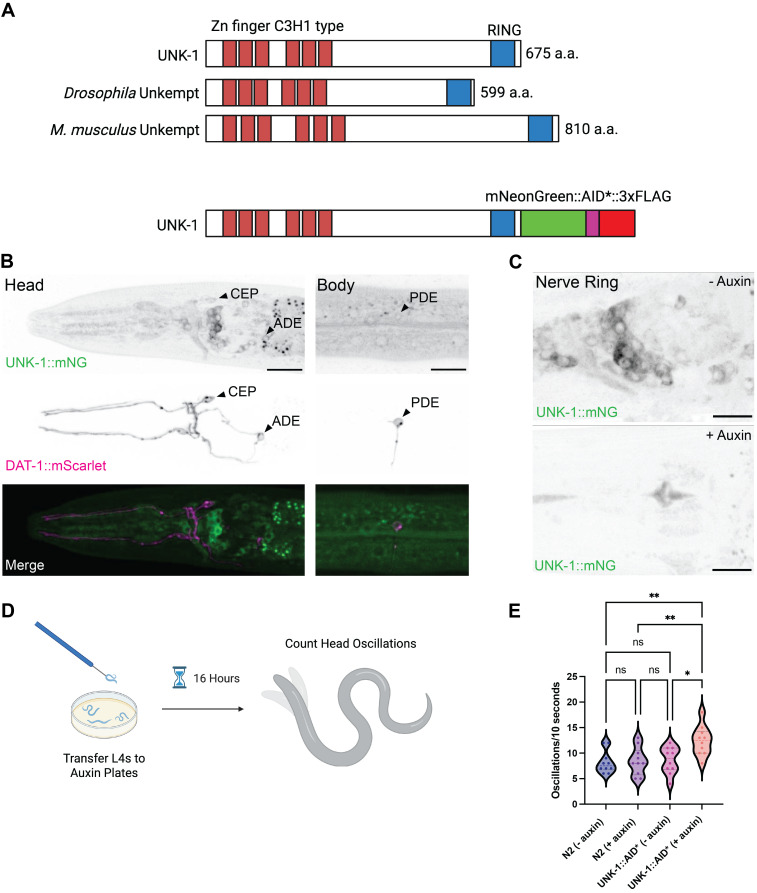 Figure 1
Peer Reviews
No public reviews on file for this paper yet. If you reviewed it on a platform where reviews are public (OpenReview, ICLR, NeurIPS, ICML), you can paste yours below so the community can read it here.
Videos
No videos yet. Explain this paper in a talk, walkthrough, or lecture? Add one.
Taxonomy
TopicsMechanical Failure Analysis and Simulation · Electric and Hybrid Vehicle Technologies · Multilevel Inverters and Converters