Sphingosine-1-Phosphate Receptor 2 Promotes Renal Microvascular Constriction and Kidney Injury Following Renal Ischemia-Reperfusion in Rats
Zhengrong Guan, Colton E Remedies, Yanfeng Zhang, Paul W Sanders, Edward W Inscho, Wenguang Feng

TL;DR
This study shows that S1P receptor 2 contributes to kidney injury after blood flow is restored following a period of reduced blood flow in rats.
Contribution
The study identifies S1PR2 as a key mediator of microvascular dysfunction and kidney injury after ischemia-reperfusion.
Findings
IR increases afferent arteriolar sensitivity to S1P, causing vasoconstriction.
S1PR2 blockade reduces kidney injury and improves vascular tone after IR.
IR upregulates S1PR2 expression and increases S1P content in the kidney.
Abstract
Ischemia-reperfusion (IR) induced acute kidney injury (AKI) features increased renal vascular resistance, which is predominantly regulated by adjustments in afferent arteriolar diameter. Sphingosine-1-phosphate (S1P), a bioactive sphingolipid metabolite, is a potent vasoconstrictor in afferent arterioles. We hypothesized that IR enhanced afferent arteriolar sensitivity to S1P-induced vasoconstriction, thus contributing to renal microvascular dysfunction and kidney injury in AKI. The impact of IR on afferent arteriolar reactivity to S1P was assessed using the in vitro blood-perfused juxtamedullary nephron preparation in male rats subjected to 60 min of bilateral renal arterial ischemia followed by 24 h of reperfusion. Baseline diameter of afferent arterioles declined significantly following IR. S1P evoked concentration-dependent vasoconstriction in both sham and IR rats. However, the S1P…
Genes, proteins, chemicals, diseases, species, mutations and cell lines named across the full text — each resolved to its canonical identifier and authoritative record.
Click any figure to enlarge with its caption.
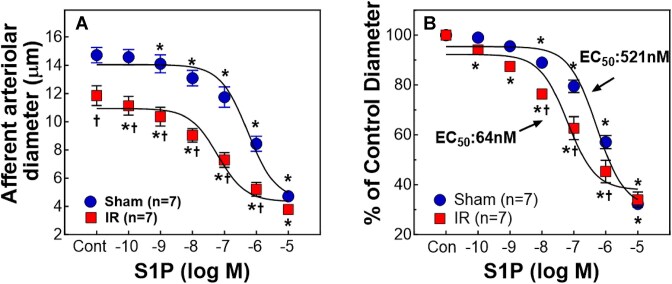 Figure 1
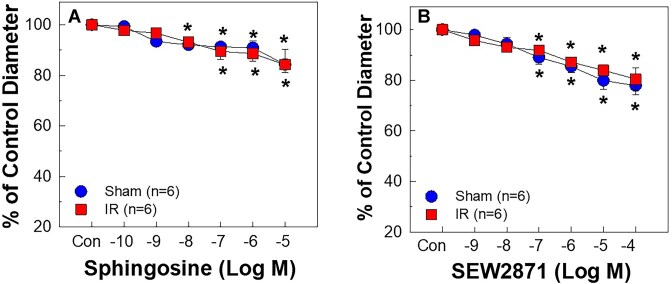 Figure 2
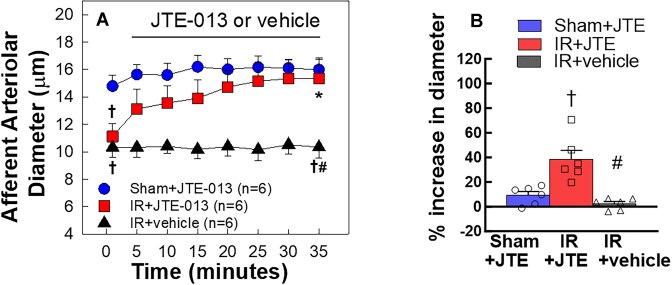 Figure 3
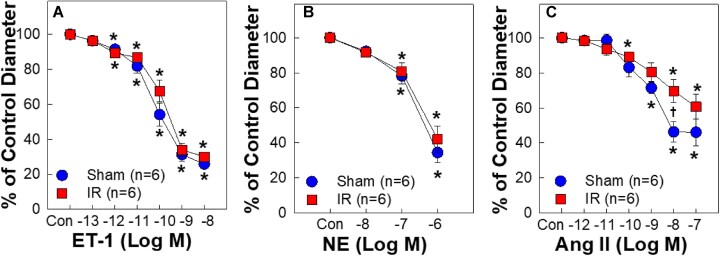 Figure 4
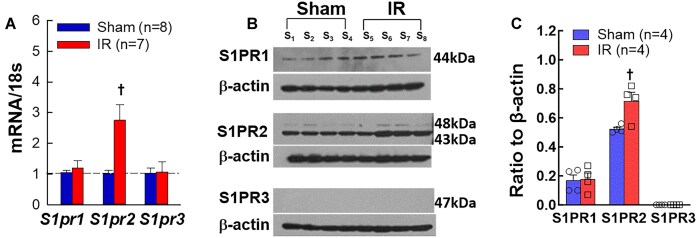 Figure 5
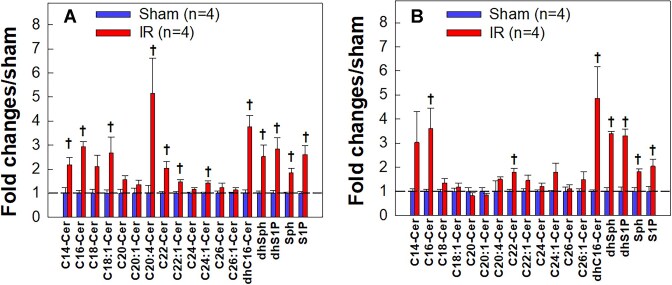 Figure 6
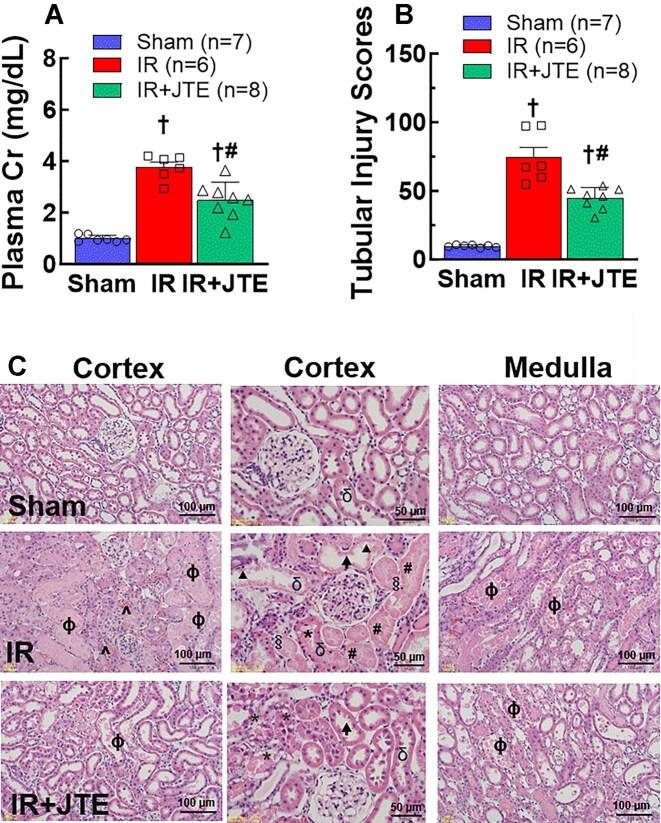 Figure 7
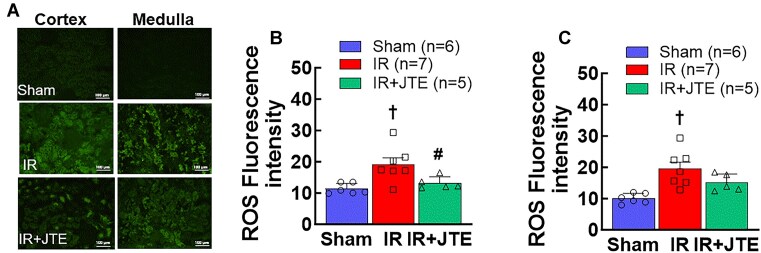 Figure 8
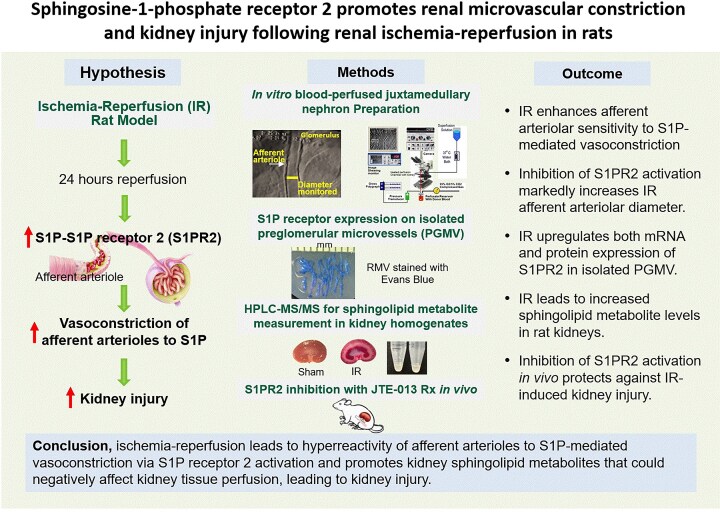 Figure 9
Peer Reviews
No public reviews on file for this paper yet. If you reviewed it on a platform where reviews are public (OpenReview, ICLR, NeurIPS, ICML), you can paste yours below so the community can read it here.
Videos
No videos yet. Explain this paper in a talk, walkthrough, or lecture? Add one.
Taxonomy
TopicsSphingolipid Metabolism and Signaling · Biomedical Research and Pathophysiology · Heme Oxygenase-1 and Carbon Monoxide