Glycine-to-aspartic acid mutation at codon 51 in Snca disrupts the synaptic localisation of α-synuclein and enhances its propensity for synucleinopathy
Stephen West, Ammar Natalwala, Karamjit Singh Dolt, Douglas J Lamont, Melanie McMillan, Kelvin Luk, Tomoji Mashimo, Tilo Kunath

TL;DR
A mutation in the α-synuclein gene in rats reduces its presence at synapses and increases the risk of Parkinson's-like brain pathology.
Contribution
The study introduces the first rat model with the G51D α-synuclein mutation and shows its role in synucleinopathy.
Findings
The G51D mutation reduces α-synuclein localization at synapses in rat brains.
Rats with the G51D mutation show increased formation of Parkinson's-like pathological structures after PFF injections.
Proteomic analysis reveals synaptic dysfunction in G51D mutant rats.
Abstract
Point mutations in the SNCA gene, which encodes α-synuclein (αSyn), are a known cause of familial Parkinson’s disease. The glycine-51-aspartic acid (G51D) mutation causes early-onset neurodegeneration with complex, wide-spread αSyn pathology. We used CRISPR/Cas9 gene editing to introduce the G51D point mutation into the endogenous rat Snca gene. Our goal was to investigate whether the G51D αSyn mutation gives rise to synucleinopathy and neurodegenerative phenotypes in rats. Co-localisation immunostaining studies with synaptic proteins revealed that αSynG51D protein fails to efficiently localise to synapses. Furthermore, biochemical isolation of synaptosomes from rat cortex demonstrated a significant depletion of αSyn in SncaG51D/+ and SncaG51D/G51D rats. Unbiased proteomic investigation of the cortex identified significant synaptic dysregulation in SncaG51D/G51D animals. Finally, we…
Genes, proteins, chemicals, diseases, species, mutations and cell lines named across the full text — each resolved to its canonical identifier and authoritative record.
Click any figure to enlarge with its caption.
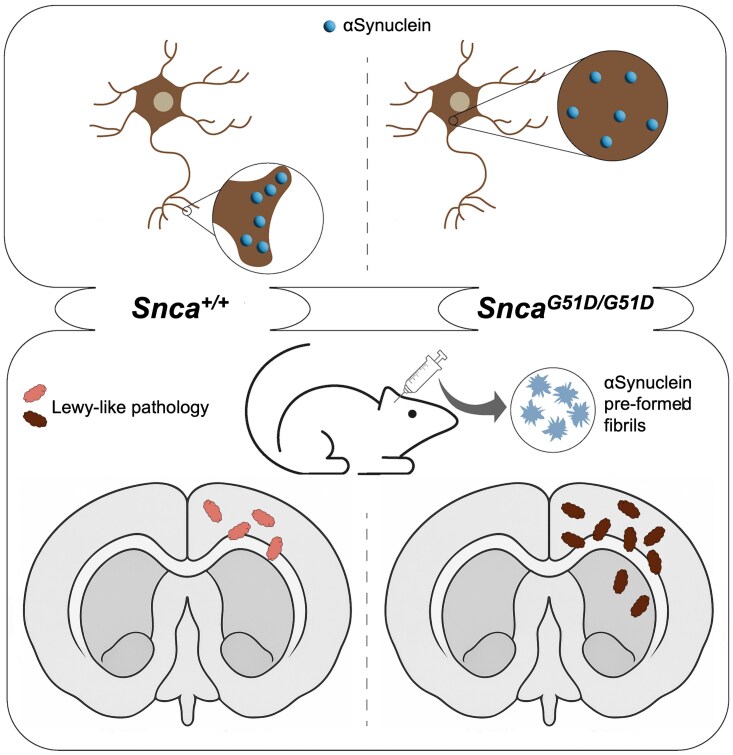 Figure 1
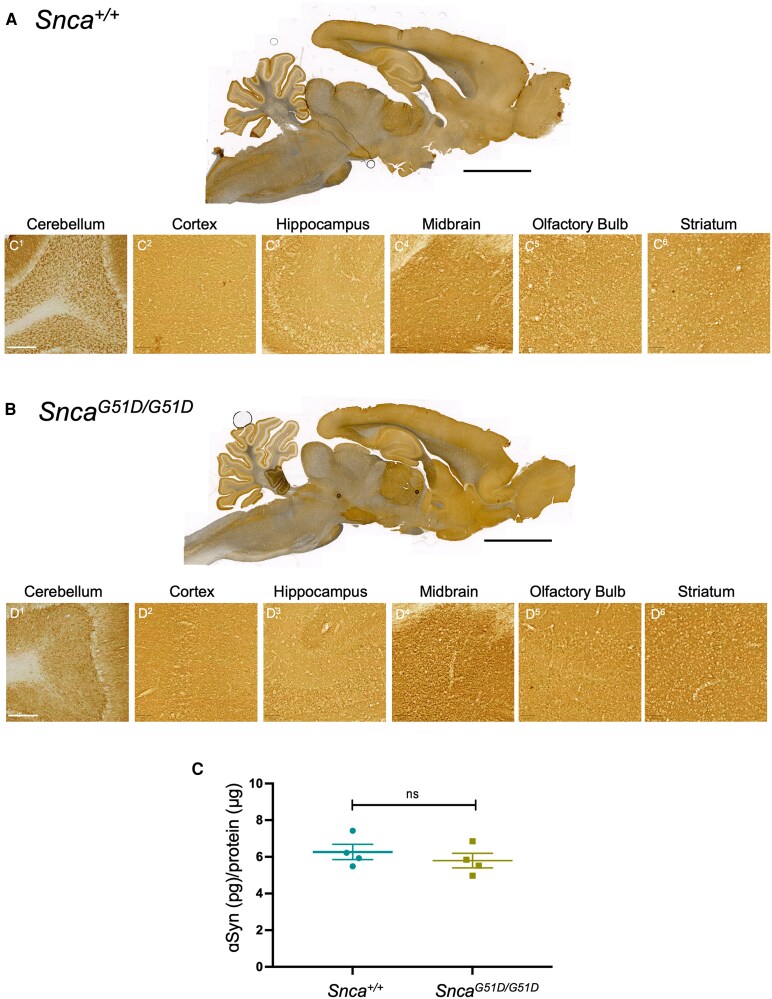 Figure 2
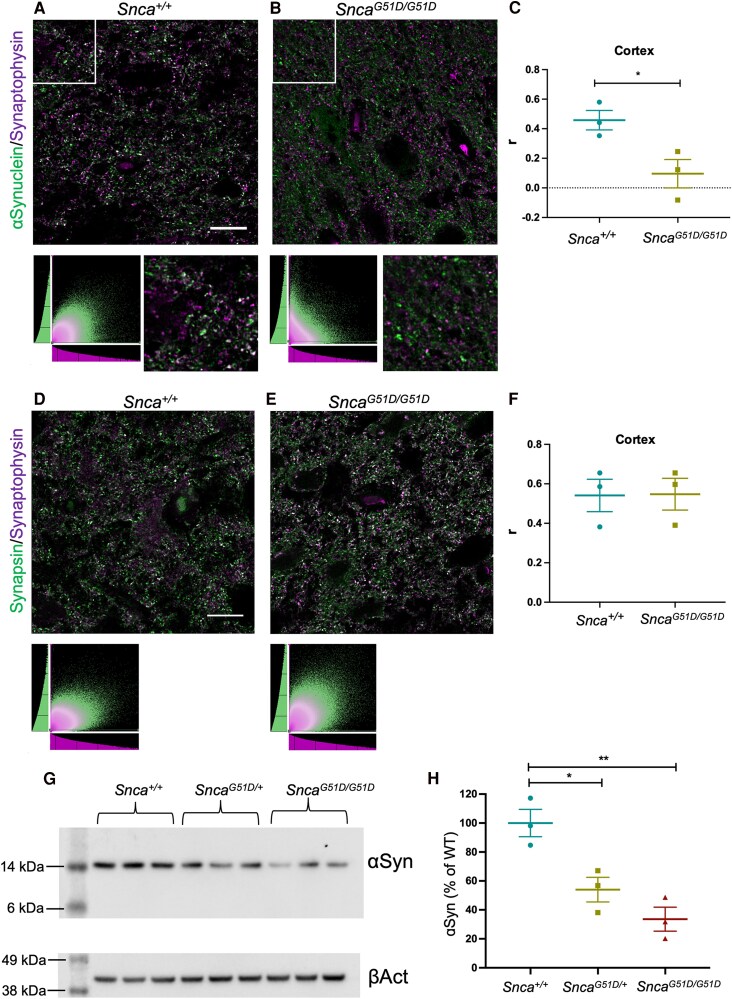 Figure 3
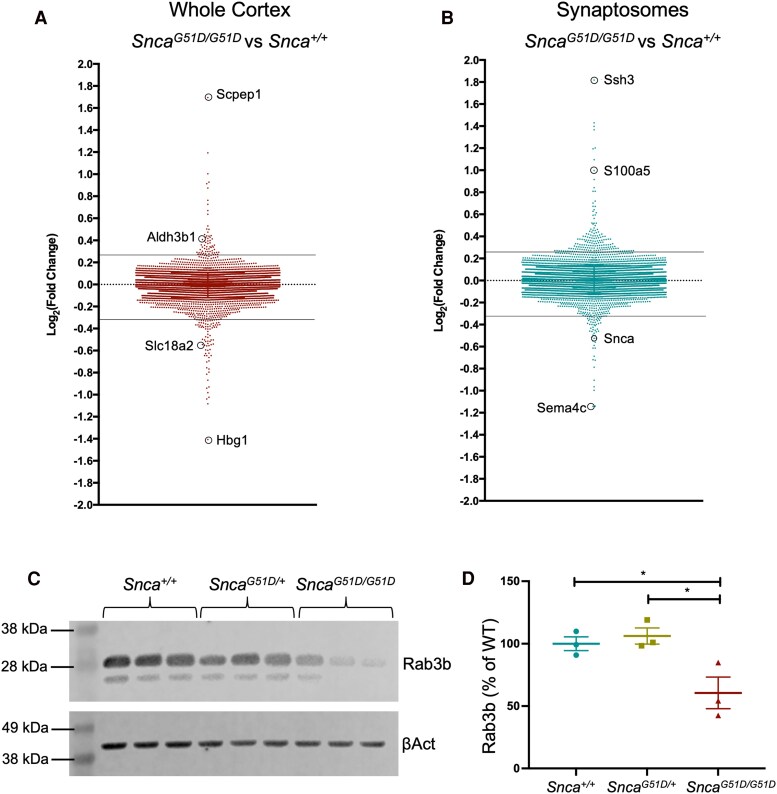 Figure 4
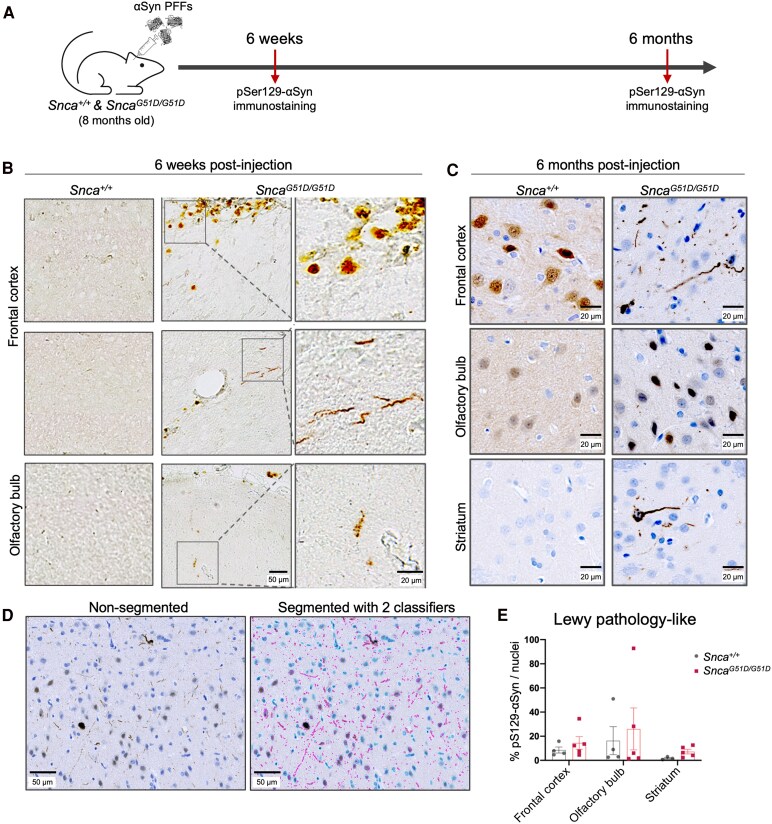 Figure 5
Peer Reviews
No public reviews on file for this paper yet. If you reviewed it on a platform where reviews are public (OpenReview, ICLR, NeurIPS, ICML), you can paste yours below so the community can read it here.
Videos
No videos yet. Explain this paper in a talk, walkthrough, or lecture? Add one.
Taxonomy
TopicsParkinson's Disease Mechanisms and Treatments · Autism Spectrum Disorder Research · Neuroscience and Neuropharmacology Research