A novel PSEN2 mutation in amnestic early-onset Alzheimer's disease (EOAD): A familial case series
Carl Froilan D Leochico, Ekaterina Rogaeva, Ljubica Zotovic, Ana Luiza Pinto Oliveira, Tina Le, Amit Singnurkar, Mario Masellis, Sara B Mitchell

TL;DR
A new PSEN2 mutation is linked to early-onset Alzheimer's in a family, offering insights into the disease's genetic causes.
Contribution
A novel PSEN2 missense variant is identified as likely pathogenic in a familial case of EOAD.
Findings
A PSEN2 variant (c.359T > G, p.Ile120Ser) was found in four siblings, three of whom had EOAD or mild cognitive impairment.
The PSEN2 variant was deemed likely pathogenic based on segregation, imaging biomarkers, and bioinformatics.
Two siblings were also heterozygous for a PSEN1 variant, but PSEN2 was the primary pathogenic contributor.
Abstract
Familial early-onset Alzheimer's disease (EOAD) is a rare form of dementia often caused by autosomal dominant mutations in APP, PSEN1, or PSEN2. We report a novel PSEN2 missense variant (c.359T > G, p.Ile120Ser) that has been detected in four siblings; three of whom are affected by predominantly amnestic EOAD or mild cognitive impairment in their fifties (supported by neuroimaging biomarkers), while the youngest sibling is currently asymptomatic at age 50. Two of the siblings were also heterozygous for a variant in PSEN1 (c.118_120del, p.Asp40del). Between the two genes, the PSEN2 variant was deemed to be likely pathogenic based on segregation with EOAD, imaging biomarker analyses, and bioinformatic analyses. Reporting genetic findings in familial EOAD cases can help in classifying their pathogenic significance and improving genetic conceptualization within Alzheimer's disease.
Genes, proteins, chemicals, diseases, species, mutations and cell lines named across the full text — each resolved to its canonical identifier and authoritative record.
Click any figure to enlarge with its caption.
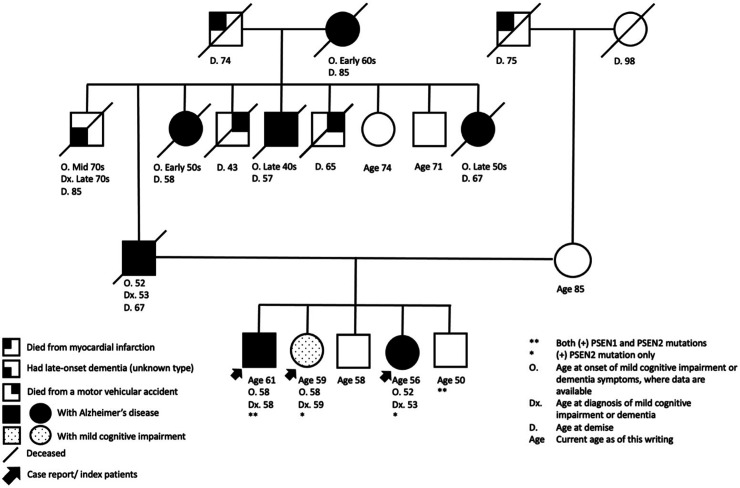 Figure 1
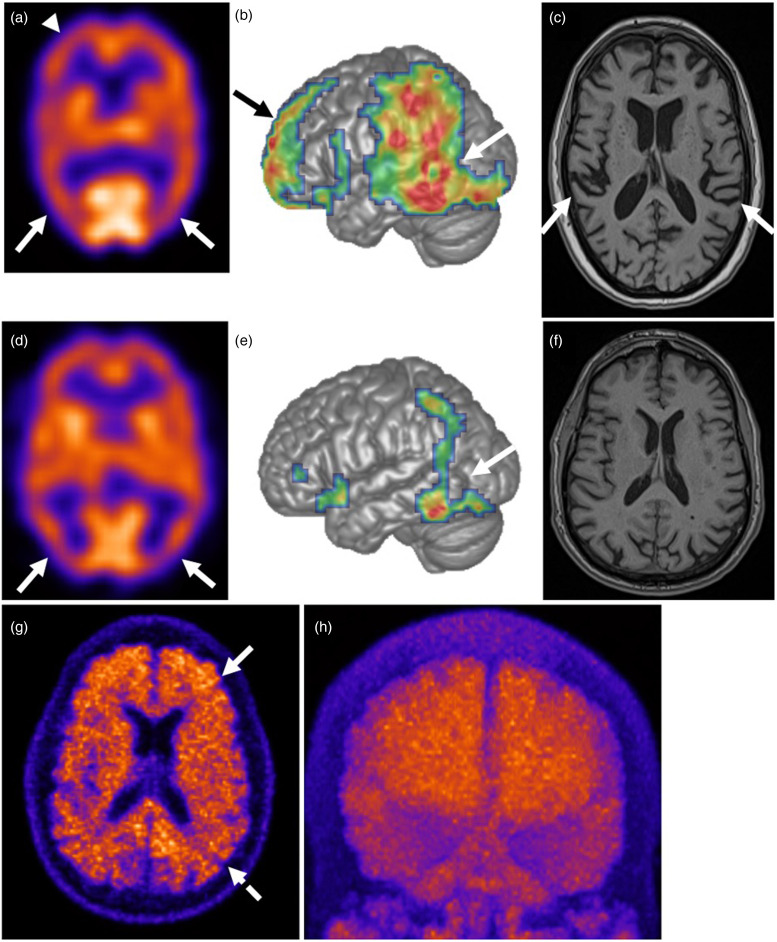 Figure 2
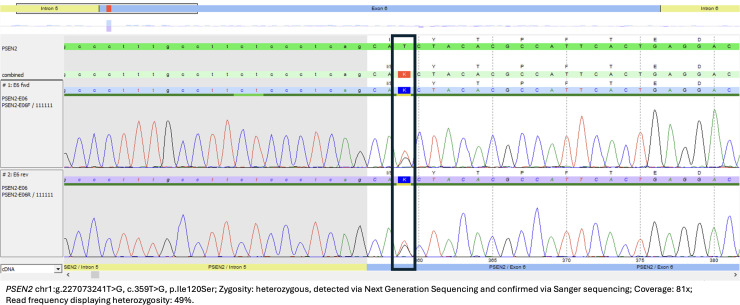 Figure 3
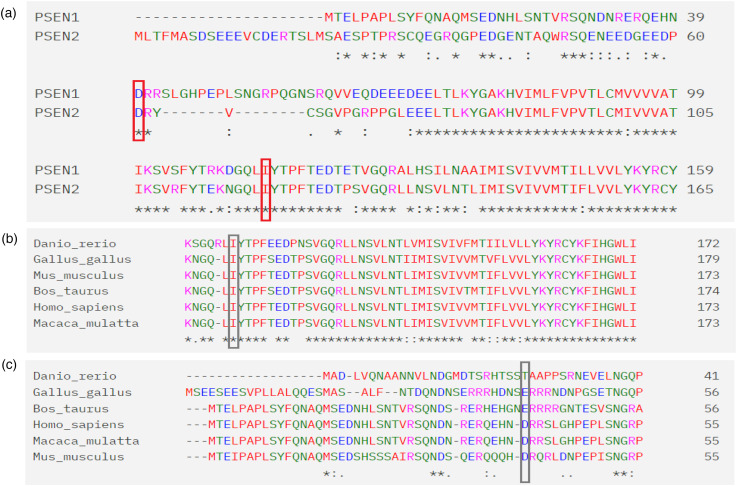 Figure 4
Peer Reviews
No public reviews on file for this paper yet. If you reviewed it on a platform where reviews are public (OpenReview, ICLR, NeurIPS, ICML), you can paste yours below so the community can read it here.
Videos
No videos yet. Explain this paper in a talk, walkthrough, or lecture? Add one.
Taxonomy
TopicsGenomics and Rare Diseases · Alzheimer's disease research and treatments · Bioinformatics and Genomic Networks