Data use in social science and medical articles around the world
Brian Stacy, Lucas Kitzmüller, Xiaoyu Wang, Daniel Gerszon Mahler, Umar Serajuddin

TL;DR
This paper explores how data is used in social science and medical research globally, finding that high-income countries are overrepresented despite being a small portion of the world's population.
Contribution
The paper introduces a novel method using natural language processing to track data use in academic articles by country.
Findings
High-income countries are the subject of about 50% of data-driven papers despite representing only 17% of the global population.
A model's predictions of data use in academic articles correlate highly (0.99) with human-coded assessments.
Countries are classified based on whether they need to increase data production or usage, with poorer countries needing more production and wealthier ones needing more use.
Abstract
Data-driven research is key to producing evidence-based public policies, yet little is known about where data-driven research is lacking and how it can be expanded. We propose a method for tracking academic data use by country of subject in English-language social science and medicine articles, applying natural language processing to a large corpus of academic articles. The model’s predictions produce country estimates of the number of articles using data that are highly correlated with a human-coded approach, with a correlation of 0.99. Analyzing more than 140,000 academic articles, we find that high-income countries are the subject of ∼50% of all papers using data, despite only making up around 17% of the world’s population. Finally, we classify countries by whether they could most benefit from increasing their production or use of data, with the former applying to many poorer…
Genes, proteins, chemicals, diseases, species, mutations and cell lines named across the full text — each resolved to its canonical identifier and authoritative record.
Click any figure to enlarge with its caption.
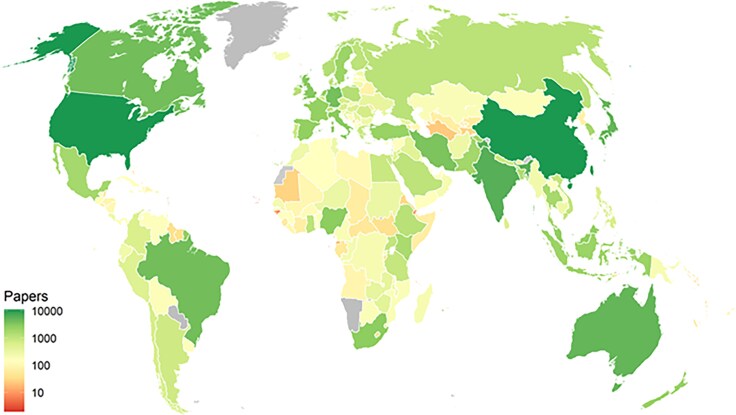 Figure 1
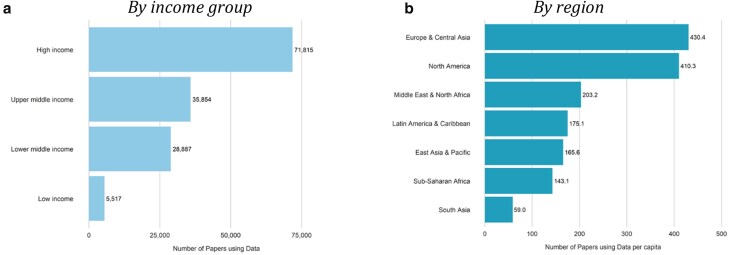 Figure 2
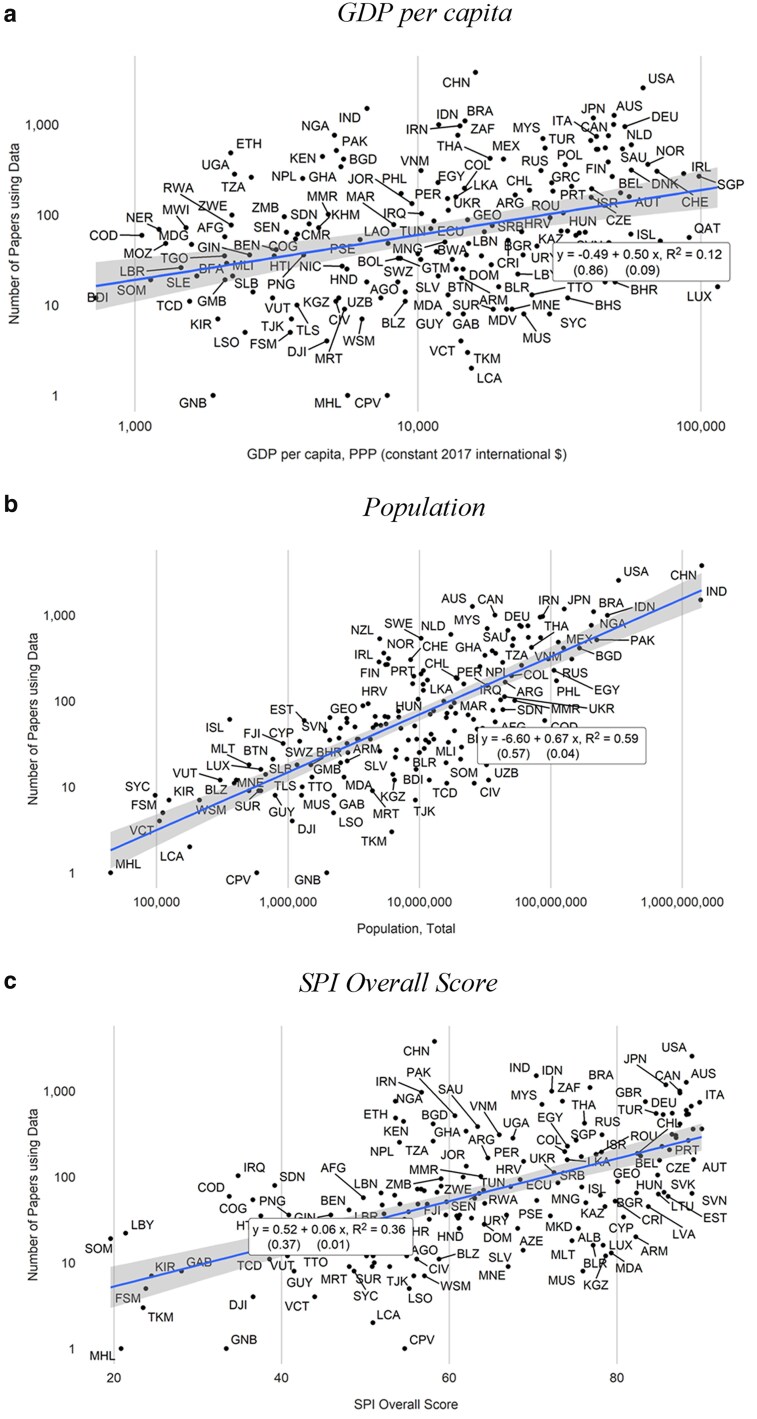 Figure 3
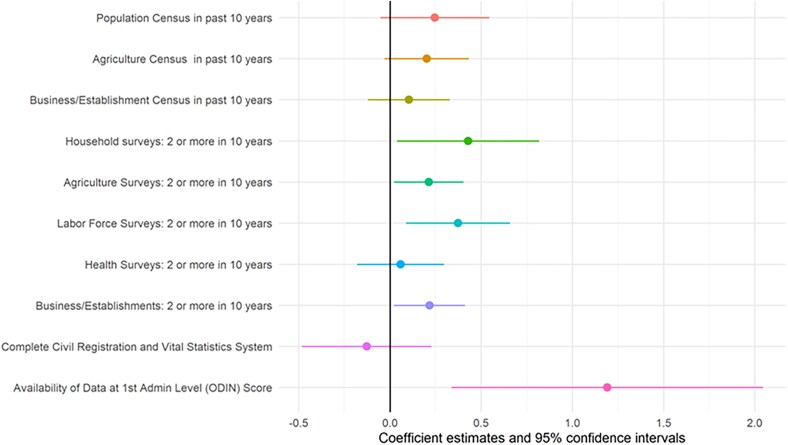 Figure 4
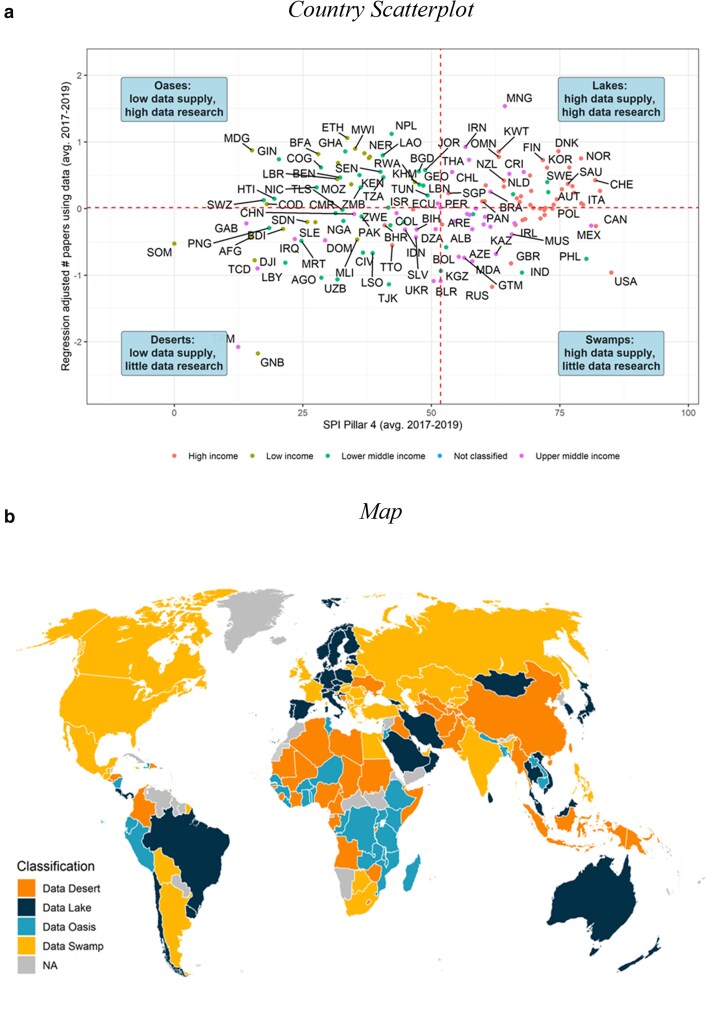 Figure 5
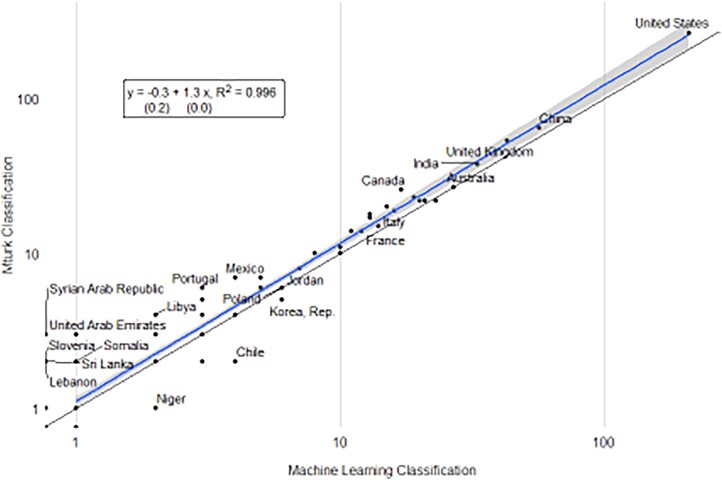 Figure 6
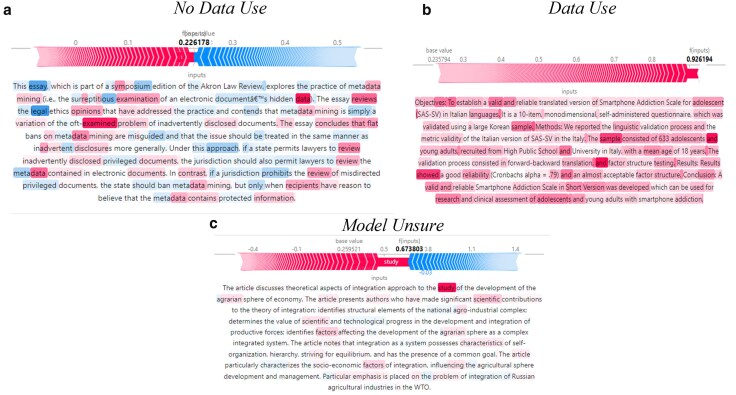 Figure 7
Peer Reviews
No public reviews on file for this paper yet. If you reviewed it on a platform where reviews are public (OpenReview, ICLR, NeurIPS, ICML), you can paste yours below so the community can read it here.
Videos
No videos yet. Explain this paper in a talk, walkthrough, or lecture? Add one.
Taxonomy
TopicsExplainable Artificial Intelligence (XAI) · scientometrics and bibliometrics research · Data Analysis with R