A New Measure of Mnemonic Discrimination Applicable to Recognition Memory Tests With Continuous Variation in Novel Stimulus Interference
Simon Léger, Christian Guinard, Selena Singh, Suzanna Becker, Jasmyn E. A. Cunningham, Martin Alda, Aaron J. Newman, Thomas Trappenberg, Abraham Nunes

TL;DR
This paper introduces a new way to measure how well people can tell new items apart from similar ones, which is important for understanding memory issues in aging and brain disorders.
Contribution
A novel mnemonic discrimination index (λ) is developed for common recognition memory tests, showing convergent validity with the gold-standard MST measure.
Findings
The new MD index (λ) strongly predicted the MST's lure discrimination index (LDI) but not overall recognition memory (REC).
The overall recognition index (Δ) predicted REC but not LDI, showing distinct roles for λ and Δ.
Simulations suggest that impaired overall recognition memory may affect MD measurement accuracy.
Abstract
Mnemonic discrimination (MD) involves distinguishing new stimuli from highly similar memories; it is impaired in the elderly and individuals with neuropsychiatric disorders and may also probe hippocampal dentate gyrus function. Measuring MD is, therefore, highly relevant; however, the gold‐standard MD test, the mnemonic similarity task (MST), is rarely used in clinical research. Thus, it would be useful to develop a novel MD index applicable to recognition memory tasks that are commonly used in clinical research. The present study develops such a measure and demonstrates its convergent validity with the gold‐standard MD index from the MST. We derived participant‐level indices of MD (λ) and overall recognition memory performance (Δ) by fitting a logistic function to the relationship between stimulus interference and the probability of classifying a stimulus as novel. We then applied…
Genes, proteins, chemicals, diseases, species, mutations and cell lines named across the full text — each resolved to its canonical identifier and authoritative record.
Click any figure to enlarge with its caption.
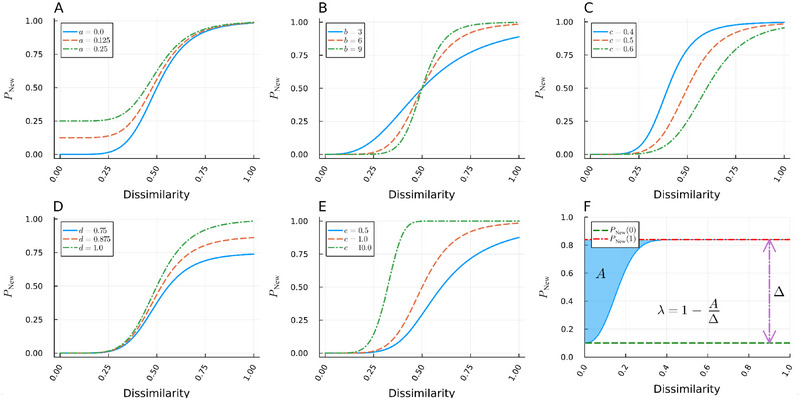 Figure 1
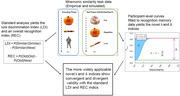 Figure 2
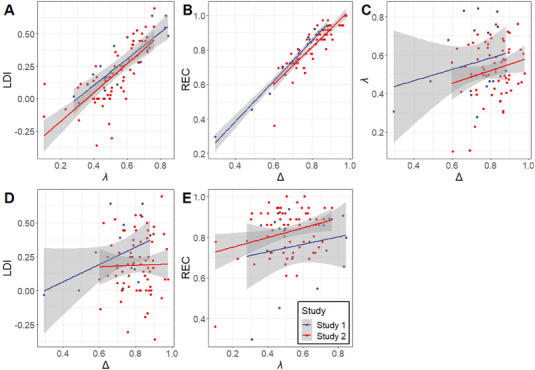 Figure 3
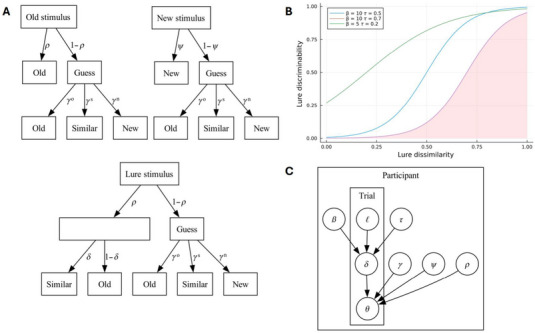 Figure 4
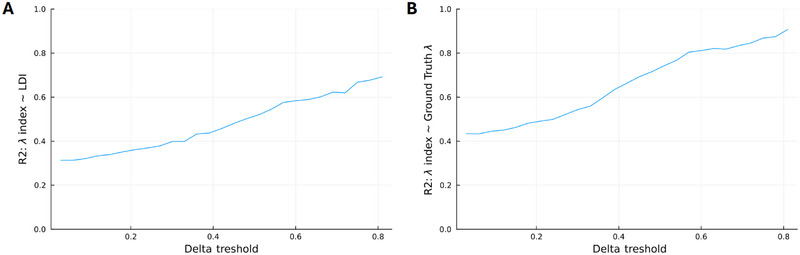 Figure 5
Peer Reviews
No public reviews on file for this paper yet. If you reviewed it on a platform where reviews are public (OpenReview, ICLR, NeurIPS, ICML), you can paste yours below so the community can read it here.
Videos
No videos yet. Explain this paper in a talk, walkthrough, or lecture? Add one.
Taxonomy
TopicsMemory and Neural Mechanisms · Neural and Behavioral Psychology Studies · Memory Processes and Influences