Structure of lymphostatin, a large multi-functional virulence factor of pathogenic Escherichia coli
Matthias Griessmann, Tim Rasmussen, Vanessa J. Flegler, Christian Kraft, Ronja Schneider, Max Hateley, Lukas Spantzel, Mark P. Stevens, Michael Börsch, Bettina Böttcher

TL;DR
This paper reveals the structure of lymphostatin, a key virulence factor in harmful E. coli, showing how it interacts with host cells to cause disease.
Contribution
The study provides the first high-resolution structure of lymphostatin using cryo-electron microscopy.
Findings
Lymphostatin has six distinct domains and three conformations observed at different pH levels.
Long linkers connect the domains and block the catalytic sites of glycosyltransferase and protease domains.
Lymphostatin binds to T-lymphocytes and HEK-293T cells, forming clusters that are internalized.
Abstract
Lymphostatin is a key virulence factor of enteropathogenic and enterohaemorrhagic Escherichia coli, playing roles in bacterial colonisation of the gut and in the inhibition of lymphocyte proliferation and proinflammatory responses. The protein’s glycosyltransferase and cysteine protease motifs are required for activity against lymphocytes, but high-resolution structural information has proven elusive. Here, we describe the structure of lymphostatin from enteropathogenic E. coli O127:H6, determined by electron cryo-microscopy at different pH values. We observe three conformations of a highly complex molecule with two glycosyltransferase domains, one PaToxP-like protease domain, an ADP-ribosyltransferase domain, a vertex domain and a delivery domain. Long linkers hold these domains together and occlude the catalytic sites of the N-terminal glycosyltransferase and protease domains.…
Genes, proteins, chemicals, diseases, species, mutations and cell lines named across the full text — each resolved to its canonical identifier and authoritative record.
Click any figure to enlarge with its caption.
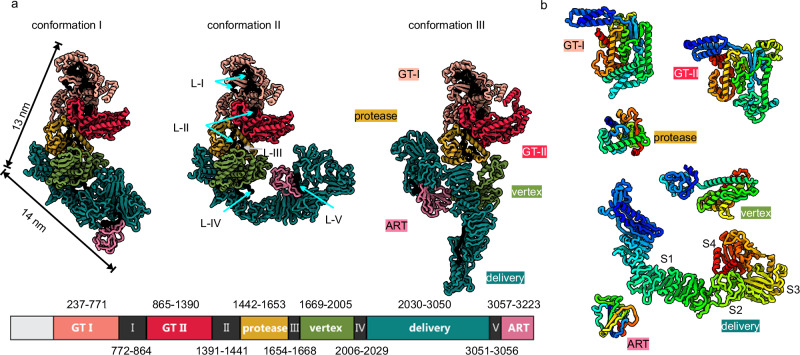 Figure 1
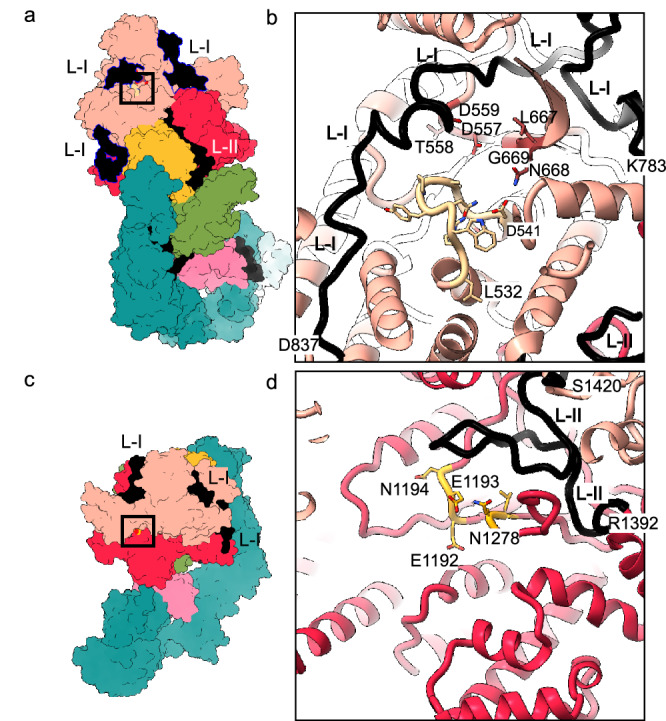 Figure 2
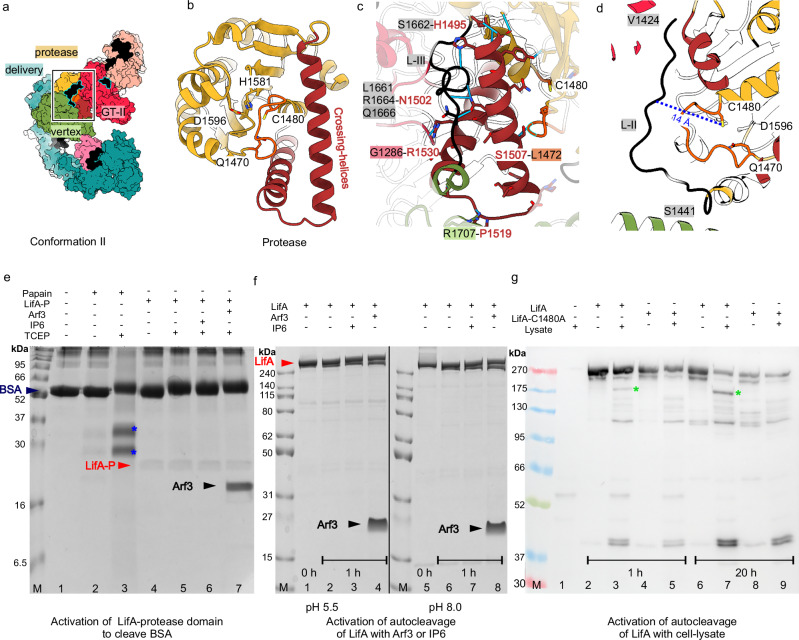 Figure 3
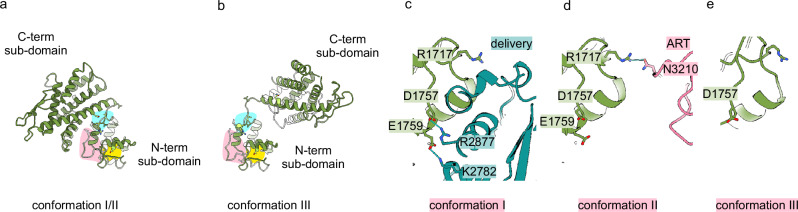 Figure 4
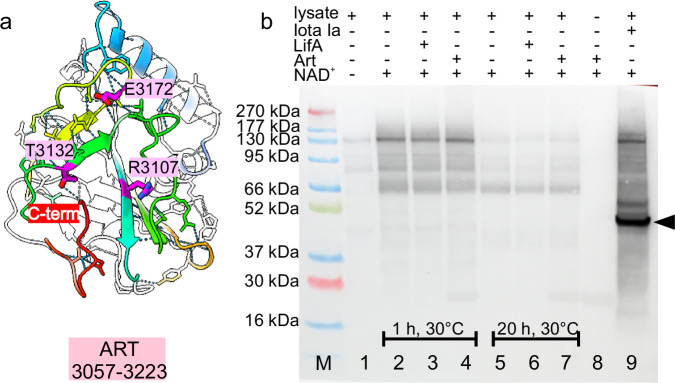 Figure 5
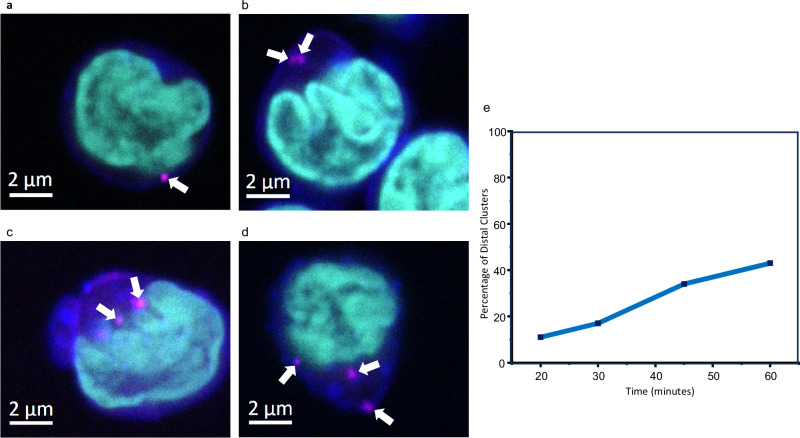 Figure 6
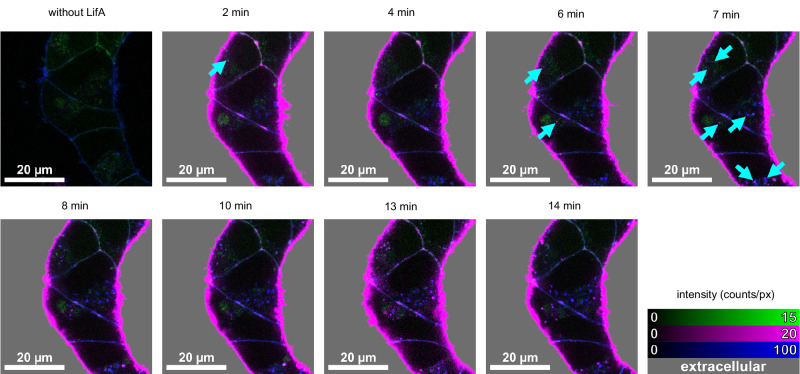 Figure 7
Peer Reviews
No public reviews on file for this paper yet. If you reviewed it on a platform where reviews are public (OpenReview, ICLR, NeurIPS, ICML), you can paste yours below so the community can read it here.
Videos
No videos yet. Explain this paper in a talk, walkthrough, or lecture? Add one.
Taxonomy
TopicsEscherichia coli research studies · Antibiotic Resistance in Bacteria · Toxin Mechanisms and Immunotoxins