The Abundance of Viroid-Like RNA Obelisk-S.s in Streptococcus sanguinis SK36 May Suffice for Evolutionary Persistence
Rohan Maddamsetti, Lingchong You

TL;DR
A new type of RNA called Obelisk-S.s is found in high abundance in a human oral bacterium, suggesting it may play a role in evolutionary persistence.
Contribution
The study confirms the high abundance of Obelisk-S.s RNA in Streptococcus sanguinis SK36 and identifies potential mutations in its sequences.
Findings
Obelisk-S.s RNA is more abundant than any mRNA in 11 out of 17 SK36 RNA-seq datasets.
Three Obelisk-S.s mutations are found at 5–10% allele frequency in some samples.
A mathematical model suggests high Obelisk abundance can stabilize intracellular populations.
Abstract
A new class of viroid-like RNAs, called Obelisks, was recently reported by Zheludev et al. (Cell 187:6521–6536.e6518, 2024). They found thousands of Obelisk sequences globally and identified a specific 1137 nt Obelisk, called Obelisk-S.s, in monoculture transcriptomes of Streptococcus sanguinis SK36, a commensal bacterium of the human oral microbiome. Here, we confirm that Obelisk-S.s is highly abundant in SK36, despite its absence from the SK36 genome (i.e., as DNA). In 11 out of 17 monoculture SK36 RNA-seq datasets examined, Obelisk-S.s is more abundant than any mRNA. Given its relative abundance, we hypothesized that multiple Obelisk-S.s variants could coexist within SK36. We found three Obelisk-S.s mutations at 5–10% allele frequency in some samples: a R162R synonymous mutation in one set of replicate transcriptomes, and an I48I synonymous mutation and an intergenic mutation in…
Genes, proteins, chemicals, diseases, species, mutations and cell lines named across the full text — each resolved to its canonical identifier and authoritative record.
Click any figure to enlarge with its caption.
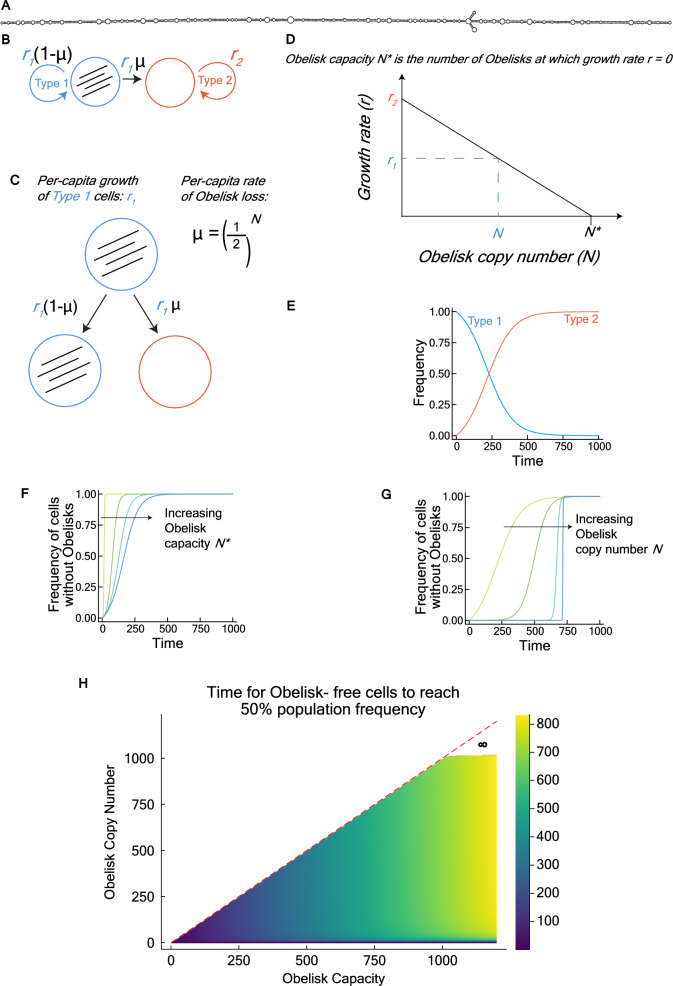 Figure 1
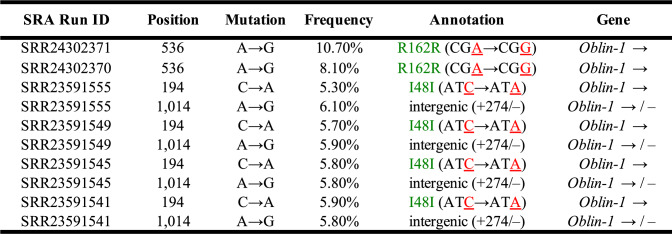 Figure 2
Peer Reviews
No public reviews on file for this paper yet. If you reviewed it on a platform where reviews are public (OpenReview, ICLR, NeurIPS, ICML), you can paste yours below so the community can read it here.
Videos
No videos yet. Explain this paper in a talk, walkthrough, or lecture? Add one.
Taxonomy
TopicsRNA and protein synthesis mechanisms · Plant Virus Research Studies · Plant and Fungal Interactions Research