Biotransformation of ketamine in terminal in vivo experiments under chronic intermittent hypoxia conditions and the role of AhR
António B. Pimpão, Luísa Teixeira-Santos, Nuno R. Coelho, Maria João Correia, Judit Morello, Alexandra M. M. Antunes, Emília C. Monteiro, Sofia A. Pereira

TL;DR
The study explores how ketamine is metabolized in rats under chronic intermittent hypoxia and reveals a new role for the AhR receptor in this process.
Contribution
This is the first study to describe the role of AhR in ketamine biotransformation under chronic intermittent hypoxia.
Findings
Six ketamine metabolites were identified in liver and kidney tissues, including norketamine glucuronide in the liver.
Hydroxynorketamine was more prevalent than norketamine under chronic intermittent hypoxia.
The AhR antagonist CH-223191 influenced hydroxynorketamine glucuronidation in the liver.
Abstract
We were pioneers in describing aryl hydrocarbon receptor (AhR) activation by chronic intermittent hypoxia (CIH) in a rat pre-clinical model. This model mimics hypertension (HTN) secondary to obstructive sleep apnea, enabling longitudinal investigation of hypertension development. Concerns about the influence of barbiturates on AhR-regulated enzymes led us to opt for ketamine/medetomidine anesthesia in terminal in vivo experiments. However, the biotransformation and the metabolomic pathways of ketamine in CIH conditions, which is associated to AhR overactivation, are yet to be disclosed. A rat model of CIH was used, with experimental groups defined based on the duration of CIH exposure. Ketamine/medetomidine (75/0.5 mg/kg) was administered intraperitoneally as terminal anesthetic. Metabolomic strategies were used to reveal the profiles of ketamine and its metabolites in liver and kidney…
Genes, proteins, chemicals, diseases, species, mutations and cell lines named across the full text — each resolved to its canonical identifier and authoritative record.
Click any figure to enlarge with its caption.
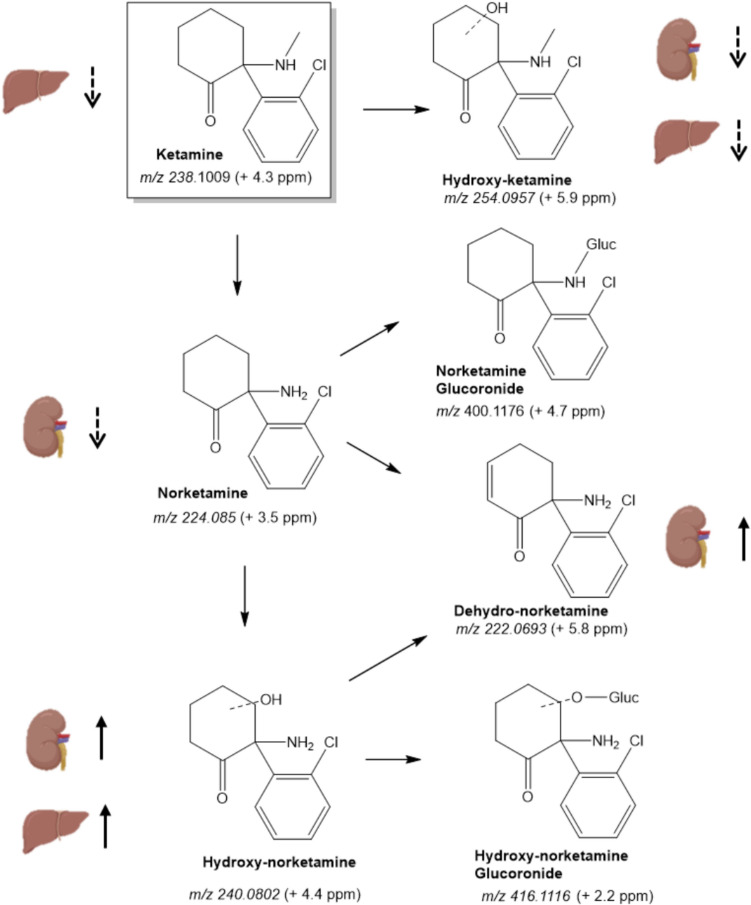 Figure 1
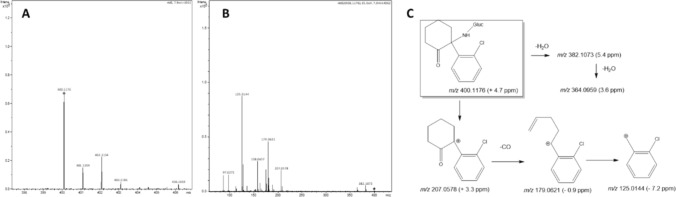 Figure 2
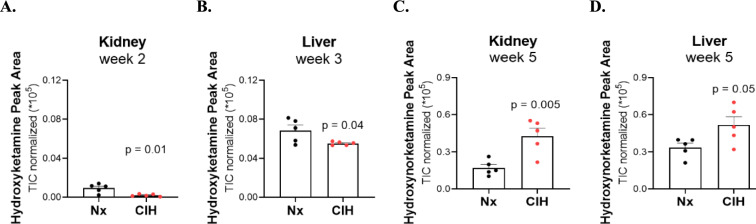 Figure 3
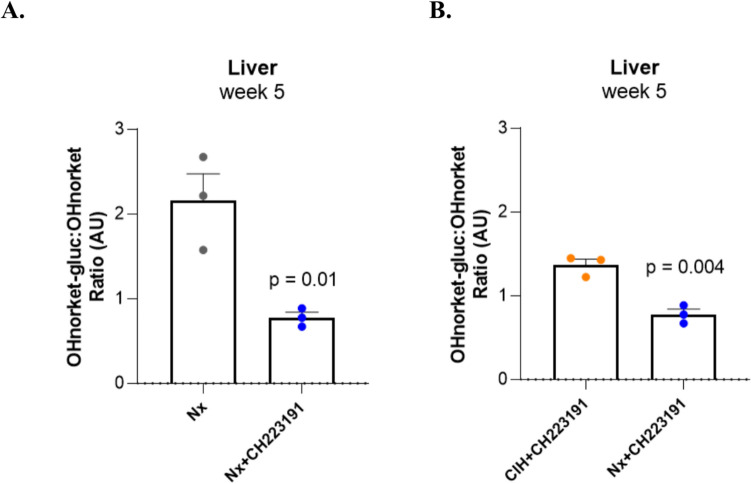 Figure 4
Peer Reviews
No public reviews on file for this paper yet. If you reviewed it on a platform where reviews are public (OpenReview, ICLR, NeurIPS, ICML), you can paste yours below so the community can read it here.
Videos
No videos yet. Explain this paper in a talk, walkthrough, or lecture? Add one.
Taxonomy
TopicsEicosanoids and Hypertension Pharmacology · Metabolomics and Mass Spectrometry Studies · Diet and metabolism studies