Quantitative comparisons of pulmonary artery hemodynamics before and after Pulsta valve implantation in patients with Tetralogy of Fallot using computational fluid dynamics
Seung Min Baek, Kieun Choi, Sang Yun Lee, Hong Gook Lim, Gi Beom Kim, Jongmin Seo

TL;DR
This study uses computational fluid dynamics to analyze changes in blood flow in the pulmonary arteries of Tetralogy of Fallot patients before and after a specific valve implantation.
Contribution
The novel use of computational fluid dynamics to quantitatively assess hemodynamic changes after Pulsta valve implantation in Tetralogy of Fallot patients.
Findings
Pulmonary artery flow velocities decreased significantly after PPVI, reducing differences between arteries.
Vorticity and energy dissipation in the pulmonary arteries decreased significantly post-implantation.
Changes in right ventricular volume were not correlated with changes in energy dissipation after PPVI.
Abstract
The evaluation of percutaneous pulmonary valve implantation (PPVI) performance has been predominantly confined to assessing changes in the right ventricular volume using magnetic resonance imaging (MRI). This study aimed to evaluate the hemodynamic changes in the pulmonary arteries following PPVI using computational fluid dynamics (CFD) in patients with Tetralogy of Fallot. We conducted CFD analysis based on MRI scans performed before and after PPVI using Pulsta valve in nine patients who underwent PPVI between 2016 and 2021. Statistical analysis, including Wilcoxon rank-sum tests and multivariable linear regression, was performed to examine the associations between CFD data and non-CFD factors, as well as changes in these parameters after PPVI. Before PPVI, forward and backward flow velocities in the right pulmonary artery (RPA) were higher than those in the left pulmonary artery…
Genes, proteins, chemicals, diseases, species, mutations and cell lines named across the full text — each resolved to its canonical identifier and authoritative record.
Click any figure to enlarge with its caption.
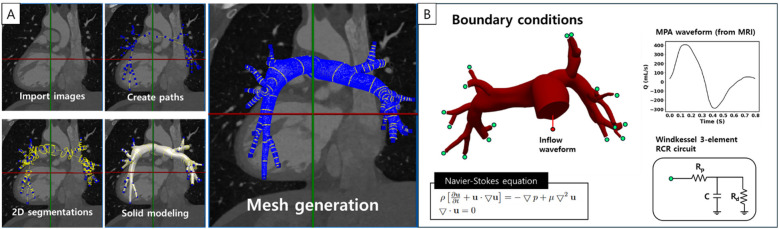 Figure 1
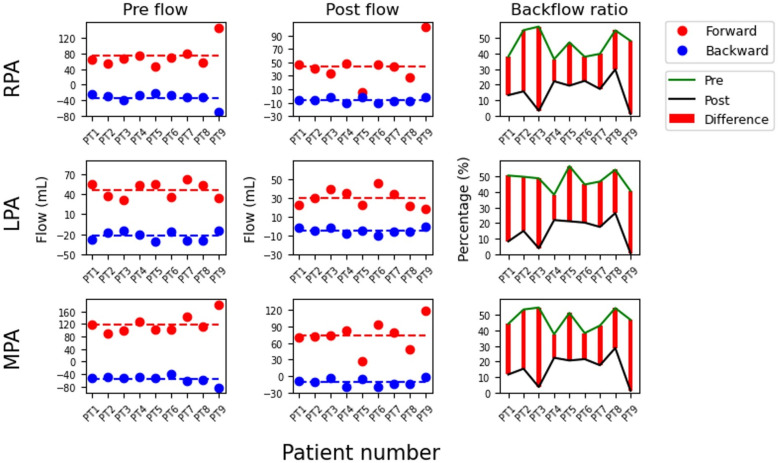 Figure 2
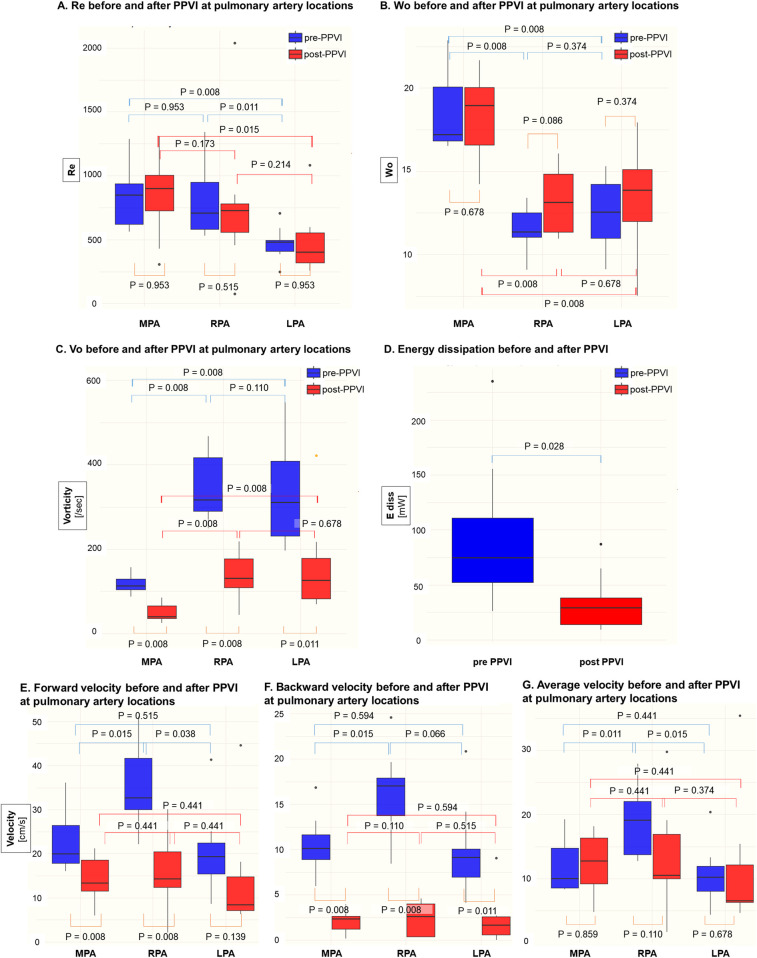 Figure 3
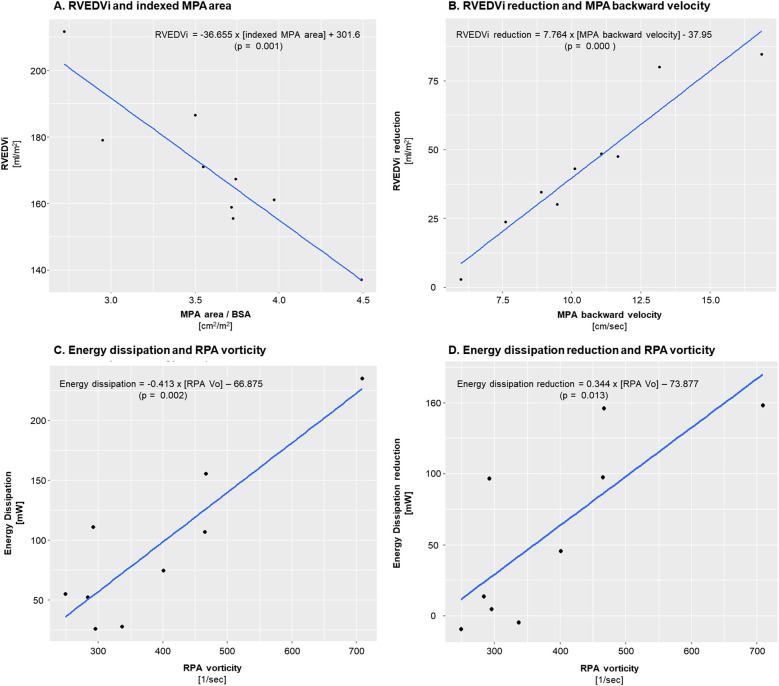 Figure 4
Peer Reviews
No public reviews on file for this paper yet. If you reviewed it on a platform where reviews are public (OpenReview, ICLR, NeurIPS, ICML), you can paste yours below so the community can read it here.
Videos
No videos yet. Explain this paper in a talk, walkthrough, or lecture? Add one.
Taxonomy
TopicsCongenital Heart Disease Studies · Pulmonary Hypertension Research and Treatments · Cardiovascular Function and Risk Factors