Leveraging Random Forests explainability for predictive modeling of children's conduct problems: insights from individual and family factors
Estrella Romero, Jaime González-González, María Álvarez-Voces, Enrique Costa-Montenegro, Beatriz Díaz-Vázquez, Andrea Busto-Castiñeira, Paula Villar, Laura López-Romero

TL;DR
This study uses Random Forest models to predict children's conduct problems by analyzing individual and family factors, offering insights for better mental health screening and interventions.
Contribution
The study introduces the application of Random Forest explainability to identify key factors in predicting children's conduct problems.
Findings
Random Forest models effectively classify children with varying levels of conduct problems.
Key individual and family variables were identified as important predictors of high conduct problems.
The study highlights the value of combining psychological insights with computational methods for mental health assessment.
Abstract
Conduct problems are among the most complex, impairing, and prevalent challenges affecting the mental health of children and adolescents. Due to their multifaceted nature, it is important to develop predictive models that capture the intricate interactions among contributing factors. This longitudinal study aims to: (1) evaluate the utility and effectiveness of Random Forest models for classifying children with varying levels of conduct problems, (2) analyze the interactions between individual and family variables in predicting high levels of conduct problems, and (3) determine the most relevant factors or combinations for accurate child classification. The sample was drawn from the ELISA study, and consisted of 1,352 children assessed twice within a 1-year frame. The use of Random Forest and its inherent structure allowed to identify subsets of variables with the capability of…
Genes, proteins, chemicals, diseases, species, mutations and cell lines named across the full text — each resolved to its canonical identifier and authoritative record.
Click any figure to enlarge with its caption.
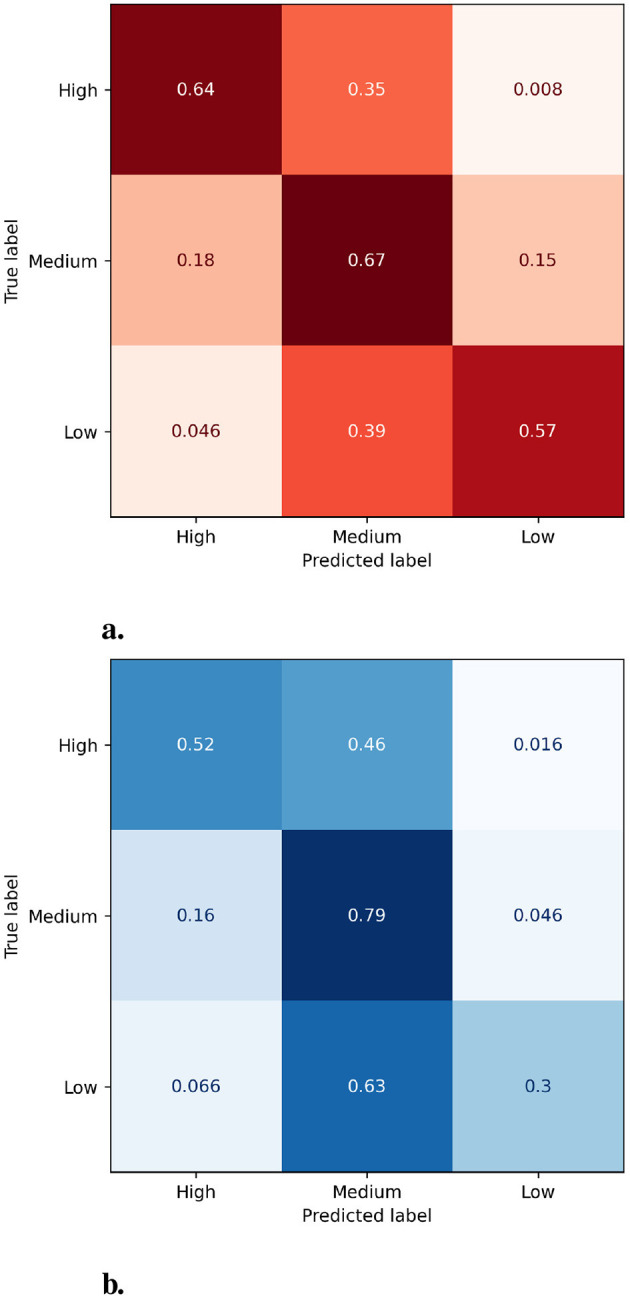 Figure 1
 Figure 2
Peer Reviews
No public reviews on file for this paper yet. If you reviewed it on a platform where reviews are public (OpenReview, ICLR, NeurIPS, ICML), you can paste yours below so the community can read it here.
Videos
No videos yet. Explain this paper in a talk, walkthrough, or lecture? Add one.
Taxonomy
TopicsChild and Adolescent Psychosocial and Emotional Development · Psychopathy, Forensic Psychiatry, Sexual Offending · Child Abuse and Trauma