Pluripotency genes of mammals: a network at work
Ranieri Cancedda, Maddalena Mastrogiacomo

TL;DR
The paper reviews how mammalian pluripotency is regulated by a network of genes and factors that control stem cell development and differentiation.
Contribution
This review integrates genetic and stem cell biology to clarify the gene network maintaining pluripotency and its clinical implications.
Findings
Pluripotency in mammals involves transitions through naive, formative, and primed states.
Oct4, Sox2, and Nanog form an autoregulatory loop crucial for maintaining pluripotency.
Cytokines, signaling pathways, and epigenetic modifications regulate pluripotency gene expression.
Abstract
Pluripotency, i.e., the ability to differentiate into cells of all three germ layers, is a transient state of early embryonic cells. In mammals, during progression from pre-implantation to post-implantation stage, pluripotent cells undergo different state transitions characterized by changes in gene expression and development potential. These developmental states include: (i) a naive pluripotency (pre-implantation embryonic stem cells, or ESCs), (ii) an intermediate condition (formative state), and (iii) a primed pluripotency (late post-implantation ESCs derived from epiblasts also named EpiSCs). The transitions are regulated by an interconnected network of pluripotency-related genes. Transcription of genes such as Oct4, Sox2, and Nanog is crucial for obtaining and maintaining pluripotency. These three factors form an autoregulatory loop by binding to each other’s promoters to activate…
Genes, proteins, chemicals, diseases, species, mutations and cell lines named across the full text — each resolved to its canonical identifier and authoritative record.
Click any figure to enlarge with its caption.
 Figure 1
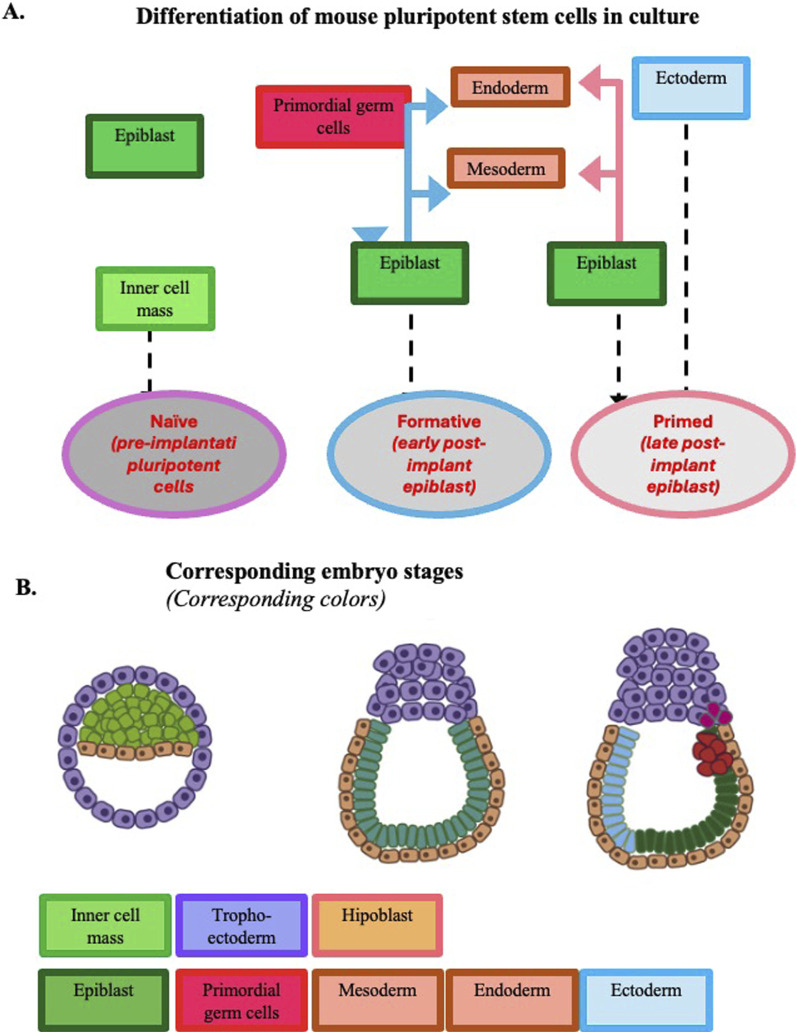 Figure 2
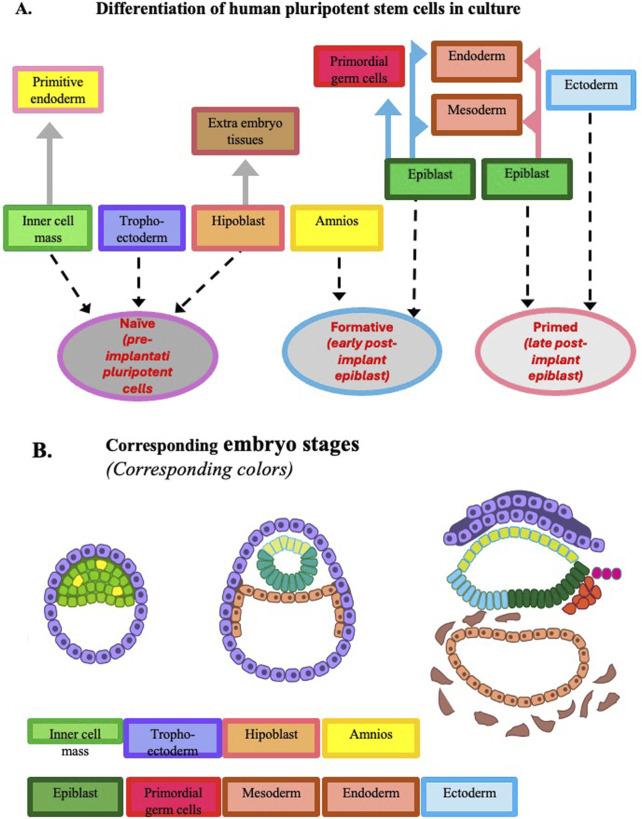 Figure 3
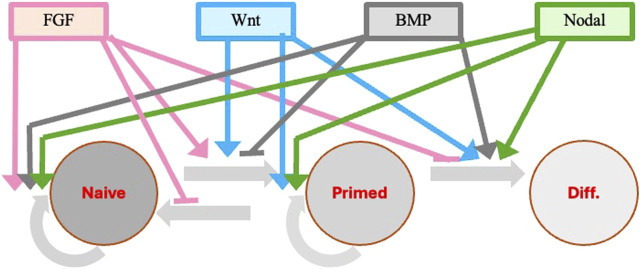 Figure 4
Peer Reviews
No public reviews on file for this paper yet. If you reviewed it on a platform where reviews are public (OpenReview, ICLR, NeurIPS, ICML), you can paste yours below so the community can read it here.
Videos
No videos yet. Explain this paper in a talk, walkthrough, or lecture? Add one.
Taxonomy
TopicsPluripotent Stem Cells Research · CRISPR and Genetic Engineering · Animal Genetics and Reproduction