Community-based health insurance dropout rate and its' associated factors among households in Seyo District, Kellem Wollega Zone, Oromia, Ethiopia: community-based cross-sectional study
Segni Mulugeta Tafasa, Yonas Etana, Firezer Belay Keno, Worku Fikadu, Dejene Seyoum

TL;DR
This study examines why households in Ethiopia are leaving a community-based health insurance program and identifies key factors like family size, education, and health facility experiences.
Contribution
The study identifies specific factors associated with dropout rates in a community-based health insurance scheme in Ethiopia, offering actionable insights for policymakers.
Findings
The overall CBHI dropout rate was 36.1% in the study area.
Factors like family size, age, education level, and health facility experiences were significantly associated with dropout rates.
Insufficient laboratory services and lack of treatment at health facilities increased dropout likelihood.
Abstract
Despite an initial surge in enrollment in the Community-Based Health Insurance (CBHI) scheme, maintaining the membership remains a significant challenge in Ethiopia, particularly in the study area. High dropout rates jeopardize the program's effectiveness and long-term sustainability. Therefore, this study aimed to assess the CBHI dropout rate and its associated factors among households in Seyo District, Kellem Wollega, Ethiopia. A community-based cross-sectional study was conducted among 551 randomly selected households from eight kebeles in the Seyo district. This study employed a multistage sampling technique and took place from 1 August to 30 September 2023. Data were collected using pretested and structured questionnaires. The collected data were coded, entered into Epi Info (version 7), and analyzed using Statistical Package for the Social Sciences (SPSS version 25). Descriptive…
Genes, proteins, chemicals, diseases, species, mutations and cell lines named across the full text — each resolved to its canonical identifier and authoritative record.
Click any figure to enlarge with its caption.
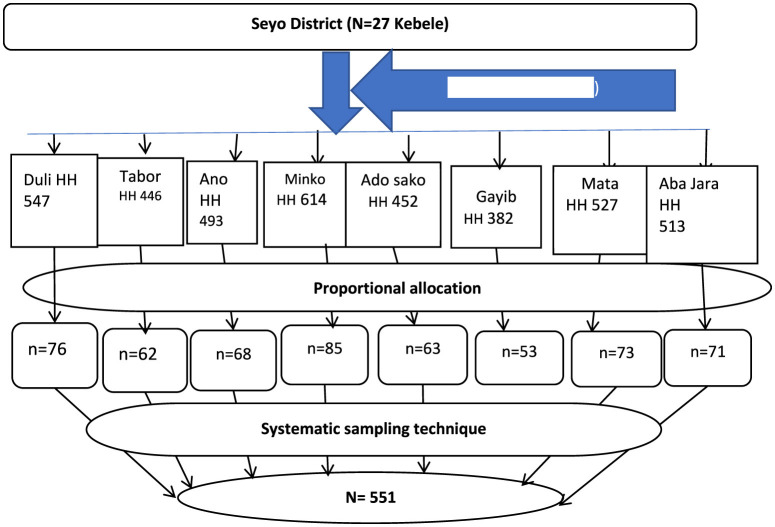 Figure 1
Peer Reviews
No public reviews on file for this paper yet. If you reviewed it on a platform where reviews are public (OpenReview, ICLR, NeurIPS, ICML), you can paste yours below so the community can read it here.
Videos
No videos yet. Explain this paper in a talk, walkthrough, or lecture? Add one.
Taxonomy
TopicsHealthcare Systems and Reforms · HIV/AIDS Impact and Responses · Global Maternal and Child Health