Sulfide Oxidation Products Support Microbial Metabolism at Interface Environments in a Marine‐Like Serpentinizing Spring in Northern California
Leah Trutschel, Brittany Kruger, Andrew Czaja, Megan Brueck, Joshua Sackett, Gregory Druschel, Annette Rowe

TL;DR
This study explores how microbial communities in a serpentinizing spring in California are influenced by sulfur compounds and environmental conditions.
Contribution
The study identifies how sulfur oxidation products and interface environments support diverse microbial metabolism in serpentinizing systems.
Findings
Reduced sulfur species significantly influence microbial community changes at interface environments.
Oxygen availability promotes sulfur-oxidizing taxa, including light-driven sulfur oxidation.
Fluid mixing with meteoric water selects for different sulfur-oxidizing taxa like Halothiobacillus and Thiothrix.
Abstract
Interface environments between extreme and neutrophilic conditions are often hotspots of metabolic activity and taxonomic diversity. In serpentinizing systems, the mixing of high pH fluids with meteoric water, and/or the exposure of these fluids to the atmosphere can create interface environments with distinct but related metabolic activities and species. Investigating these systems can provide insights into the factors that stimulate microbial growth, and/or what attributes may be limiting microbial physiologies in native serpentinized fluids. To this aim, changes in geochemistry and microbial communities were investigated for different interface environments at Ney Springs—a marine‐like terrestrial serpentinization system where the main serpentinized fluids have been well characterized geochemically and microbially. We found that reduced sulfur species from Ney Springs had large…
Genes, proteins, chemicals, diseases, species, mutations and cell lines named across the full text — each resolved to its canonical identifier and authoritative record.
Click any figure to enlarge with its caption.
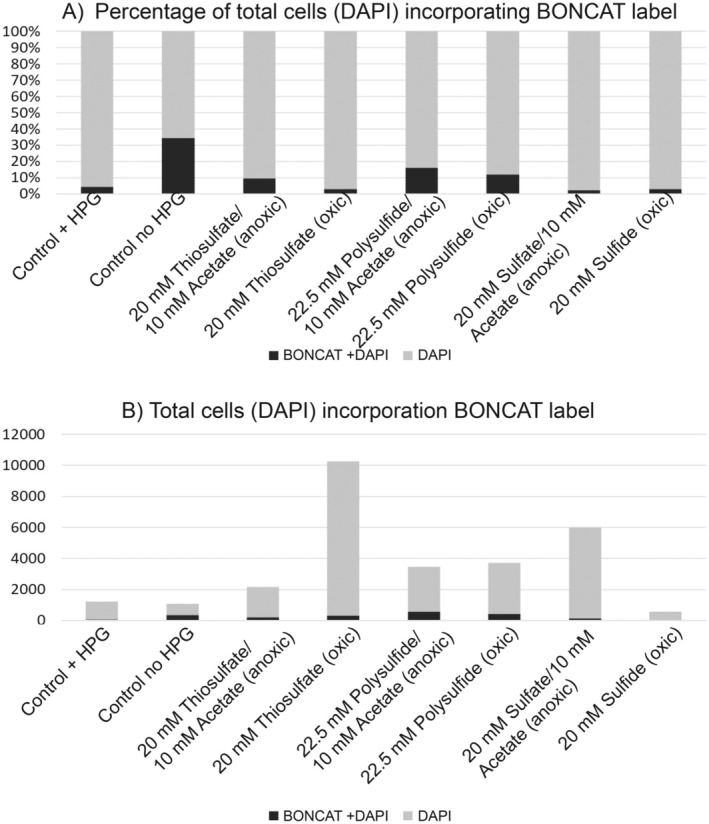 Figure 1
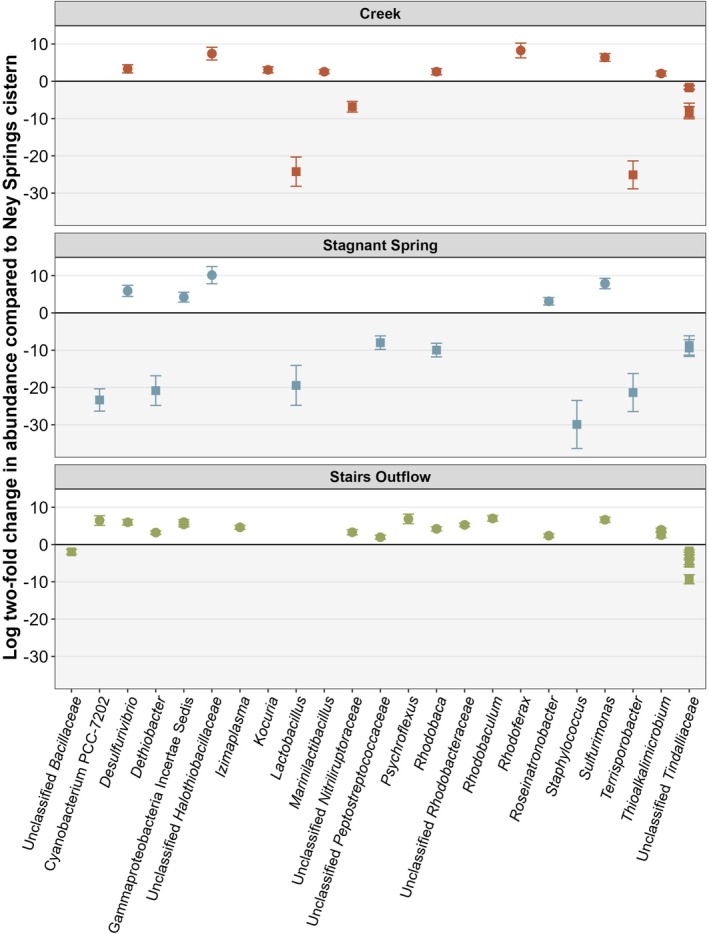 Figure 2
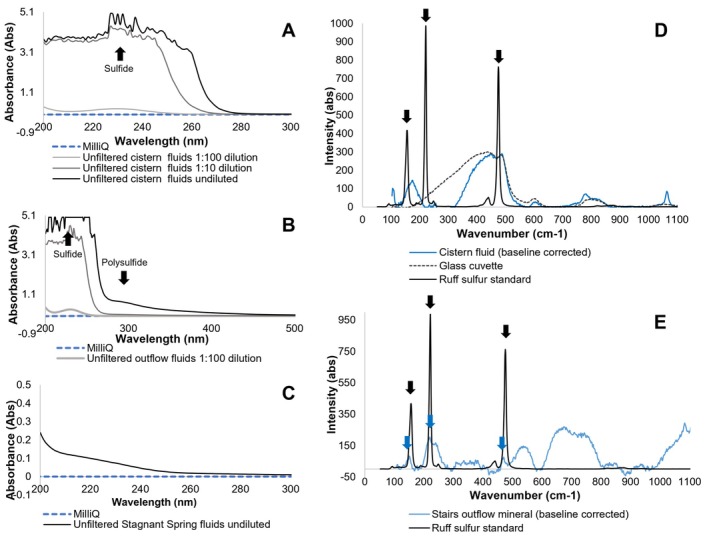 Figure 3
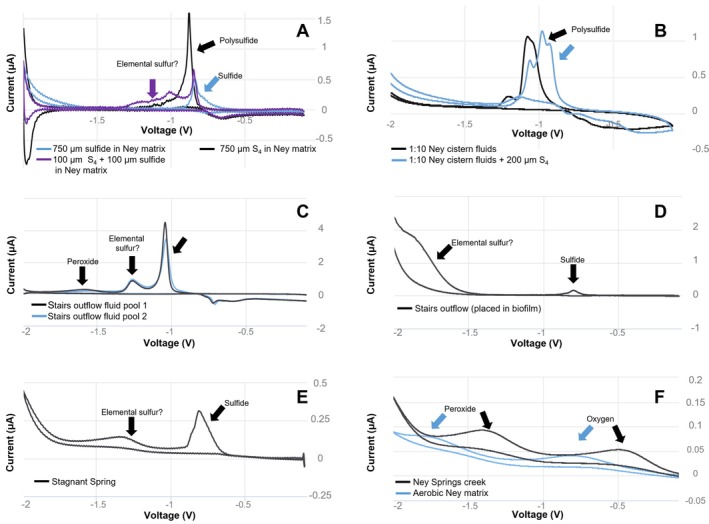 Figure 4
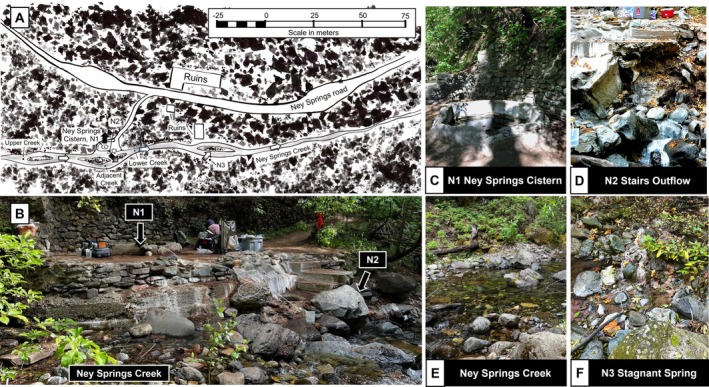 Figure 5
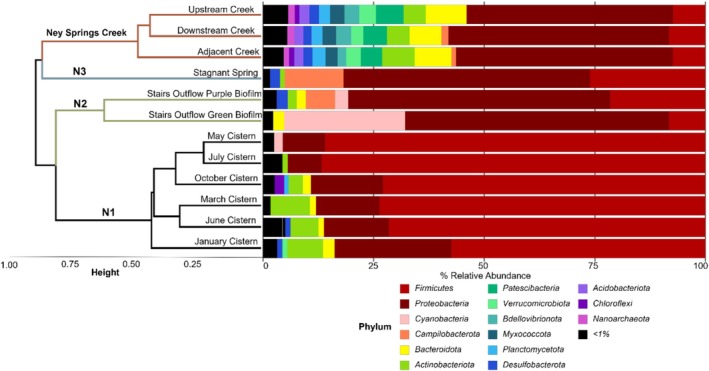 Figure 6
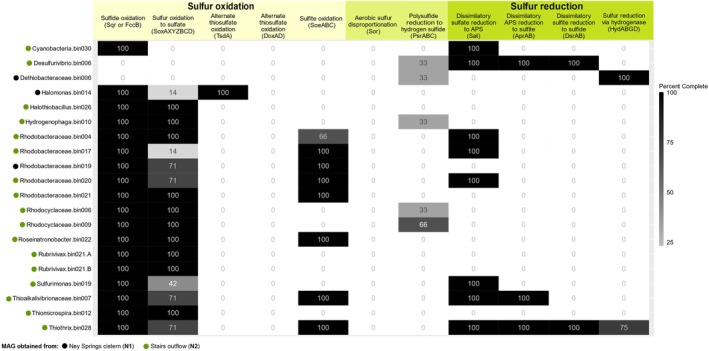 Figure 7
Peer Reviews
No public reviews on file for this paper yet. If you reviewed it on a platform where reviews are public (OpenReview, ICLR, NeurIPS, ICML), you can paste yours below so the community can read it here.
Videos
No videos yet. Explain this paper in a talk, walkthrough, or lecture? Add one.
Taxonomy
TopicsMicrobial Community Ecology and Physiology · Methane Hydrates and Related Phenomena · Genomics and Phylogenetic Studies