Children With Fragile X Syndrome Display a Switch Towards Fast Fibres in Their Recruitment Strategy During Gait
Fabiola Spolaor, Federica Beghetti, Weronika Piatkowska, Annamaria Guiotto, Roberta Polli, Elisa Bettella, Valentina Liani, Elisa di Giorgio, Zimi Sawacha

TL;DR
Children with Fragile X Syndrome use fast muscle fibers more during walking, which may explain their fatigue and difficulty with exercise.
Contribution
The study reveals a distinct fast-twitch fiber recruitment strategy in FXS children during gait, not previously characterized.
Findings
FXSFull and FXSMos children show higher energy in fast-twitch fibers compared to controls.
Increased Instantaneous Mean Frequency suggests reliance on fast fibers in FXS children.
This recruitment pattern may explain exercise intolerance and fatigability in FXS.
Abstract
Fragile X Syndrome (FXS) is a genetic disorder caused by the lack of FMRP, a crucial protein for brain development and function. FMR1 mutations are categorized into premutation and full mutation (FXSFull), with somatic mosaicism (FXSMos) modulating the FXS phenotype. Recent studies identified muscle activity alterations during gait in FXS children. This study aims to explore the relationship between these muscle activity changes and motor fibre recruitment strategies during gait in FXS children. Fifty‐four FXS children and fourteen healthy controls participated in the study. Gait trials at self‐selected speeds were recorded using four synchronized cameras and a surface electromyography system that captured bilateral activity of Gastrocnemius lateralis, Tibialis anterior, Rectus and Biceps femoris muscles. The continuous wavelet transform, using the ‘bump’ mother wavelet, provided the…
Genes, proteins, chemicals, diseases, species, mutations and cell lines named across the full text — each resolved to its canonical identifier and authoritative record.
Click any figure to enlarge with its caption.
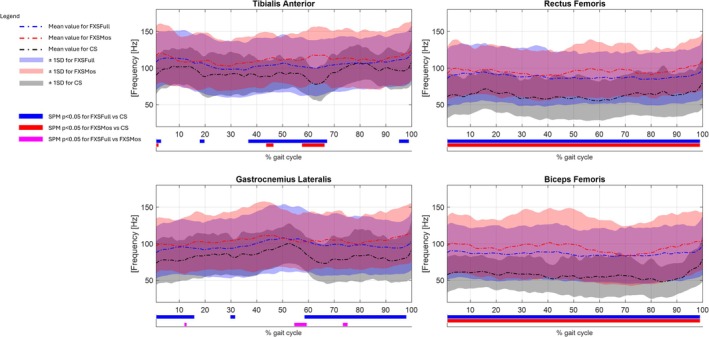 Figure 1
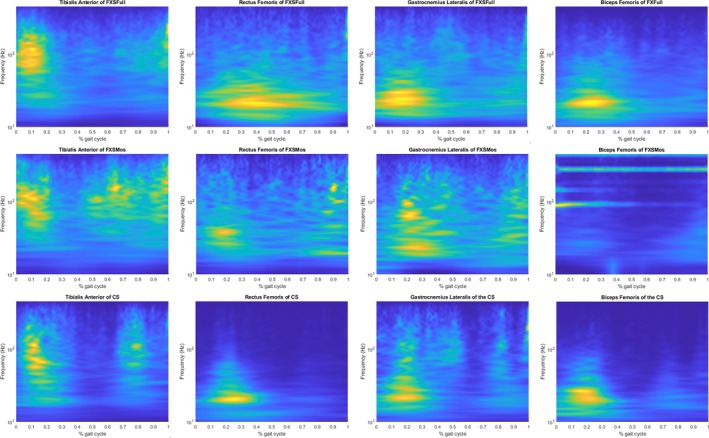 Figure 2
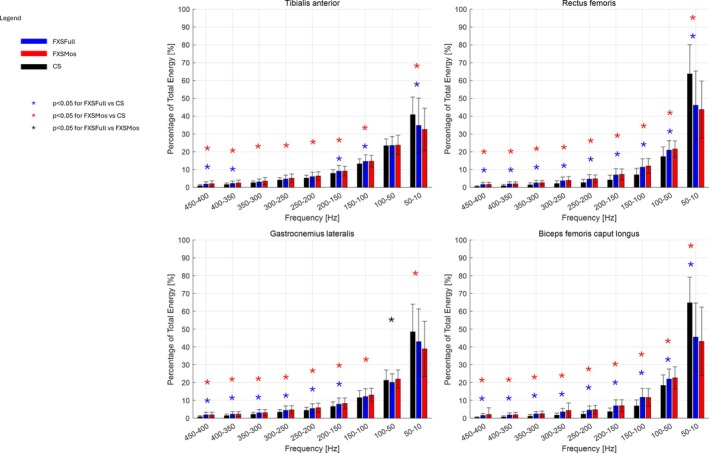 Figure 3
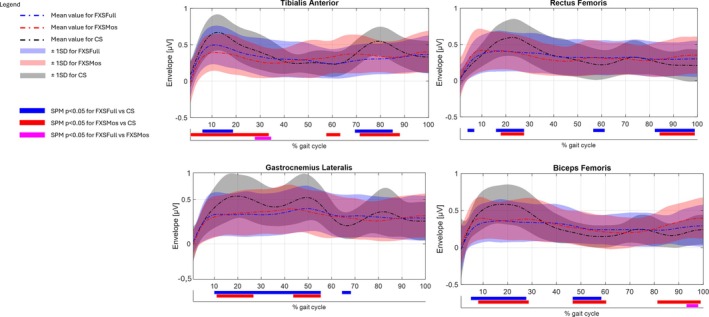 Figure 4
Peer Reviews
No public reviews on file for this paper yet. If you reviewed it on a platform where reviews are public (OpenReview, ICLR, NeurIPS, ICML), you can paste yours below so the community can read it here.
Videos
No videos yet. Explain this paper in a talk, walkthrough, or lecture? Add one.
Taxonomy
TopicsGenetics and Neurodevelopmental Disorders · Autism Spectrum Disorder Research · Congenital heart defects research