Mutant Strain of Aspergillus aculeatinus Boosts Total Phenolic Compounds and Sugar Recovery from Coffee Residues via Enzyme-Assisted Extraction
Jantima Arnthong, Panida U-thai, Sa-ngapong Plupjeen, Piyada Bussadee, Wanlapa Lorliam, Sukhumaporn Krajangsang, Verawat Champreda, Surisa Suwannarangsee

TL;DR
A mutant strain of Aspergillus aculeatinus produces more enzymes that help extract valuable compounds like polyphenols and sugars from coffee residues efficiently.
Contribution
A novel mutant strain (QN-247) with significantly enhanced cellulase and pectinase production for enzyme-assisted extraction from coffee by-products.
Findings
The QN-247 mutant showed 31% higher pectinase and 120% higher CMCase activity compared to the wild-type strain.
Enzyme-assisted extraction using QN-247 released up to 31.7 mg GAE/g of polyphenols and 208.3 mg/g of glucose from coffee residues.
The mutant strain outperformed commercial enzyme preparations in extracting bioactive compounds from coffee by-products.
Abstract
Coffee residues are a valuable source of phenolic compounds and saccharides, which can be extracted through various methods such as solvent extraction, subcritical water extraction, and microwave-assisted extraction. Recently, enzyme-assisted extraction using microbial enzymes has emerged as a green and sustainable alternative. This study focused on enhancing cellulase and pectinase production in Aspergillus aculeatinus SF-034 through induced mutagenesis and evaluating the mutant enzymes for extracting polyphenols and saccharides from coffee by-products. The mutant QN-247 strain exhibited notably increased enzyme activities, with pectinase and CMCase levels approximately 31% and 120% higher than those of the mutant SF-034 and the wild-type strain, respectively. Scale-up in a 10-L bioreactor further confirmed high enzyme activities, reaching 995.8 U/ml for pectinase and 888.7 U/ml for…
Genes, proteins, chemicals, diseases, species, mutations and cell lines named across the full text — each resolved to its canonical identifier and authoritative record.
Click any figure to enlarge with its caption.
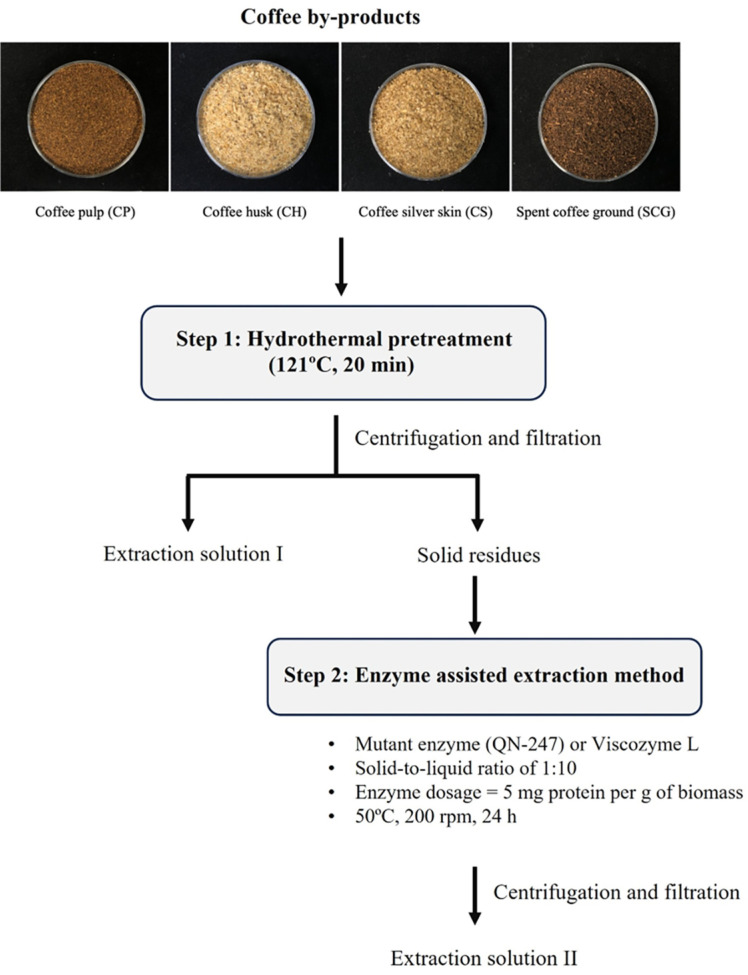 Figure 1
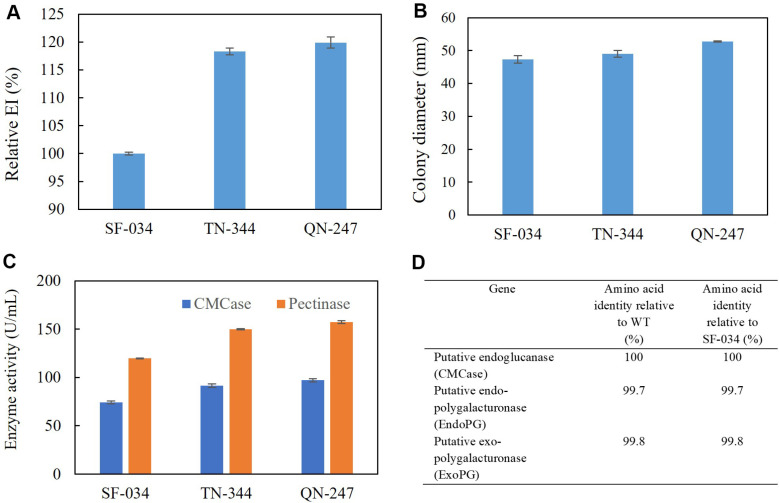 Figure 2
 Figure 3
 Figure 4
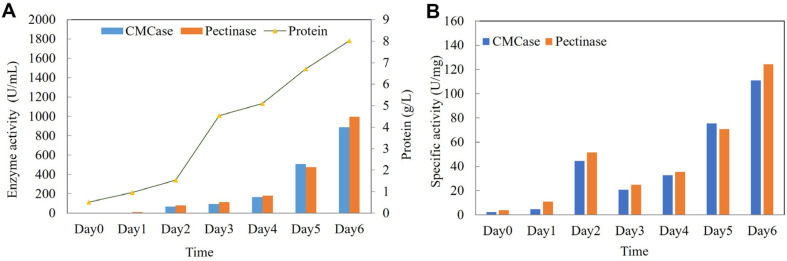 Figure 5
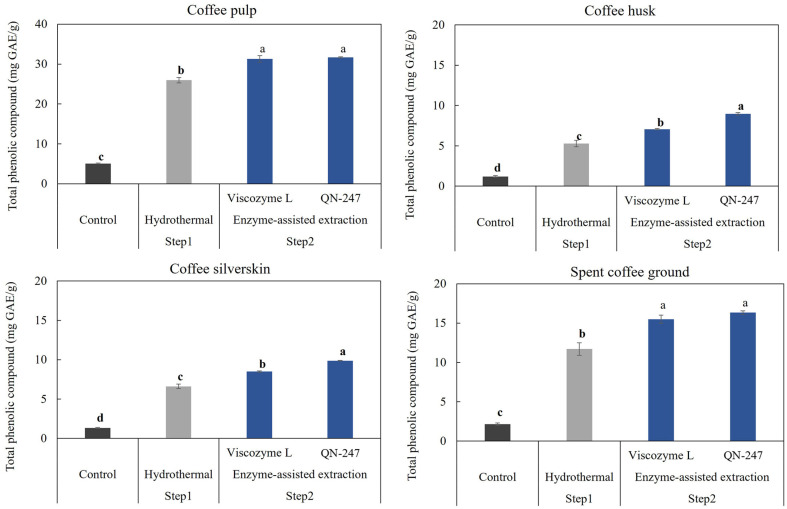 Figure 6
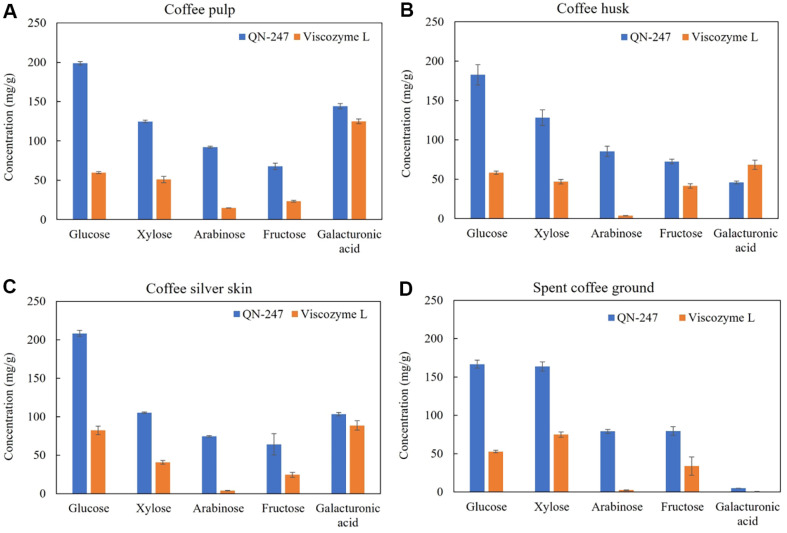 Figure 7
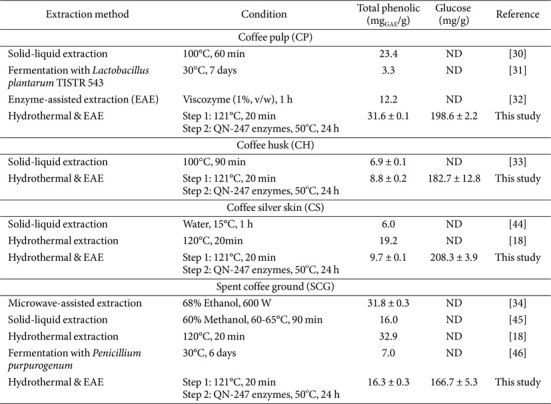 Figure 8
Peer Reviews
No public reviews on file for this paper yet. If you reviewed it on a platform where reviews are public (OpenReview, ICLR, NeurIPS, ICML), you can paste yours below so the community can read it here.
Videos
No videos yet. Explain this paper in a talk, walkthrough, or lecture? Add one.
Taxonomy
TopicsMicrobial Metabolites in Food Biotechnology · Coffee research and impacts · Tea Polyphenols and Effects