Beyond Individual Acute Phase Protein Assessments: Introducing the Acute Phase Index (API) as a Prognostic Indicator in Dogs with Malignant Neoplasia
Martina Baldin, Maria Elena Gelain, Giacomo Marolato, Silvia Bedin, Michele Berlanda, Manuela Zanetti, Filippo Torrigiani, Alessia Giordano, Pierangelo Moretti, Donatella Scavone, Federico Bonsembiante

TL;DR
This study introduces the Acute Phase Index (API) as a new tool to predict survival in dogs with cancer by combining changes in specific proteins linked to inflammation.
Contribution
The novel contribution is the application of the Acute Phase Index (API) to assess prognosis in dogs with malignant neoplasia.
Findings
Dogs with an API greater than 0.049 at first sampling had a 3.7-fold higher risk of death.
Lower Paraoxonase-1 (PON-1) levels were observed in round-cell tumors, suggesting higher oxidative stress.
Elevated APIs and C-reactive protein levels were associated with shorter survival times in cancer-bearing dogs.
Abstract
Cancer can alter the levels of acute phase proteins (APPs), which are involved in the innate immune response characterized by high sensitivity and low specificity. Combining APPs into an Acute Phase Index (API) enhanced their utility in monitoring human disease progression. In veterinary medicine, APIs have only been applied to livestock and dogs with Leishmaniasis. This study aimed to calculate an API to assess its value in cancer-bearing dogs. Serum samples were collected from 55 dogs, and multiple samples were available in 32 dogs. Patients were classified by neoplastic category and survival times (> or <30 and 90 days). The API included two positive and two negative APPs. Lower Paraoxonase-1 (PON-1) levels were found in round-cell tumors, possibly reflecting higher oxidative stress. Moreover, API increased and PON-1 activity decreased in the last sample in dogs that died before the…
Genes, proteins, chemicals, diseases, species, mutations and cell lines named across the full text — each resolved to its canonical identifier and authoritative record.
Click any figure to enlarge with its caption.
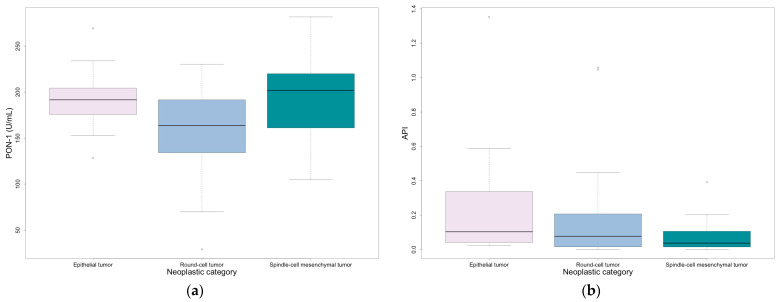 Figure 1
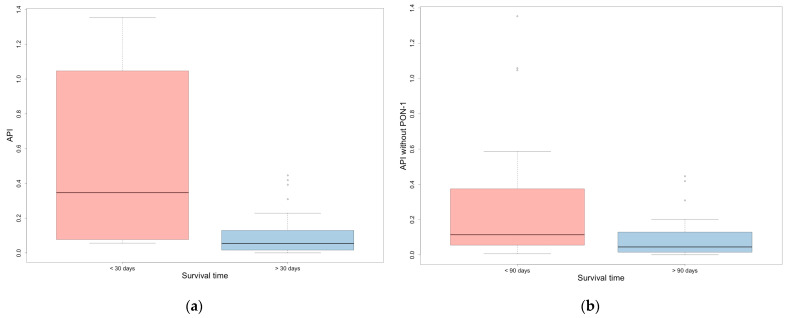 Figure 2
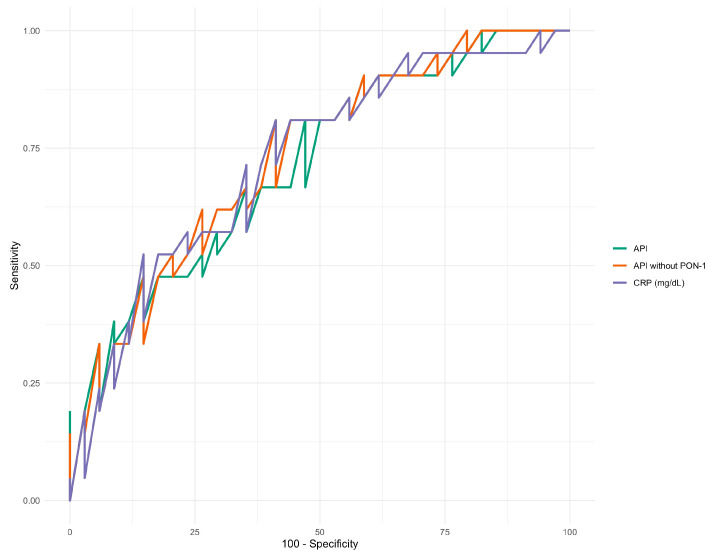 Figure 3
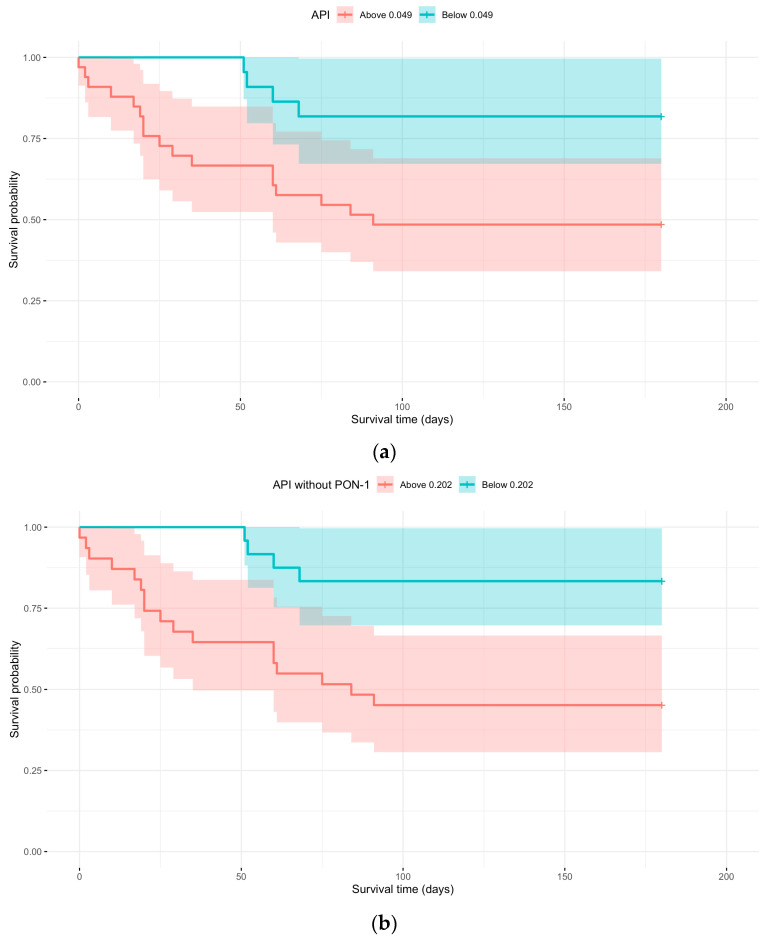 Figure 4
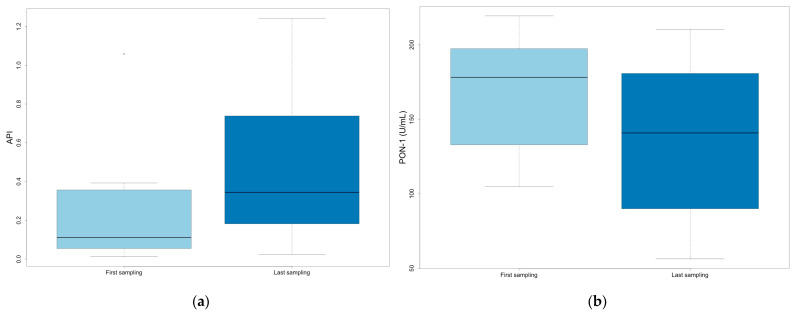 Figure 5
Peer Reviews
No public reviews on file for this paper yet. If you reviewed it on a platform where reviews are public (OpenReview, ICLR, NeurIPS, ICML), you can paste yours below so the community can read it here.
Videos
No videos yet. Explain this paper in a talk, walkthrough, or lecture? Add one.
Taxonomy
TopicsAnimal health and immunology · Liver Disease Diagnosis and Treatment · Body Composition Measurement Techniques