Enhanced HIV-1 Neutralizing Antibody Breadth in HTLV-2 Co-Infected Individuals: Influence of Antiretroviral Regimen and B Cell Subset Distribution
Eloisa Yuste, María J. Ruiz-De-León, José L. Casado, Ana Moreno, María J. Vivancos, María J. Pérez-Elías, Fernando Dronda, Carmen Quereda, Víctor Sánchez-Merino, Alejandro Vallejo

TL;DR
HTLV-2 co-infection boosts HIV-1 neutralizing antibodies in people on ART, especially when not using boosted protease inhibitors.
Contribution
Shows HTLV-2 co-infection enhances HIV-1 neutralizing antibody breadth and links it to B cell subset changes and ART regimen.
Findings
HTLV-2 co-infection and lack of r-PIs are independently linked to higher neutralization scores.
HTLV-2 co-infected individuals show broader neutralization breadth compared to HIV-1 mono-infected individuals.
HTLV-2 co-infection is associated with more resting memory B cells and fewer activated memory B cells.
Abstract
Background/Objectives: This study aimed to explore how HTLV-2 infection affects the production of broadly neutralizing antibodies (bNAbs) in persons with HIV-1 (PWH) and to assess the impact of boosted protease inhibitors (PIs). Methods: We evaluated broadly neutralizing antibody (bNAb) activity in 65 PWH, which included 27 who were also co-infected with HTLV-2. All participants were former injection drug users with HCV antibodies and were receiving suppressive antiretroviral therapy (ART). Neutralizing activity was assessed against six recombinant HIV-1 viruses that represent five different subtypes. B cell subsets were also analyzed. Results: HTLV-2 co-infection and the lack of ritonavir-boosted protease inhibitors (r-PIs) were both independently associated with higher neutralization scores (p = 0.017 and p = 0.005, respectively). Among those not on r-PIs, individuals co-infected with…
Genes, proteins, chemicals, diseases, species, mutations and cell lines named across the full text — each resolved to its canonical identifier and authoritative record.
Click any figure to enlarge with its caption.
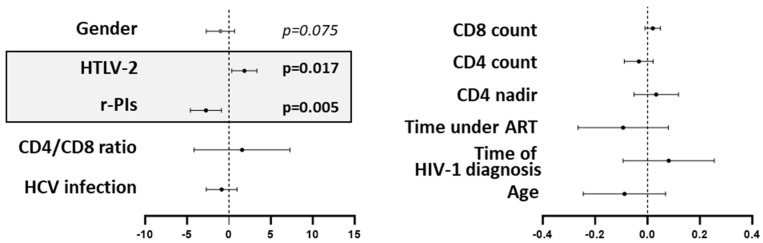 Figure 1
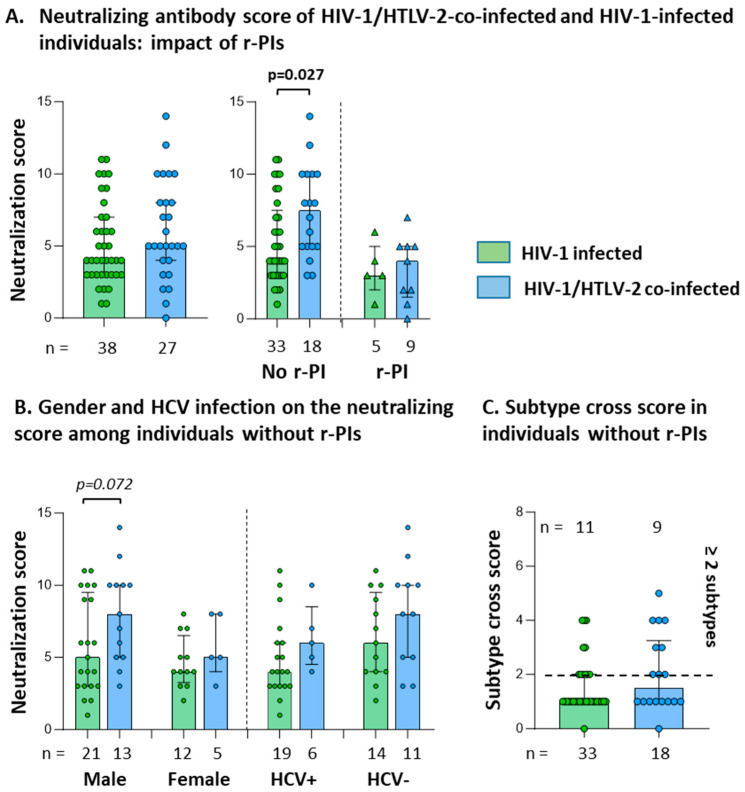 Figure 2
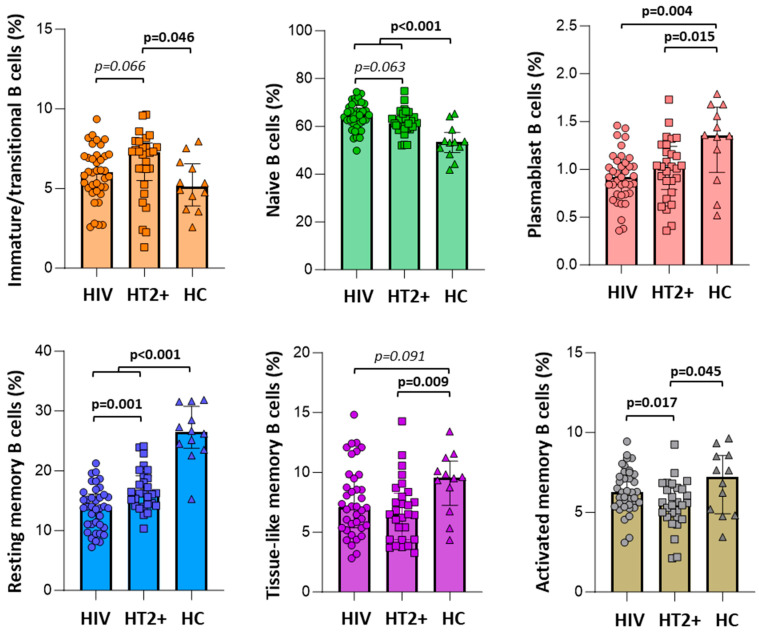 Figure 3
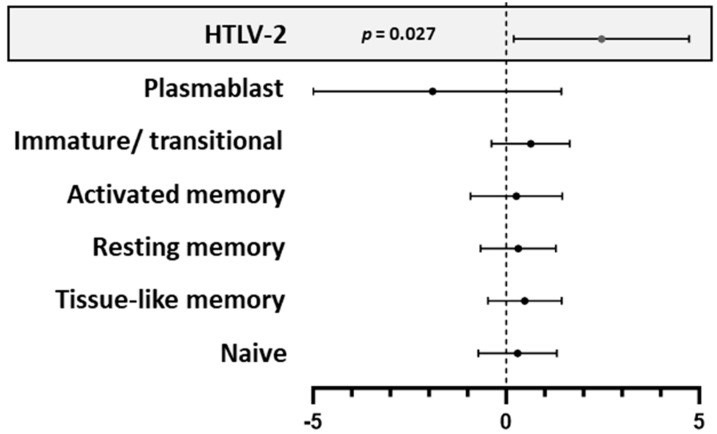 Figure 4
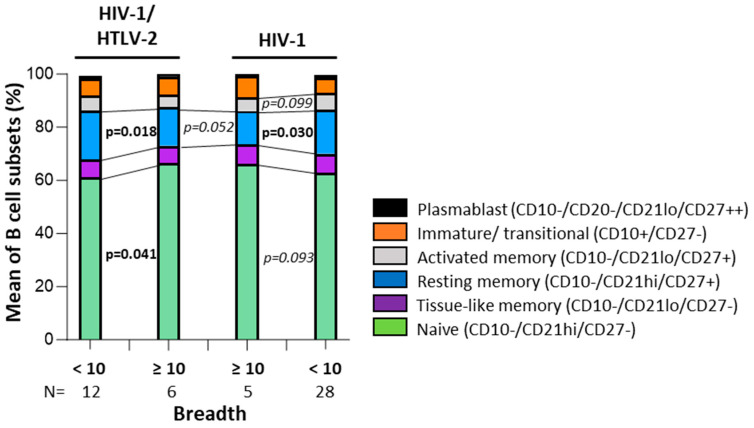 Figure 5
Peer Reviews
No public reviews on file for this paper yet. If you reviewed it on a platform where reviews are public (OpenReview, ICLR, NeurIPS, ICML), you can paste yours below so the community can read it here.
Videos
No videos yet. Explain this paper in a talk, walkthrough, or lecture? Add one.
Taxonomy
TopicsT-cell and Retrovirus Studies · Animal Disease Management and Epidemiology · Immune Cell Function and Interaction