Facilitating Cross-border Viral Sequencing Through Nucleic Acid Sample Transport Using Dry Cards
Lili Wang, Qikai Yin, Alie Brima Tia, Fengyu Tian, Liping Gao, Kai Nie, Kang Xiao, Xuejun Ma, Xiaoping Dong, Doris Harding, Xiaozhou He, George F. Gao

TL;DR
This study shows that using FTA cards to transport viral DNA samples allows for effective sequencing in areas with limited resources, improving disease monitoring.
Contribution
The study introduces a practical method for transporting amplified nucleic acids using FTA cards in resource-limited settings.
Findings
FTA cards achieved a 9.6% recovery rate for amplicons, sufficient for viral genome sequencing.
71.7% of transported samples yielded high-quality SARS-CoV-2 genomic sequences with coverage exceeding 100X.
Higher Ct values in original samples significantly reduced sequencing coverage and depth.
Abstract
(1) Background: A safe and effective nucleic acid sample transportation method was developed that is suitable for underdeveloped areas which lack advanced sequencing capabilities, specifically for virus genomic sequencing and infectious disease monitoring. (2) Methods: This study evaluated the use of Flinders Technology Associates (FTA) cards for transporting amplified whole-genome DNA from 120 SARS-CoV-2-positive nasopharyngeal swab samples in Sierra Leone. Nucleic acid extraction and whole-genome amplification were conducted at a local laboratory. Amplified products were applied to FTA Elute cards for room temperature shipment to China CDC for elution and sequencing. (3) Results: The FTA card method achieved a 9.6% recovery rate for amplicons, sufficient for viral genome sequencing. In total, 86 (71.7%) high-quality SRAS-CoV-2 genomic sequences were obtained, with the majority…
Genes, proteins, chemicals, diseases, species, mutations and cell lines named across the full text — each resolved to its canonical identifier and authoritative record.
Click any figure to enlarge with its caption.
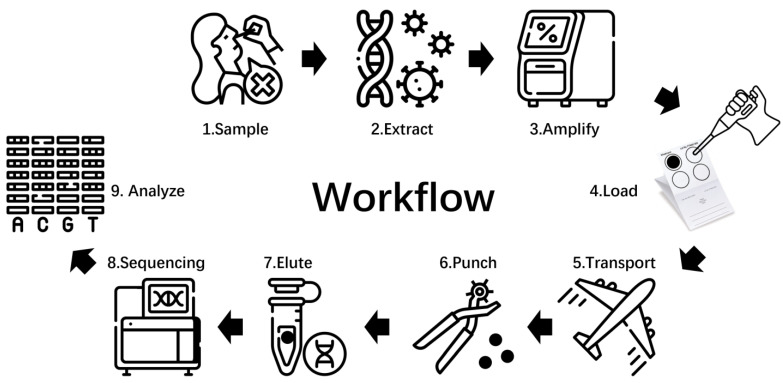 Figure 1
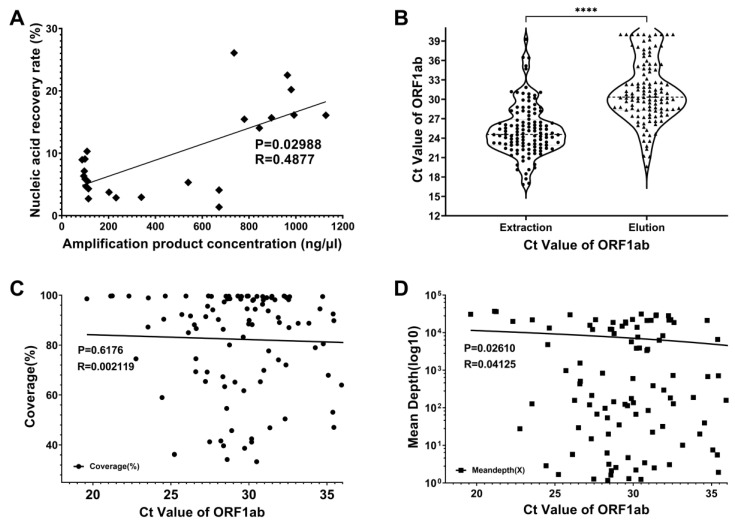 Figure 2
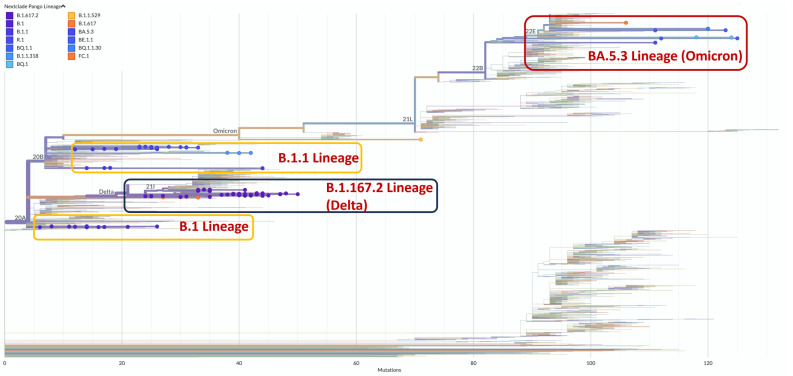 Figure 3
Peer Reviews
No public reviews on file for this paper yet. If you reviewed it on a platform where reviews are public (OpenReview, ICLR, NeurIPS, ICML), you can paste yours below so the community can read it here.
Videos
No videos yet. Explain this paper in a talk, walkthrough, or lecture? Add one.
Taxonomy
TopicsSARS-CoV-2 detection and testing · Bacteriophages and microbial interactions · Molecular Biology Techniques and Applications