Proliferation in Minimal Invasive Samples of Canine Lymphomas: Ki67 Index in Previously Stained Cytology and Paired Cell Blocks
Filipe Sampaio, Carla Marrinhas, Luísa Fonte-Oliveira, Ricardo Marcos, Pedro N. Oliveira, Marta Santos

TL;DR
This study shows that measuring Ki67 in cell blocks provides more reliable prognosis for canine lymphoma compared to cytology smears.
Contribution
The study demonstrates that Ki67 quantification in cell blocks can predict survival outcomes in canine lymphoma.
Findings
Cell blocks provided more reliable Ki67 quantification than cytology smears.
High Ki67 levels in cell blocks correlated with better survival in dogs treated with chemotherapy.
Archival time affected antigenicity in cytology smears, especially in older samples.
Abstract
Canine lymphoma is a common and serious cancer in dogs and predicting how it will progress is important for choosing the best treatment. This study focused on a protein called Ki67, which indicates how quickly cancer cells are proliferating. Herein, Ki67 was quantified in two lymphoma samples: cytology smears and samples resulting from a processing of the lymphoma cells into a tissue-like form—called cell blocks. They found that cell blocks provided more reliable results. Although both methods showed similar levels of Ki67, only the Ki67 quantification in tissue-like samples predicted survival outcomes. Dogs with high Ki67 levels in cell blocks if treated with chemotherapy tended to have a survival advantage. This suggests that testing for Ki67 in cell blocks could help veterinarians to make better treatment decisions, potentially improving the chances of survival of dogs with lymphoma.…
Genes, proteins, chemicals, diseases, species, mutations and cell lines named across the full text — each resolved to its canonical identifier and authoritative record.
Click any figure to enlarge with its caption.
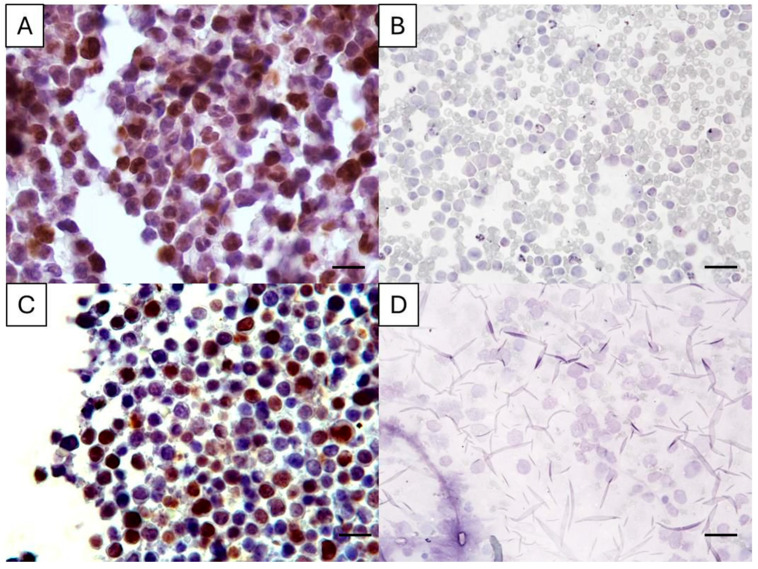 Figure 1
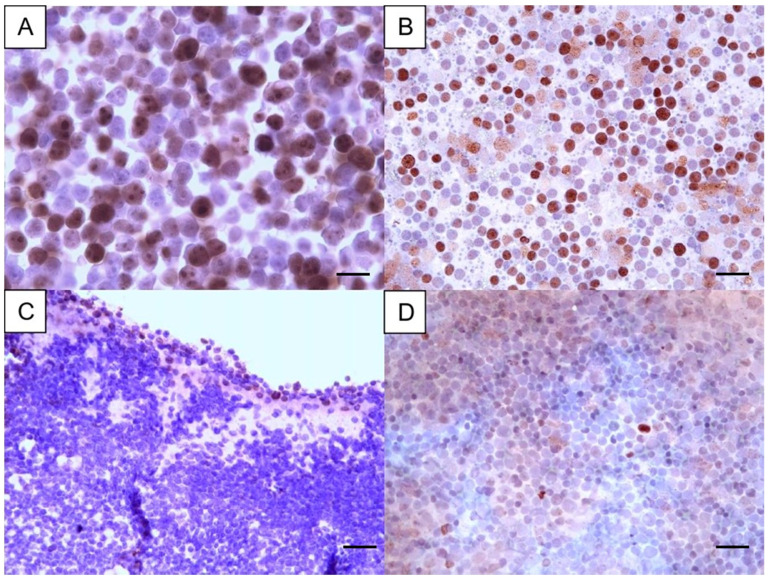 Figure 2
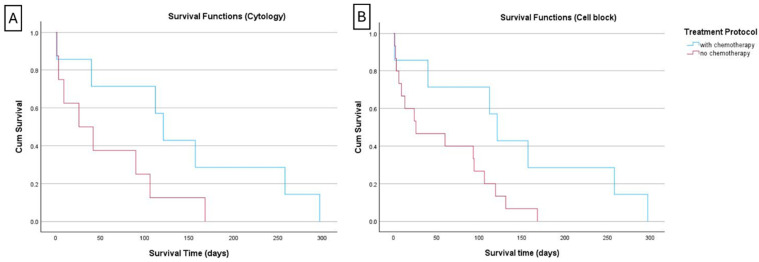 Figure 3
Peer Reviews
No public reviews on file for this paper yet. If you reviewed it on a platform where reviews are public (OpenReview, ICLR, NeurIPS, ICML), you can paste yours below so the community can read it here.
Videos
No videos yet. Explain this paper in a talk, walkthrough, or lecture? Add one.
Taxonomy
TopicsVeterinary Oncology Research · Infectious Diseases and Mycology · Microbial infections and disease research