Safety and Immunogenicity of a Canine Distemper DNA Vaccine Formulated with Lipid Nanoparticles in Dogs, Foxes, and Raccoon Dogs
Hong Huo, Han Wang, Shulin Liang, Zilong Wang, Jinming Wang, Qingzhu Wang, Chan Li, Yuting Tao, Jinying Ge, Zhiyuan Wen, Jinliang Wang, Weiye Chen, Xijun Wang, Lei Shuai, Zhigao Bu

TL;DR
This study tests a new DNA vaccine for canine distemper in dogs, foxes, and raccoon dogs, showing it is safe and effective at triggering strong immune responses.
Contribution
A novel canine distemper DNA vaccine using lipid nanoparticles is shown to be safe and immunogenic across multiple species.
Findings
The p17F-LNP and p17H-LNP vaccines were safe and induced strong neutralizing antibody responses in mice.
Lipid nanoparticle encapsulation enhanced immune responses compared to naked DNA.
The bivalent p17F/H-LNP vaccine provided long-lasting immunity in dogs and effective prime-boost responses in foxes and raccoon dogs.
Abstract
Background: canine distemper (CD) is a highly contagious and fatal disease caused by canine distemper virus (CDV), posing a significant threat to carnivores. New CDV strain circulation and multi-species infection may lead to the potential dilemma of safety concern and insufficient efficacy of the commercial modified live vaccines. Safe and effective vaccines for canine and wildlife prevention of CD need to be continuously updated and developed. Methods: we developed two DNA vaccines, p17F-LNP and p17H-LNP, encoding the fusion protein (F) or hemagglutinin protein (H) of a field CDV strain (HLJ17) and encapsulated in lipid nanoparticles (LNPs). Serum neutralizing antibody (NAb) was evaluated via neutralization tests, and mouse serum cytokine detection were evaluated via ELISA. Results: immunization of p17F-LNP and p17H-LNP monovalent or bivalent were safe, and induced robust CDV NAb and…
Genes, proteins, chemicals, diseases, species, mutations and cell lines named across the full text — each resolved to its canonical identifier and authoritative record.
Click any figure to enlarge with its caption.
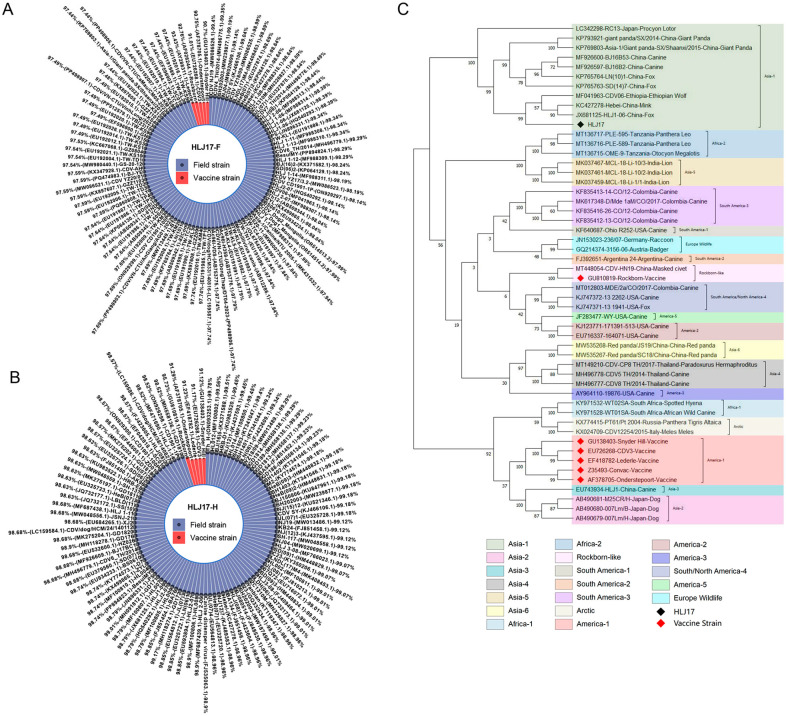 Figure 1
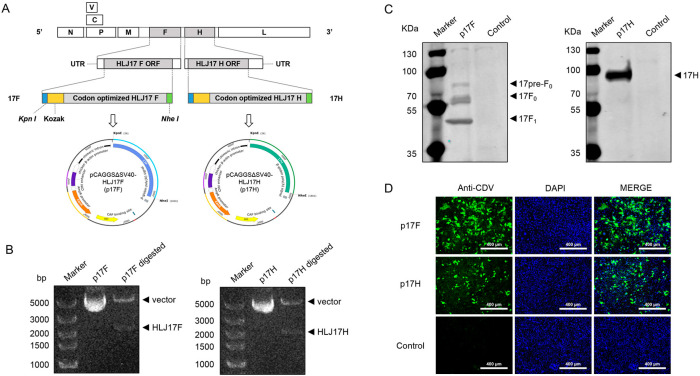 Figure 2
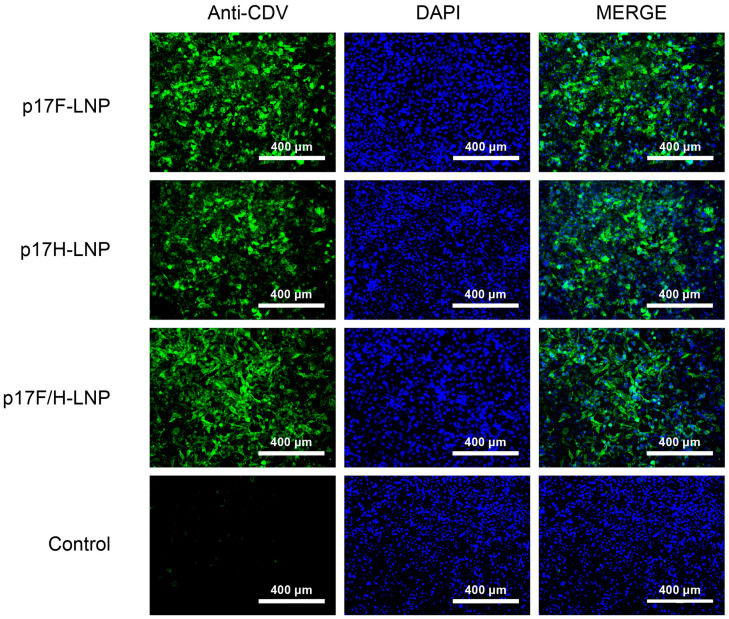 Figure 3
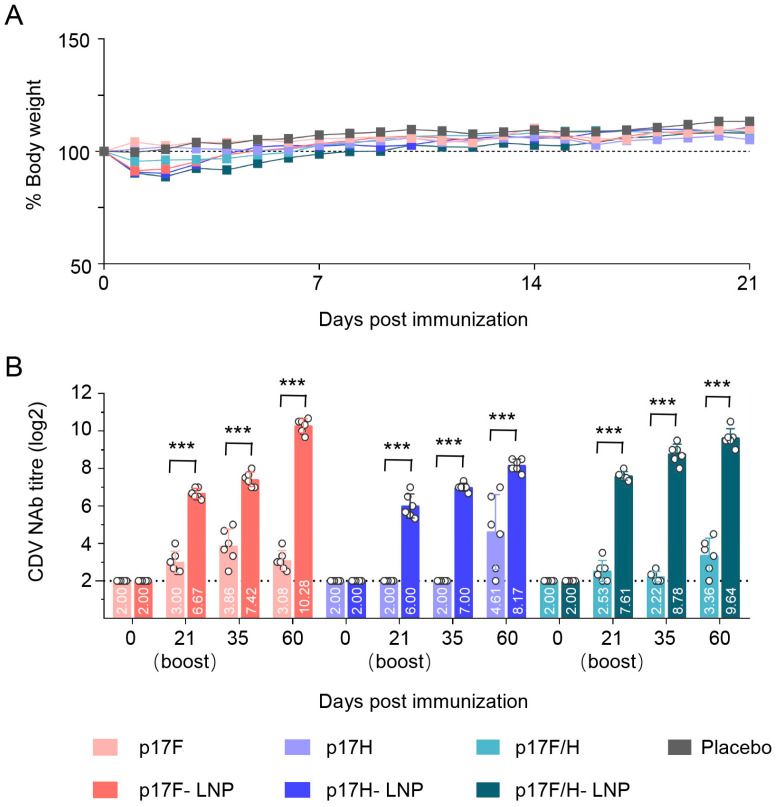 Figure 4
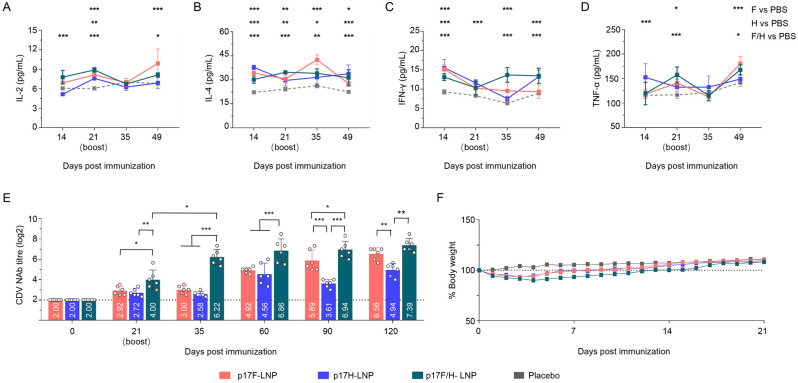 Figure 5
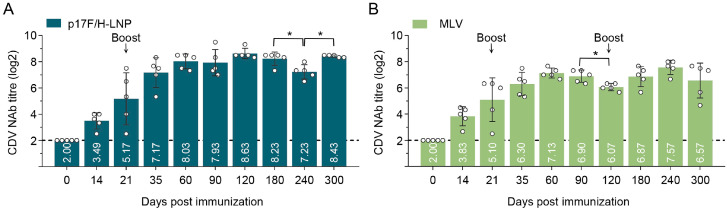 Figure 6
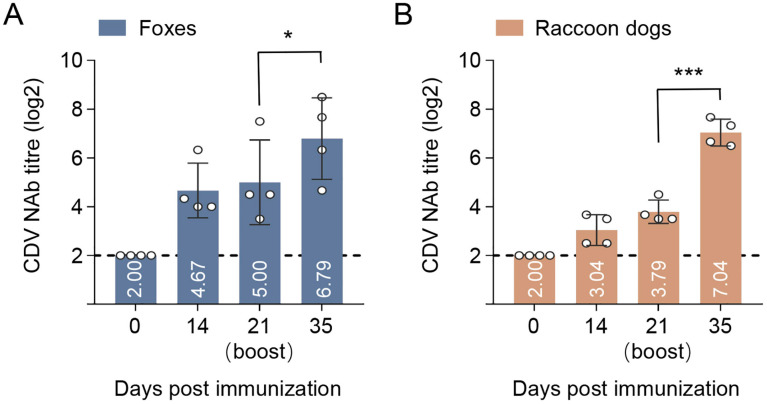 Figure 7
Peer Reviews
No public reviews on file for this paper yet. If you reviewed it on a platform where reviews are public (OpenReview, ICLR, NeurIPS, ICML), you can paste yours below so the community can read it here.
Videos
No videos yet. Explain this paper in a talk, walkthrough, or lecture? Add one.
Taxonomy
TopicsVirology and Viral Diseases · Virus-based gene therapy research · Animal Virus Infections Studies