Genomic Differences Between Nervous Necrosis Virus (NNV) Reassortants Isolated From Wild and Farmed Fish: Implications for Viral Fitness, Temperature Adaptation and Virulence
Lucía Vázquez-Salgado, José G. Olveira, María Jurado-Rodeyro, Carlos P. Dopazo, Isabel Bandín

TL;DR
This study examines how reassortant NNV strains from wild fish differ genetically and adapt to temperature, affecting their replication and potential to cause disease in farmed fish.
Contribution
The study identifies specific amino acid substitutions and non-coding region differences that enable NNV reassortants to adapt to low temperatures and affect host specificity.
Findings
The mackerel isolate showed improved replication at 15°C but delayed replication at higher temperatures.
Substitutions in the viral polymerase, especially at Arg237, may contribute to low-temperature adaptation.
The mackerel isolate replicated exponentially in turbot at 15°C but caused no mortality, suggesting host-specific interactions.
Abstract
Nervous necrosis virus (NNV), one of the most widespread fish pathogens, is classified into four genotypes: Barfin flounder-, Redspotted grouper-, Striped Jack- and Tiger puffer NNV (BFNNV, RGNNV, SJNNV and TPNNV, respectively), which show different thermotolerance and geographical distribution. Reassortant RGNNV/SJNNV strains are detected in Southern Europe, associated to disease outbreaks in Senegalese sole and gilthead seabream larvae or early juveniles, with water temperatures around 22–23°C. These strains contain amino acid changes in the capsid and polymerase protein when compared with the reference strains of each genotype. We have assessed the effect of temperature on the replicative fitness of four reassortants obtained from wild pilchard and mackerel and their pathogenic potential against sole and turbot. In vitro replication assays showed an improved replication of the…
Genes, proteins, chemicals, diseases, species, mutations and cell lines named across the full text — each resolved to its canonical identifier and authoritative record.
Click any figure to enlarge with its caption.
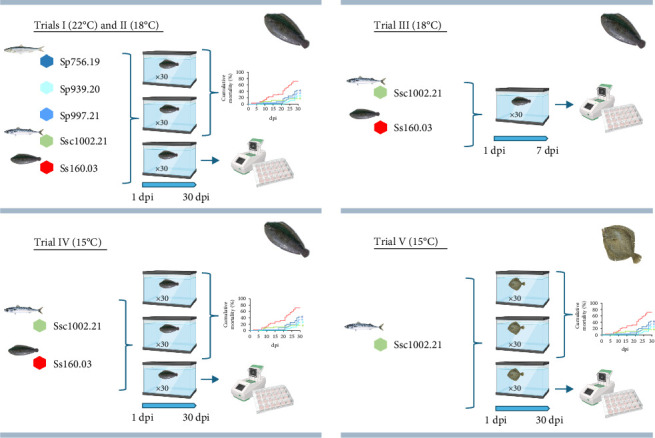 Figure 1
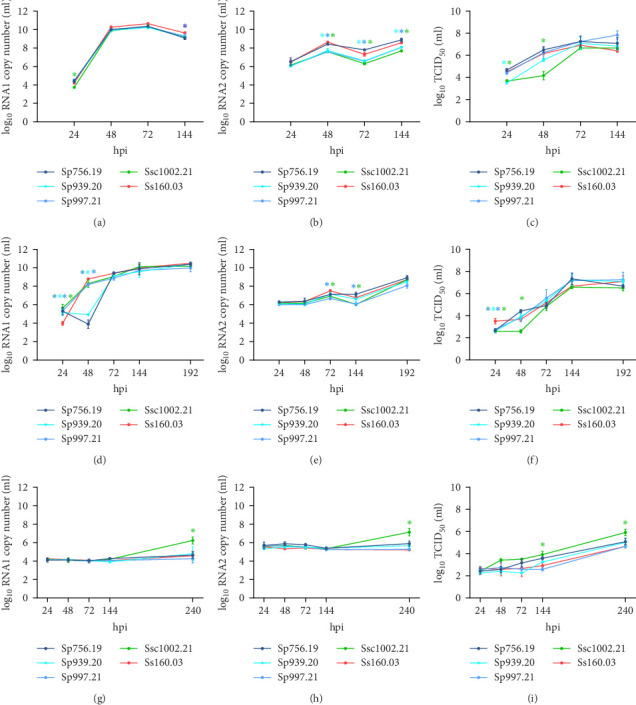 Figure 2
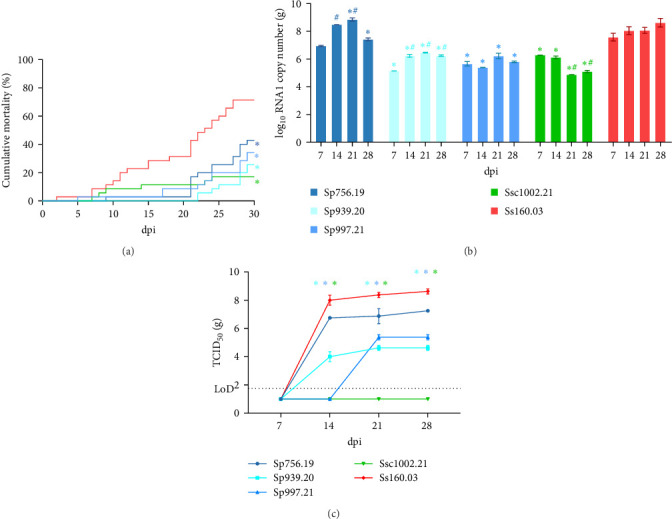 Figure 3
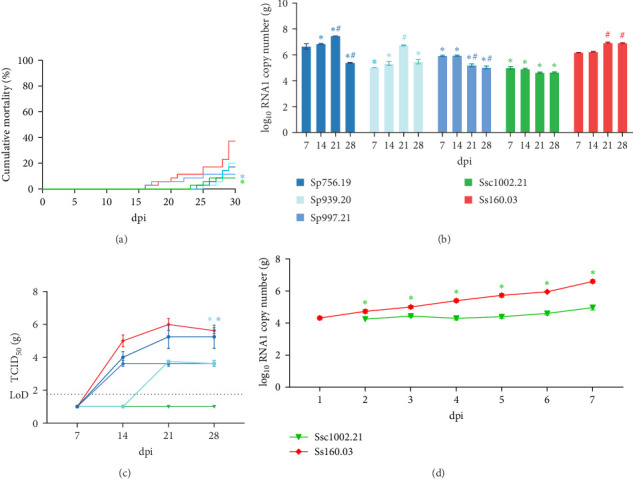 Figure 4
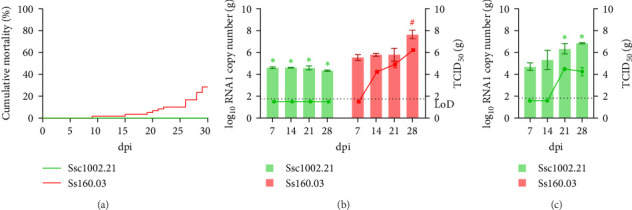 Figure 5
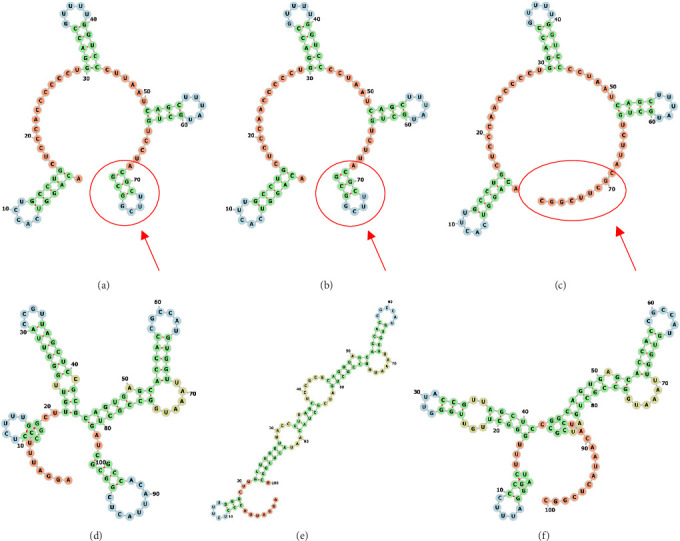 Figure 6
Peer Reviews
No public reviews on file for this paper yet. If you reviewed it on a platform where reviews are public (OpenReview, ICLR, NeurIPS, ICML), you can paste yours below so the community can read it here.
Videos
No videos yet. Explain this paper in a talk, walkthrough, or lecture? Add one.
Taxonomy
TopicsAquaculture disease management and microbiota · Animal Virus Infections Studies