Development of a Pericapsular Knee Desensitization Technique in Dogs: An Anatomical Cadaveric Study
Marta Garbin, Raiane A. Moura, Yasmim C. Souza, Mariana Cavalcanti, Adam W. Stern, Marta Romano, Enzo Vettorato, Pablo E. Otero, Diego A. Portela

TL;DR
This study introduces a new technique for managing knee pain in dogs by targeting specific nerves without causing motor impairment, with ultrasound guidance showing better results.
Contribution
The novel pericapsular knee desensitization (PKD) technique is introduced as a motor-sparing method for canine knee pain management.
Findings
The ultrasound-guided PKD technique achieved a significantly higher success rate (96.7%) compared to the blind technique (73.3%).
The medial articular nerve (MAN) was stained successfully in 100% of ultrasound-guided injections but only 50% of blind injections.
Histological confirmation validated the anatomical findings, though posterior articular nerve (PAN) identification remained inconsistent.
Abstract
Chronic pain from stifle joint diseases, such as osteoarthritis, is a common condition in dogs that often requires complex medical and surgical management. Conventional analgesic methods may be inadequate for controlling pain or may be associated with undesirable side effects, which may lead to diminished quality of life. Peripheral nerve blocks (i.e., femoral and sciatic nerve blocks) can be employed to relieve joint pain but are associated with unwanted motor impairment. This cadaveric study introduced the pericapsular knee desensitization (PKD) technique as a motor-sparing approach to selectively target the sensory articular branches innervating the canine knee joint. Two techniques—ultrasound-guided and blind injections—were developed and compared to evaluate the success rate of staining the articular nerves using a dye solution. The results showed that the ultrasound-guided…
Genes, proteins, chemicals, diseases, species, mutations and cell lines named across the full text — each resolved to its canonical identifier and authoritative record.
Click any figure to enlarge with its caption.
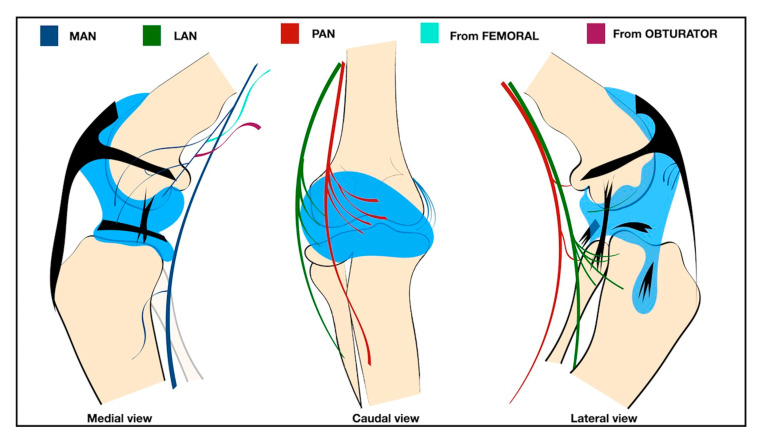 Figure 1
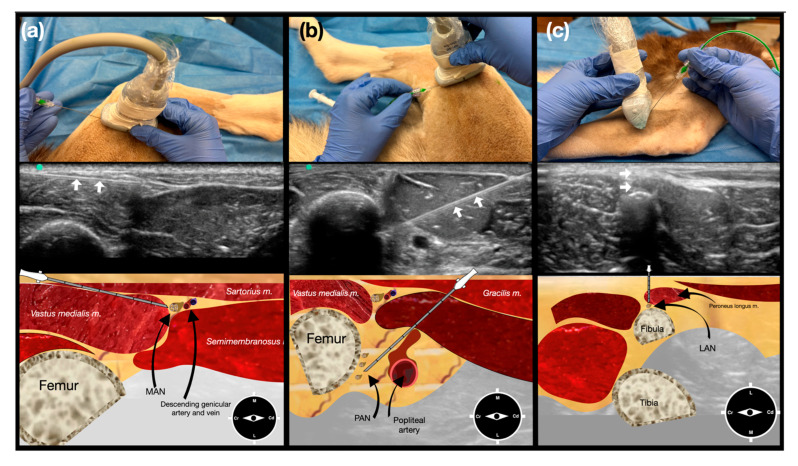 Figure 2
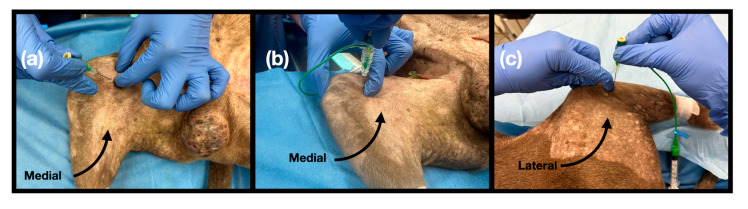 Figure 3
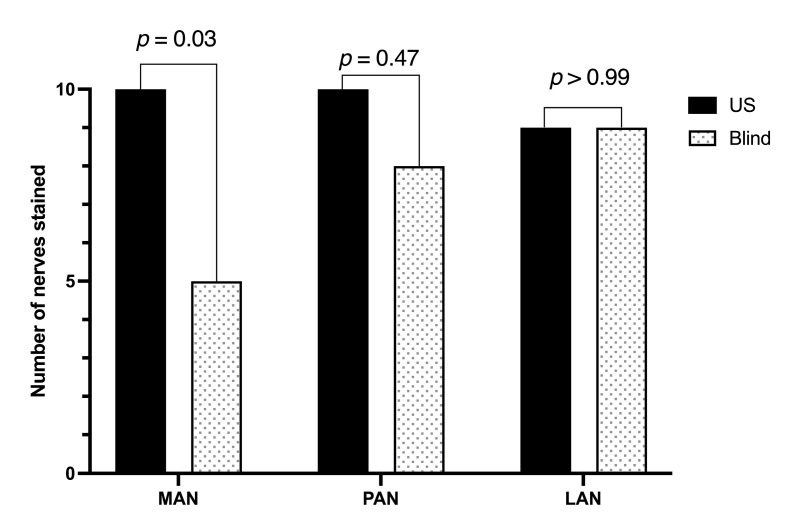 Figure 4
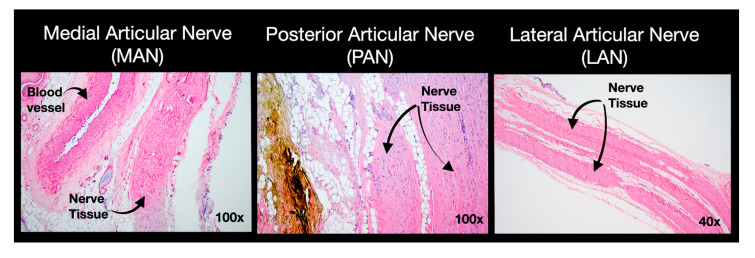 Figure 5
Peer Reviews
No public reviews on file for this paper yet. If you reviewed it on a platform where reviews are public (OpenReview, ICLR, NeurIPS, ICML), you can paste yours below so the community can read it here.
Videos
No videos yet. Explain this paper in a talk, walkthrough, or lecture? Add one.
Taxonomy
TopicsOrthopedic Surgery and Rehabilitation · Veterinary Orthopedics and Neurology · Elbow and Forearm Trauma Treatment