Proteomics Analysis of Peripheral Blood Mononuclear Cells from Patients in Early Dengue Infection Reveals Potential Markers of Subsequent Fluid Leakage
Nilanka Perera, Abhinav Kumar, Bevin Gangadharan, Diyanath Ranasinghe, Ananda Wijewickrama, Gathsaurie Neelika Malavige, Joanna L. Miller, Nicole Zitzmann

TL;DR
This study identifies proteins in blood cells that could help predict which dengue patients are at risk of severe complications early in the infection.
Contribution
The study identifies 90 proteins in PBMCs that are differentially regulated in patients who develop dengue haemorrhagic fever.
Findings
160 proteins were differentially expressed in DENV-infected samples compared to healthy controls.
90 proteins were differentially expressed in DHF patients compared to DF patients, linked to platelet and cytoskeleton pathways.
Proteins related to oxidative stress and p38 MAPK signaling were upregulated in DHF during early infection.
Abstract
Infections caused by dengue virus (DENV) result in significant morbidity and mortality. A proportion of infected individuals develop dengue haemorrhagic fever (DHF) characterized by circulatory collapse and multiorgan failure. Early detection of individuals likely to develop DHF could lead to improved outcomes for patients and help us use healthcare resources more efficiently. We identified proteins that are differentially regulated during early disease in peripheral blood mononuclear cells (PBMCs) of patients who subsequently developed DHF. Four dengue fever (DF), four DHF and two healthy control PBMCs were subjected to tandem mass tag mass spectrometry. Differentially regulated proteins were used to identify up- or down-regulated Gene Ontology pathways. One hundred and sixty proteins were differentially expressed in DENV-infected samples compared to healthy controls. PBMCs from DHF…
Genes, proteins, chemicals, diseases, species, mutations and cell lines named across the full text — each resolved to its canonical identifier and authoritative record.
Click any figure to enlarge with its caption.
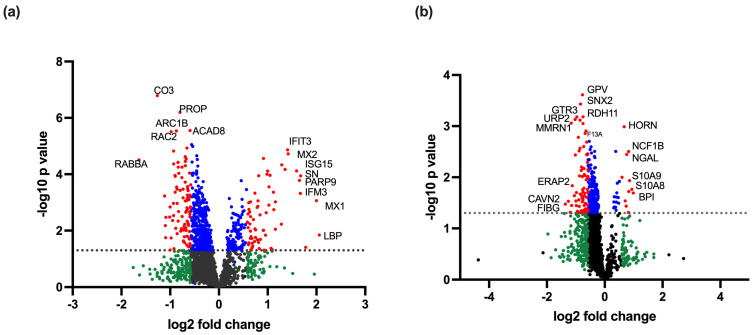 Figure 1
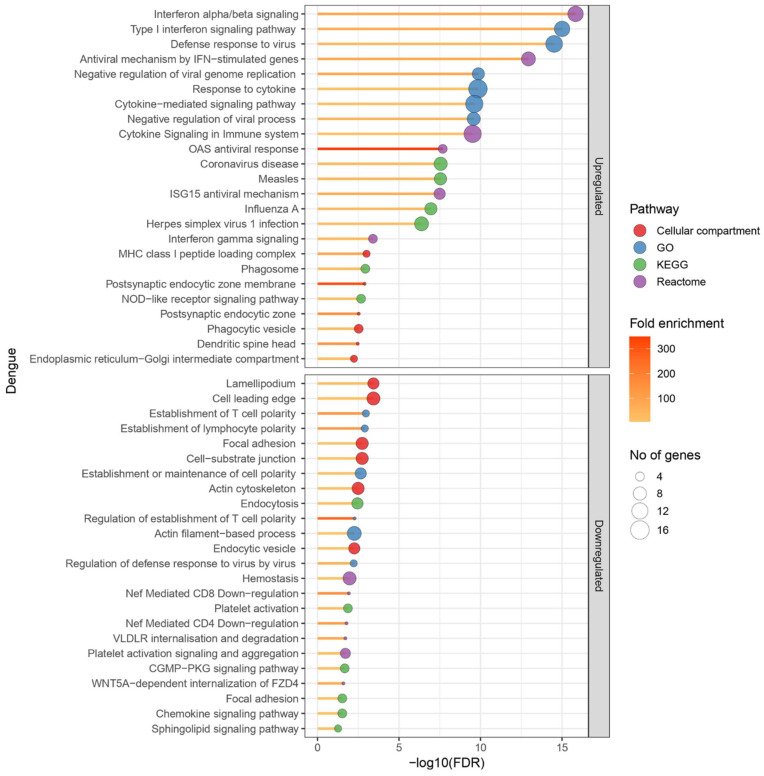 Figure 2
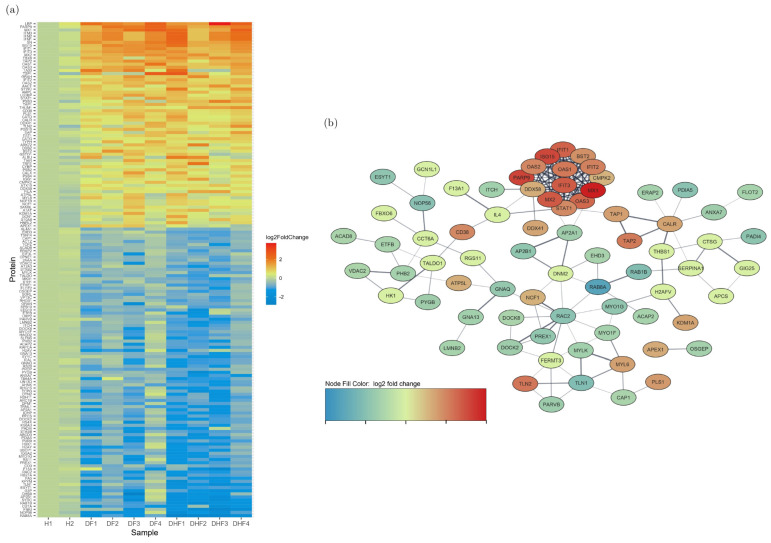 Figure 3
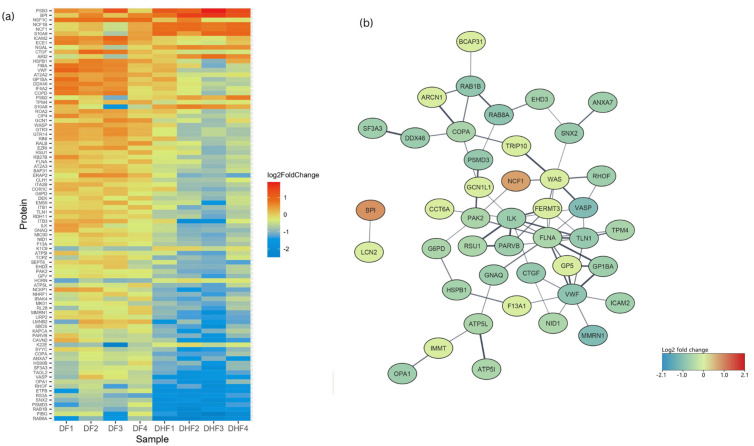 Figure 4
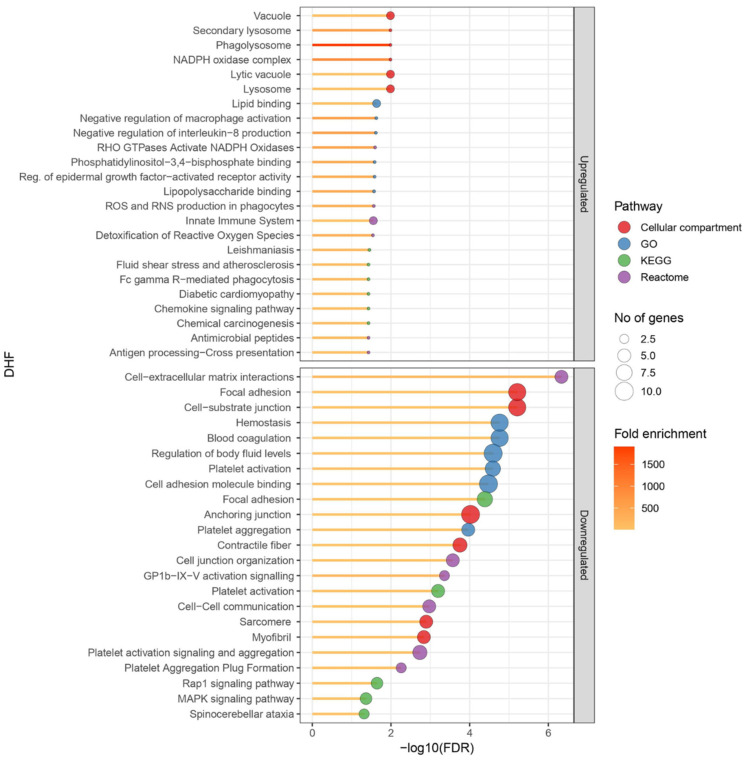 Figure 5
Peer Reviews
No public reviews on file for this paper yet. If you reviewed it on a platform where reviews are public (OpenReview, ICLR, NeurIPS, ICML), you can paste yours below so the community can read it here.
Videos
No videos yet. Explain this paper in a talk, walkthrough, or lecture? Add one.
Taxonomy
TopicsMosquito-borne diseases and control · Viral Infections and Vectors · Malaria Research and Control