Epidemiological Analysis of the COVID-19 Clusters in the Early Stages of the Epidemic in Shanghai, China: Pandemic-to-Epidemic Response Shift
Dechuan Kong, Qiwen Fang, Jian Chen, Linjie Hu, Yihan Lu, Yaxu Zheng, Yiyi Zhu, Bihong Jin, Wenjia Xiao, Shenghua Mao, Chenyan Jiang, Xiaohuan Gong, Sheng Lin, Ruobing Han, Xiao Yu, Qi Qiu, Xiaodong Sun, Hao Pan, Huanyu Wu

TL;DR
This study analyzes early COVID-19 clusters in Shanghai to understand transmission patterns and inform outbreak prevention strategies.
Contribution
The study identifies household transmission as predominant and highlights risk factors like runny nose and diabetes for contagiousness.
Findings
Most clusters had only two cases, with household transmission accounting for 79.1% of clusters.
Workplace clusters were rare but involved larger outbreaks.
Runny nose and diabetes were associated with higher contagiousness.
Abstract
As COVID-19 transitions from pandemic to endemic, our prevention and control policies have shifted from broad, strict community interventions to focusing on the prevention of cluster outbreaks. Currently, information on the characteristics of cluster outbreaks remains limited. This study describes the features of COVID-19 clusters in Shanghai. It aims to provide valuable insights for managing localized outbreaks. We conducted a retrospective analysis of clusters of confirmed COVID-19 cases. Epidemiological descriptions, the transmission characteristics of clusters, and individual risk factors for contagiousness were analyzed. A total of 381 cases of COVID-19 were confirmed and 67 clusters were identified. Most clusters (58.21%, 39/67) only had two cases, with a declining proportion held by clusters of more cases. Familial transmission was predominant, accounting for 79.10% (53/67) of…
Genes, proteins, chemicals, diseases, species, mutations and cell lines named across the full text — each resolved to its canonical identifier and authoritative record.
Click any figure to enlarge with its caption.
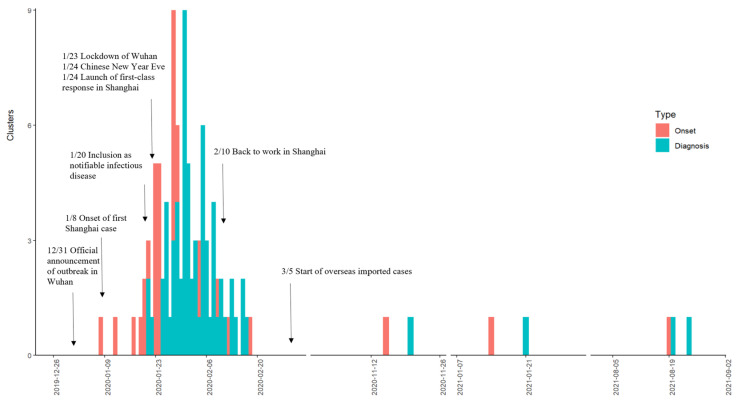 Figure 1
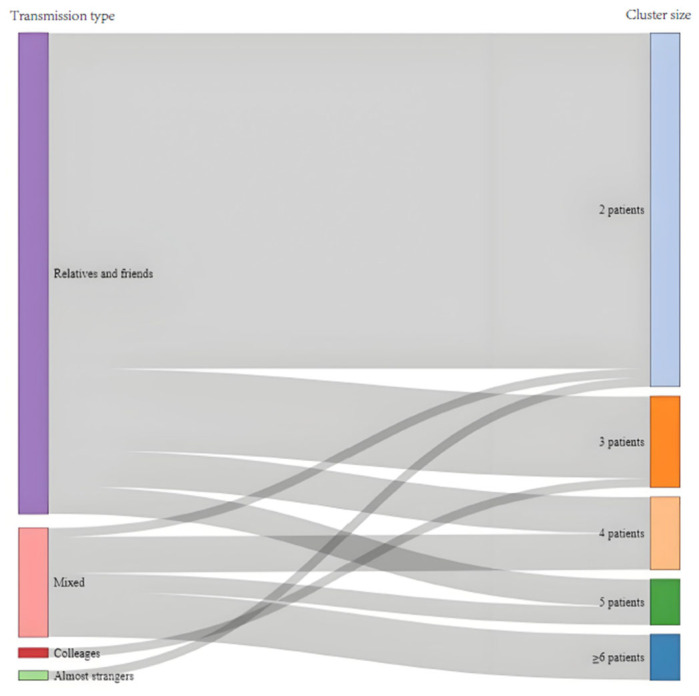 Figure 2
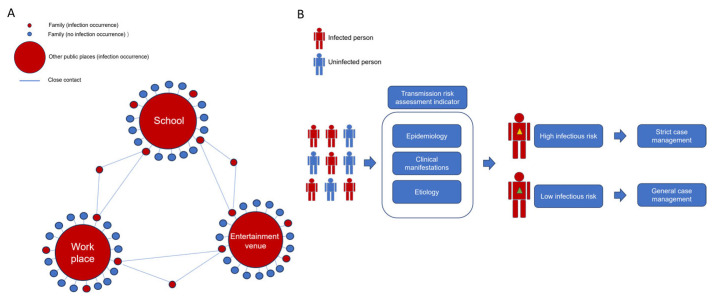 Figure 3
Peer Reviews
No public reviews on file for this paper yet. If you reviewed it on a platform where reviews are public (OpenReview, ICLR, NeurIPS, ICML), you can paste yours below so the community can read it here.
Videos
No videos yet. Explain this paper in a talk, walkthrough, or lecture? Add one.
Taxonomy
TopicsCOVID-19 epidemiological studies · Immune responses and vaccinations · Zoonotic diseases and public health