Widespread Contamination by Anticoagulant Rodenticides in Insectivorous Wildlife from the Canary Islands: Exploring Alternative Routes of Exposure
Beatriz Martín Cruz, Andrea Acosta Dacal, Ana Macías-Montes, Cristian Rial-Berriel, Manuel Zumbado, Luis Alberto Henríquez-Hernández, Ramón Gallo-Barneto, Miguel Ángel Cabrera-Pérez, Octavio P. Luzardo

TL;DR
This study finds that anticoagulant rodenticides are contaminating insectivorous wildlife in the Canary Islands, likely through invertebrates at the base of the food web.
Contribution
The study provides evidence that anticoagulant rodenticides are entering insectivorous wildlife via invertebrates, not just through apex predators.
Findings
Second-generation anticoagulant rodenticides were detected in 80% of reptiles and 40% of birds.
Brodifacoum was the most commonly detected compound, often as the sole contaminant.
Contamination levels were mostly low, suggesting varied exposure sources and scenarios.
Abstract
Research on anticoagulant rodenticides (ARs) in wildlife has primarily focused on apex predators, with less attention given to their potential integration into lower trophic levels and the associated exposure pathways. At the base of the terrestrial food web, invertebrates have been suggested as potential vectors of ARs to insectivorous species such as small mammals, reptiles, and birds. To explore this hypothesis, we analyzed the presence of nine anticoagulant rodenticides—including both first-generation (FGARs) and second-generation (SGARs) rodenticides—in 36 liver samples from Yemen chameleons (Chamaeleo calyptratus) and 98 liver samples from six non-raptorial, predominantly insectivorous bird species from the Canary Islands. Through HPLC-MS/MS analysis, only SGARs were detected in both animal groups collected between 2021 and 2024. Approximately 80% of reptiles and 40% of birds…
Genes, proteins, chemicals, diseases, species, mutations and cell lines named across the full text — each resolved to its canonical identifier and authoritative record.
Click any figure to enlarge with its caption.
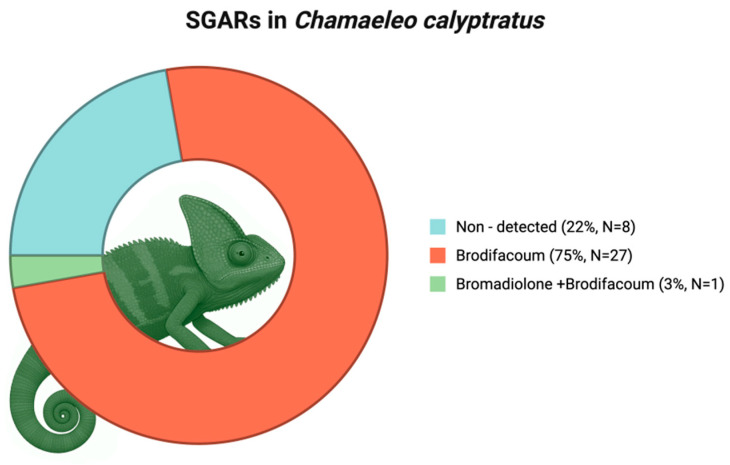 Figure 1
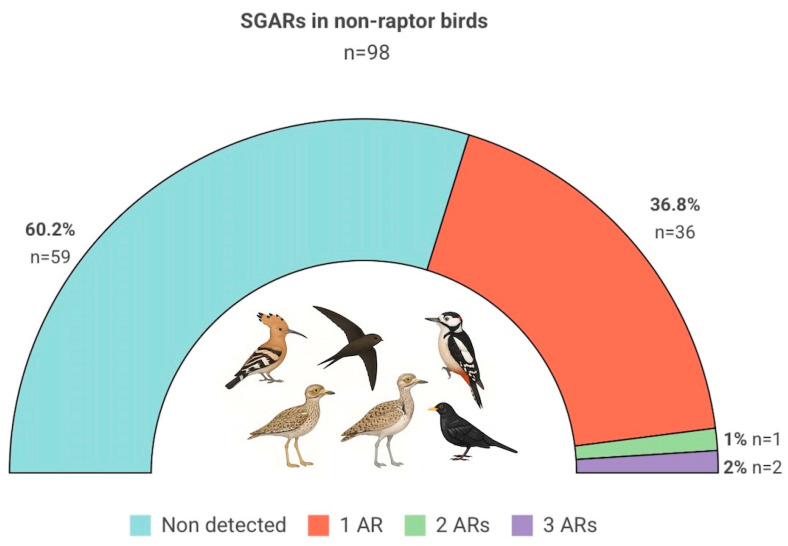 Figure 2
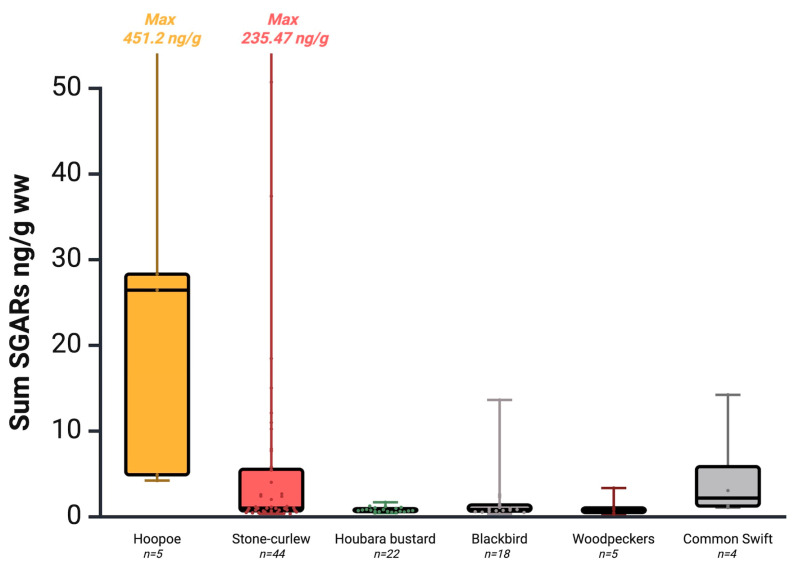 Figure 3
Peer Reviews
No public reviews on file for this paper yet. If you reviewed it on a platform where reviews are public (OpenReview, ICLR, NeurIPS, ICML), you can paste yours below so the community can read it here.
Videos
No videos yet. Explain this paper in a talk, walkthrough, or lecture? Add one.
Taxonomy
TopicsAnimal Ecology and Behavior Studies · Forensic Entomology and Diptera Studies · Insect and Pesticide Research