Etiological Detection, Isolation, and Pathogenicity of Porcine Reproductive and Respiratory Syndrome Virus in China
Yingbin Du, Jingyi Chen, Tianze Ren, Chunying Xie, Yiye Zhang, Liurong Fang, Yanrong Zhou

TL;DR
This study identifies and characterizes the most prevalent PRRSV strains in China, highlighting their genetic diversity and pathogenicity for better disease control.
Contribution
The study isolates and characterizes two novel PRRSV strains, JX03 and HN08, and evaluates their pathogenicity in pigs.
Findings
NADC30/34-like PRRSV is the dominant strain in China, followed by highly pathogenic PRRSV.
JX03 showed the highest pathogenicity, while HN08, a recombinant strain, showed the lowest.
HN08 is a recombinant of NADC30-like and NADC34-like strains, with no recombination in JX03.
Abstract
Porcine reproductive and respiratory syndrome (PRRS) is a global widespread infectious disease that severely impacts the swine industry. The high genetic variability of the PRRS virus (PRRSV) has led to the continuous emergence and spread of novel strains. The surveillance of PRRSV epidemiology and isolation of circulating strains are crucial for developing effective PRRSV control strategies. In this study, we confirmed that NADC30/34-like PRRSV is the dominant epidemic strain in China, followed by highly pathogenic PRRSV (HP-PRRSV). An HP-PRRSV strain (JX03) and a recombinant NADC34-like PRRSV strain (HN08) were isolated, and their whole genome and phylogenetic characterization were analyzed. Animal experiments confirmed that the JX03 strain exhibited the highest pathogenicity, followed by CHN-HB-2018 (a NADC30-like PRRSV strain previously isolated by our lab), while HN08 demonstrated…
Genes, proteins, chemicals, diseases, species, mutations and cell lines named across the full text — each resolved to its canonical identifier and authoritative record.
Click any figure to enlarge with its caption.
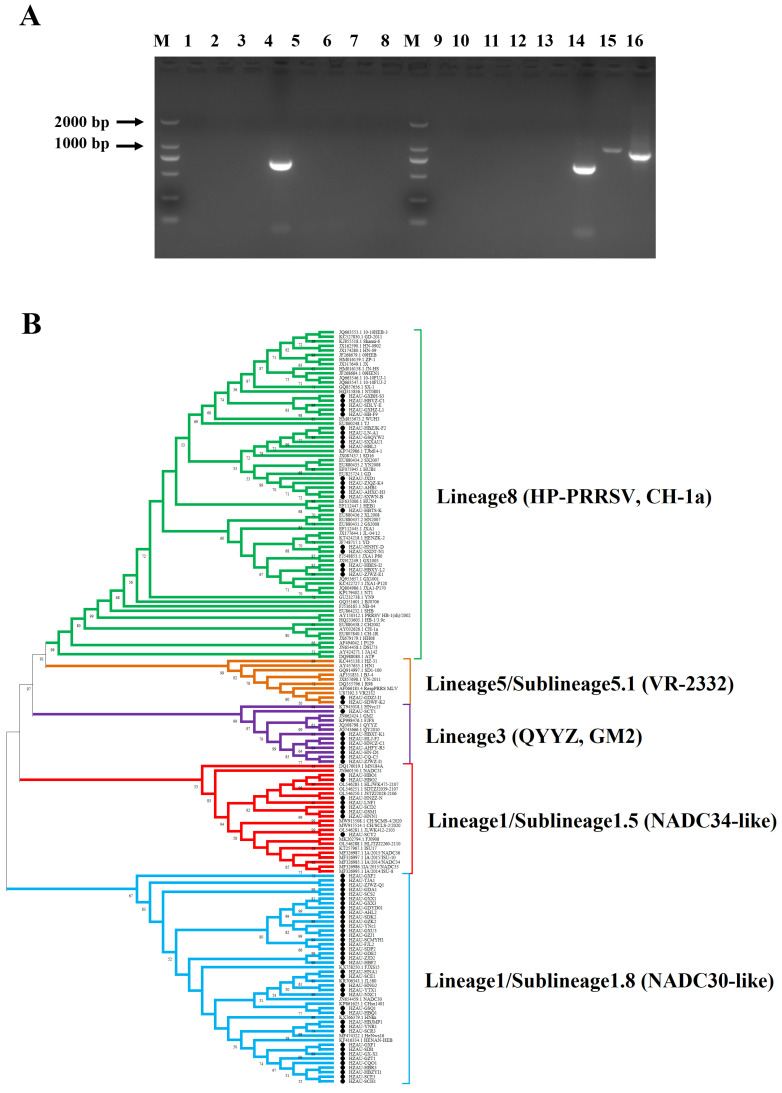 Figure 1
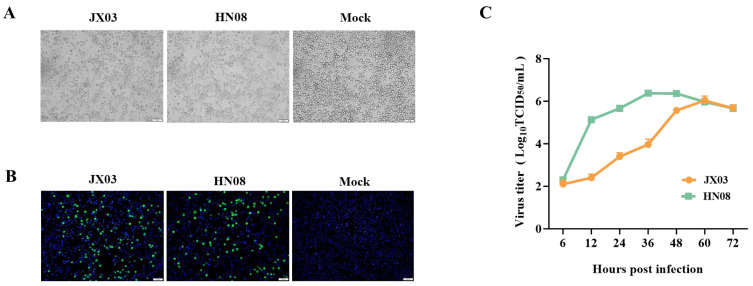 Figure 2
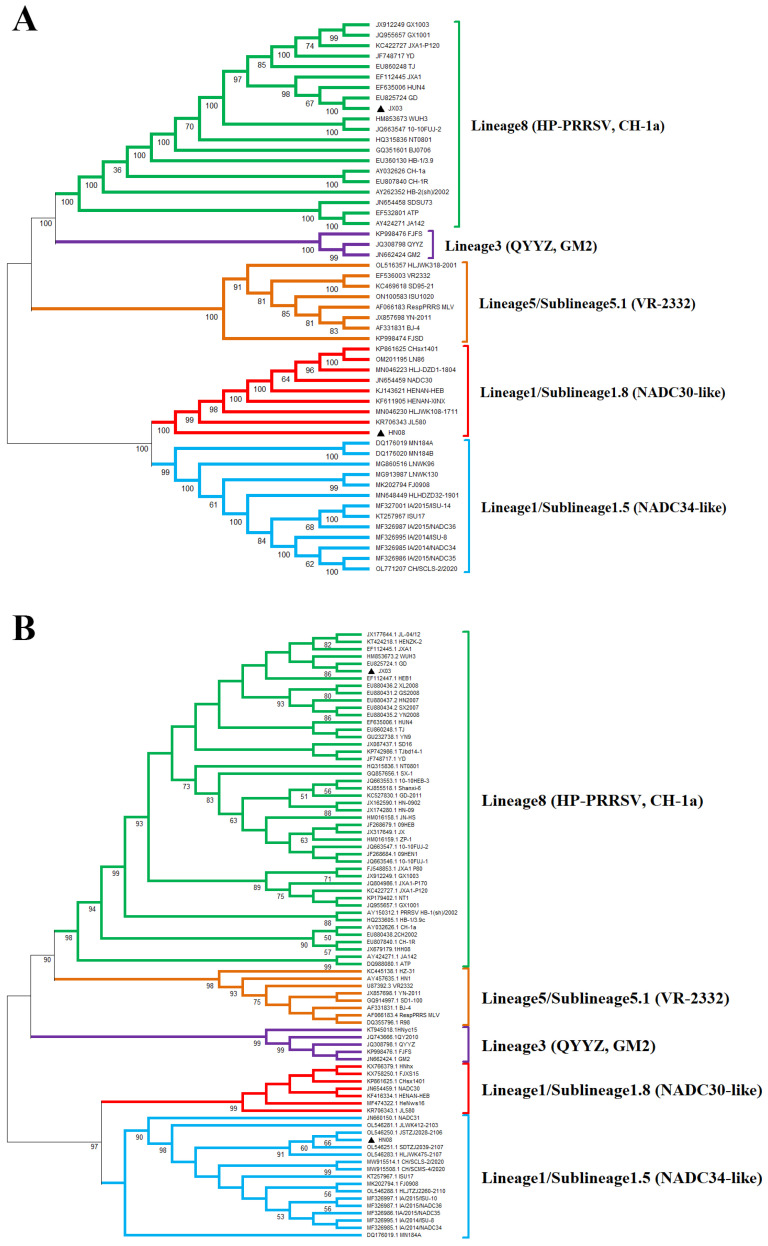 Figure 3
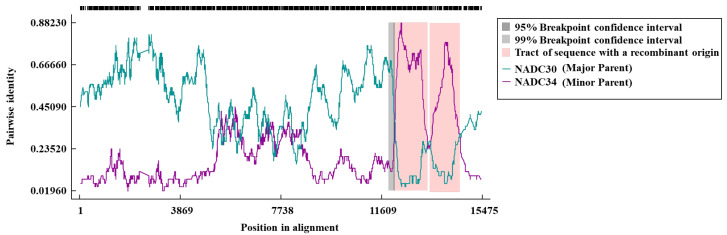 Figure 4
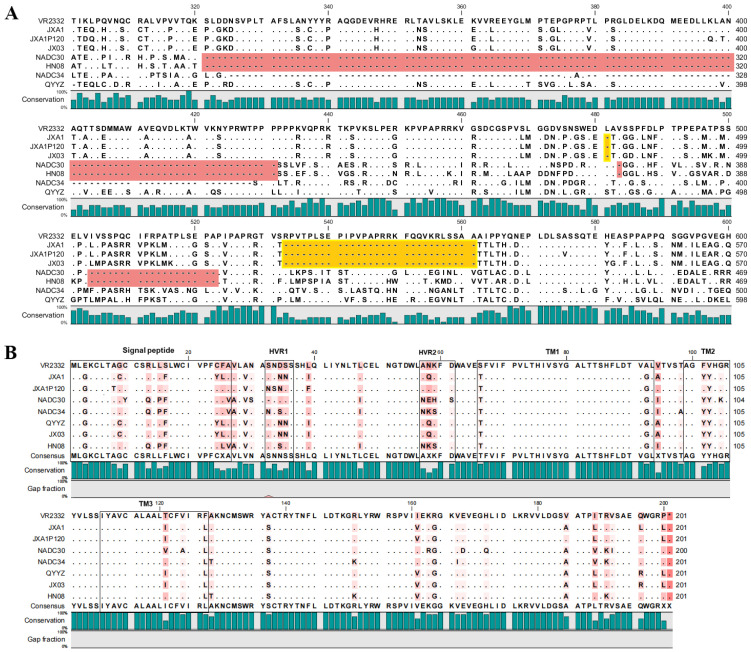 Figure 5
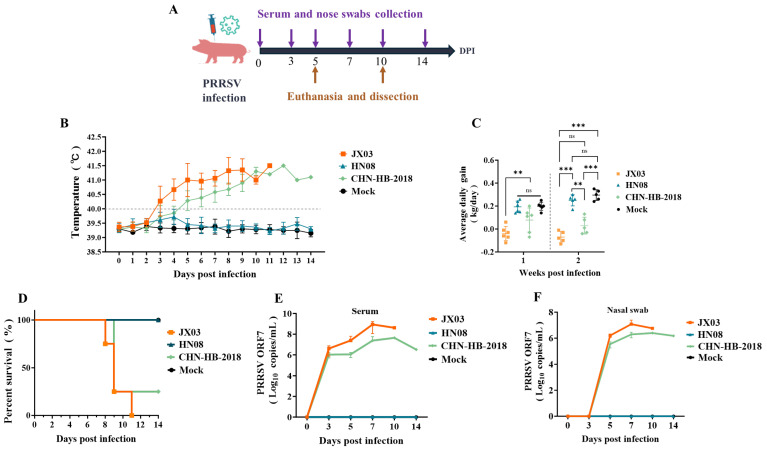 Figure 6
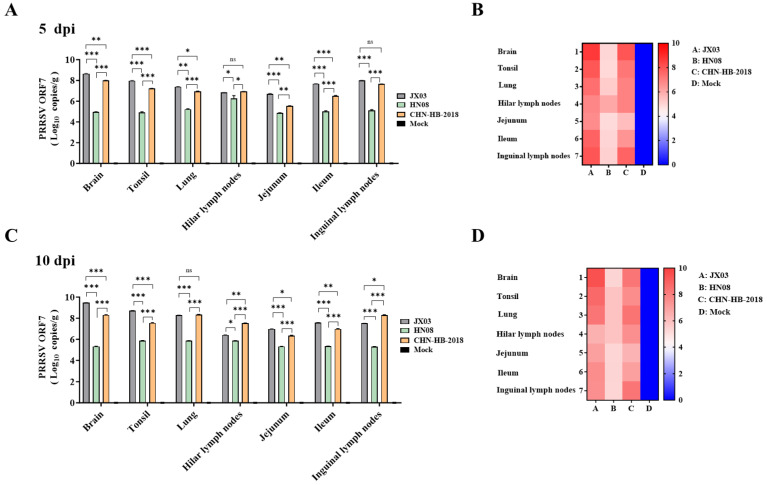 Figure 7
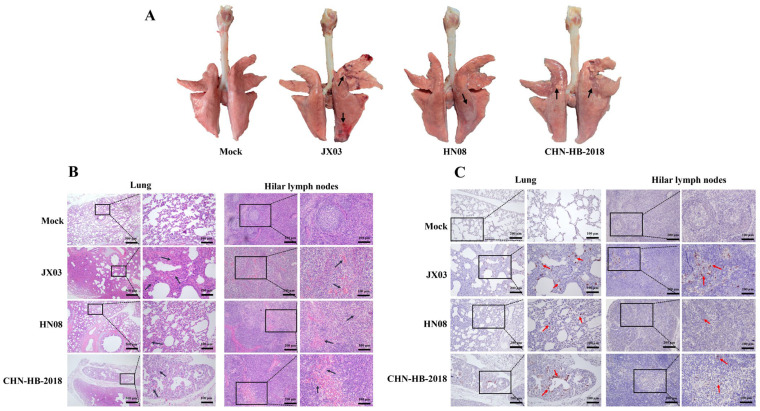 Figure 8
Peer Reviews
No public reviews on file for this paper yet. If you reviewed it on a platform where reviews are public (OpenReview, ICLR, NeurIPS, ICML), you can paste yours below so the community can read it here.
Videos
No videos yet. Explain this paper in a talk, walkthrough, or lecture? Add one.
Taxonomy
TopicsAnimal Virus Infections Studies · Virus-based gene therapy research · Viral gastroenteritis research and epidemiology