Time-Resolved Visualization of Cyanotoxin Synthesis via Labeling by the Click Reaction in the Bloom-Forming Cyanobacteria Microcystis aeruginosa and Planktothrix agardhii
Rainer Kurmayer, Rubén Morón Asensio

TL;DR
Scientists used a chemical labeling method to track the production of toxic peptides in two types of cyanobacteria over time.
Contribution
A novel method using click chemistry and fluorescent labeling to visualize cyanotoxin synthesis dynamics in live cyanobacteria.
Findings
Fluorescent labeling with Alexa Fluor 488 effectively tracked cyanopeptide synthesis in Microcystis aeruginosa and Planktothrix agardhii.
Labeling intensity correlated with chemical analysis of clickable peptides in individual cells and populations.
Intracellular distribution of the label showed heterogeneous patterns during toxin synthesis.
Abstract
In non-ribosomal peptide synthesis of cyanobacteria, promiscuous adenylation domains allow the incorporation of clickable non-natural amino acids into peptide products—namely into microcystins (MCs) or into anabaenopeptins (APs): 4-azidophenylalanine (Phe-Az), N-propargyloxy-carbonyl-L-lysine (Prop-Lys), or O-propargyl-L-tyrosine (Prop-Tyr). Subsequently, chemo-selective labeling is used to visualize the clickable cyanopeptides using Alexa Fluor 488 (A488). In this study, the time-lapse build up or decline of azide- or alkyne-modified MCs or APs was visualized during maximum growth, specifically MC biosynthesis in Microcystis aeruginosa and AP biosynthesis in Planktothrix agardhii. Throughout the time-lapse build up or decline, the A488 signal occurred with heterogeneous intracellular distribution. There was a fast increase or decrease in the A488 signal for either Prop-Tyr or Prop-Lys,…
Genes, proteins, chemicals, diseases, species, mutations and cell lines named across the full text — each resolved to its canonical identifier and authoritative record.
Click any figure to enlarge with its caption.
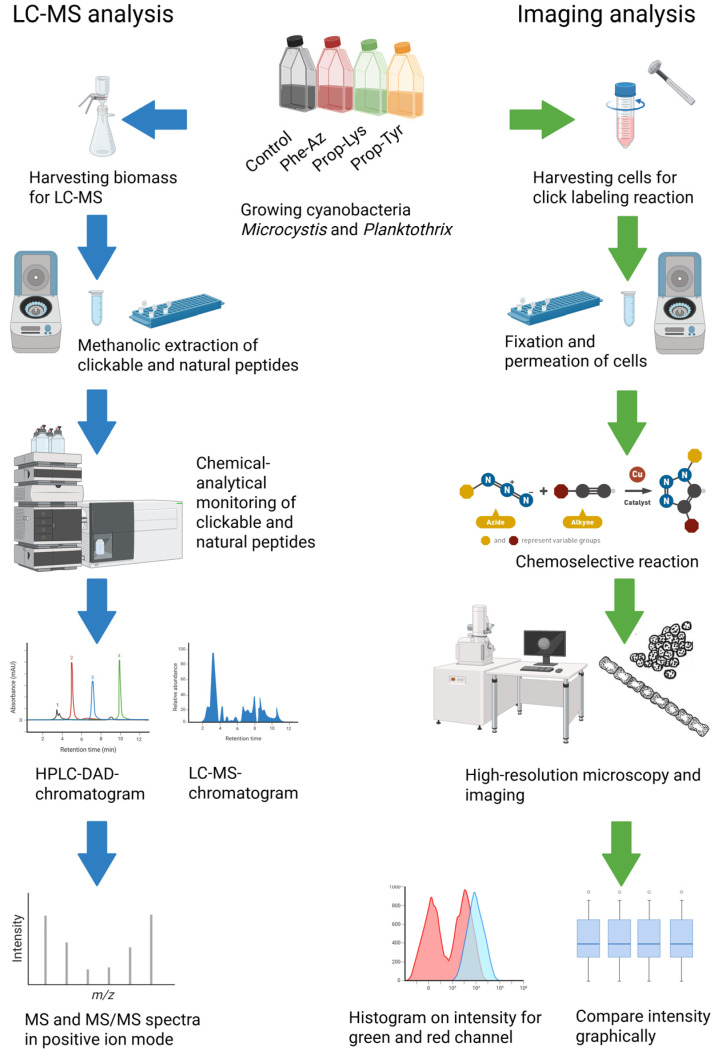 Figure 1
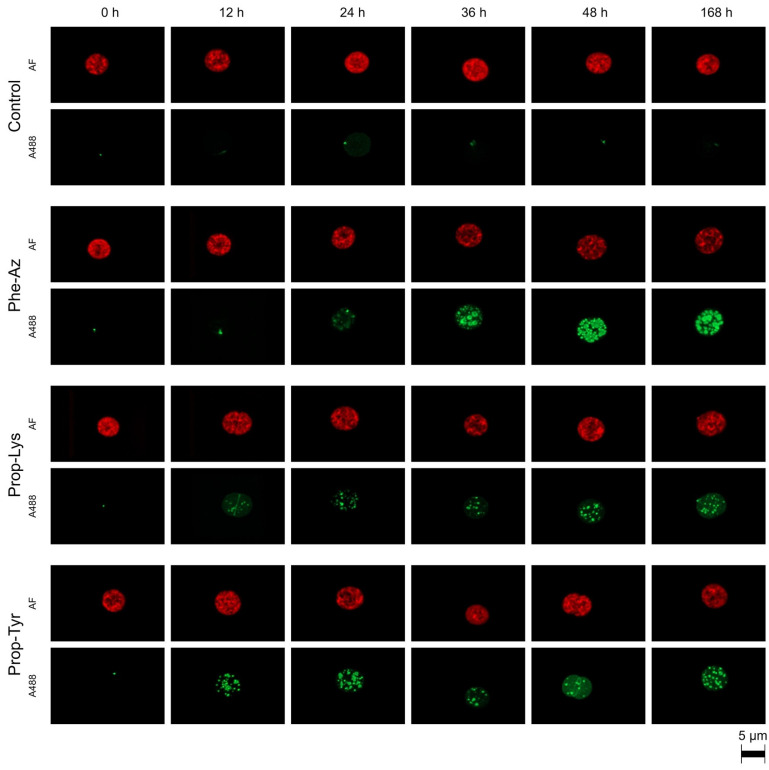 Figure 2
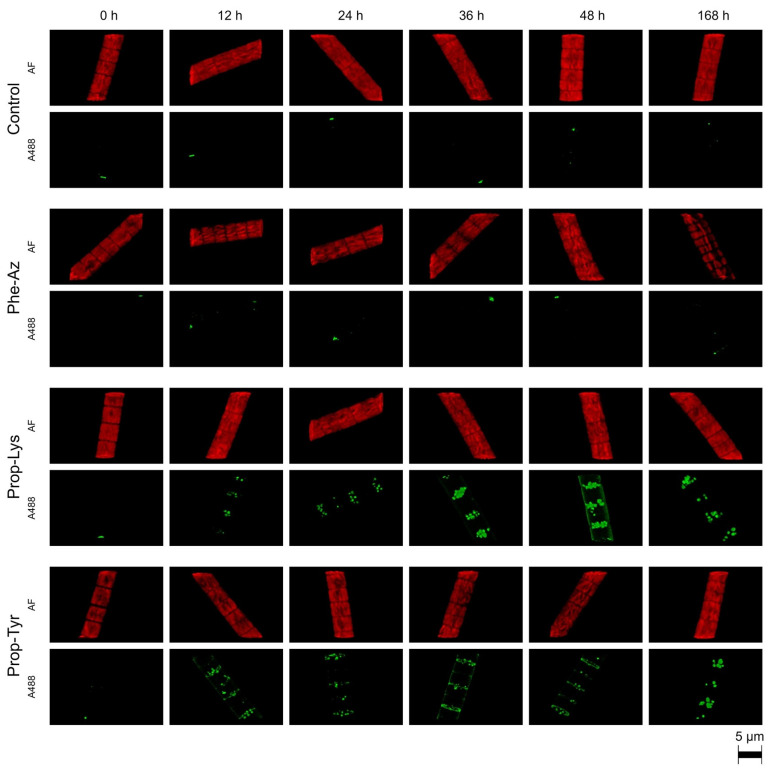 Figure 3
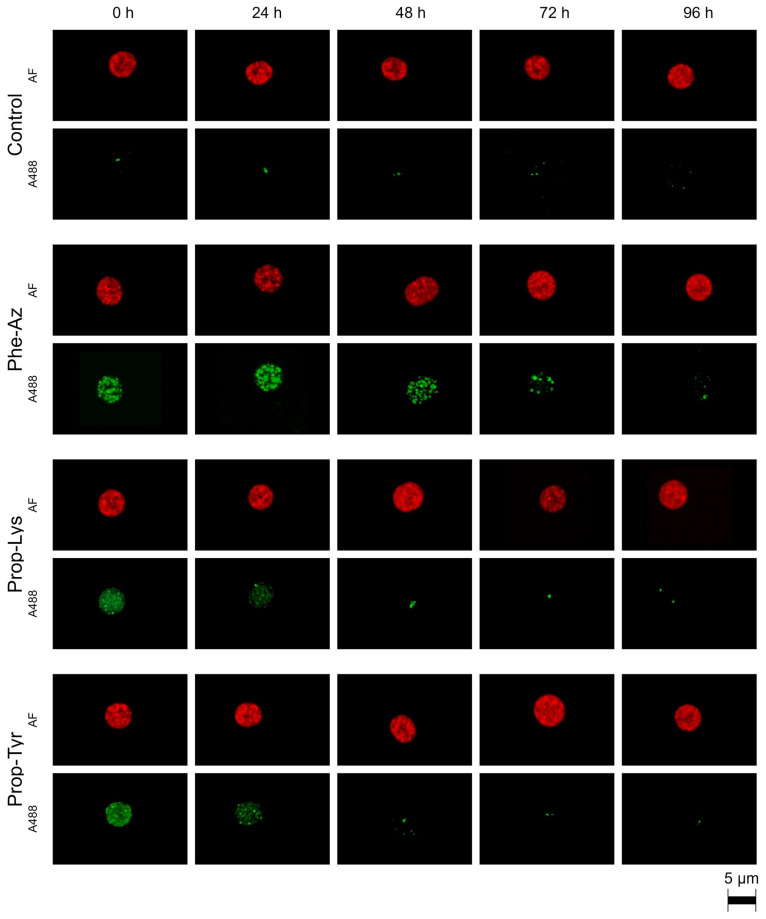 Figure 4
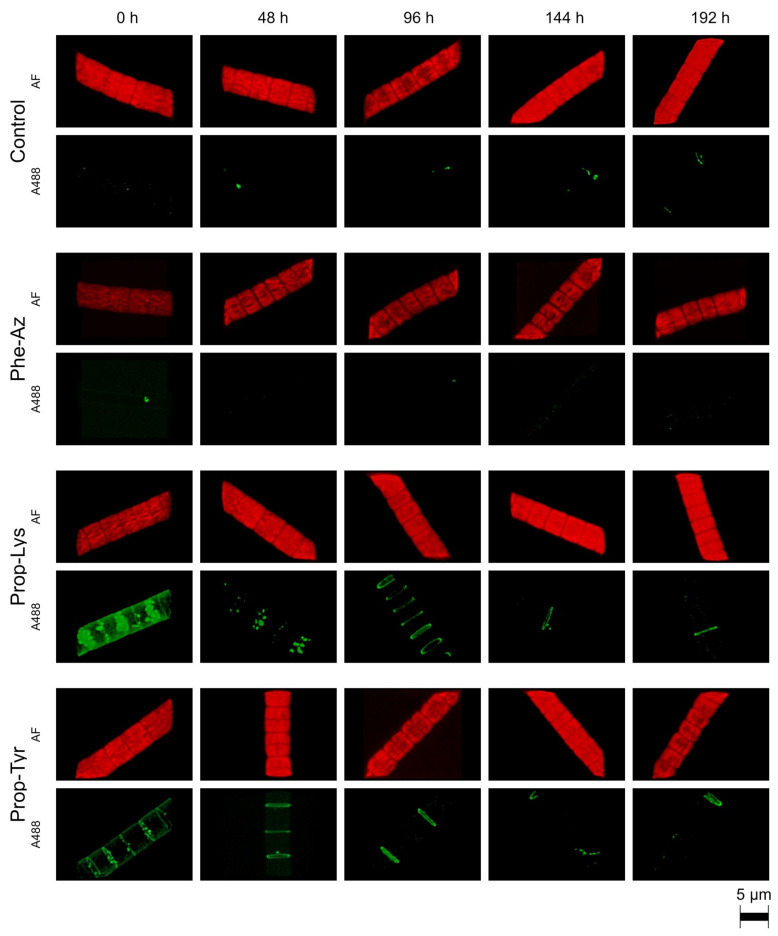 Figure 5
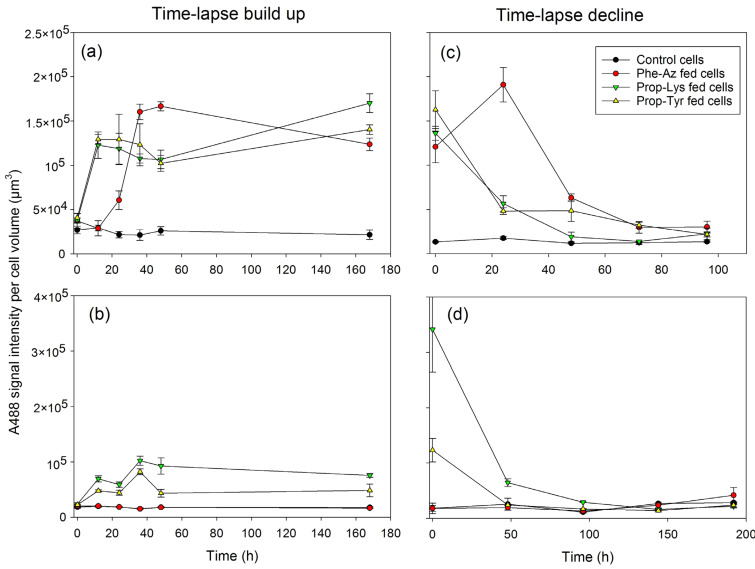 Figure 6
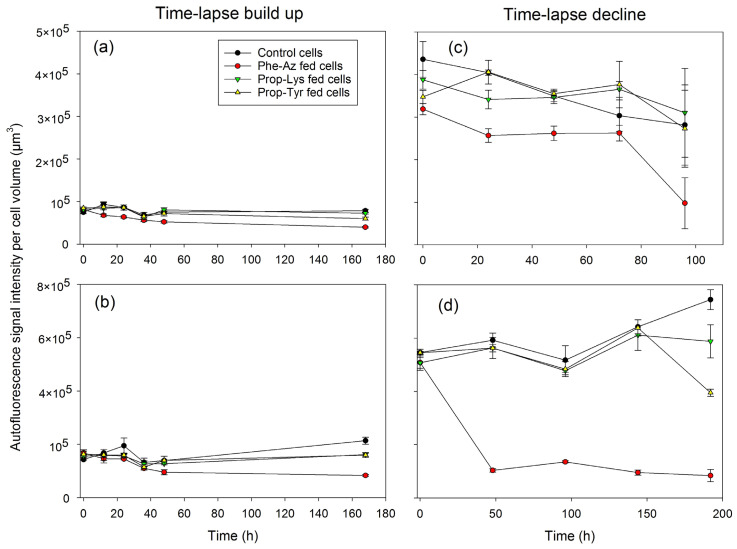 Figure 7
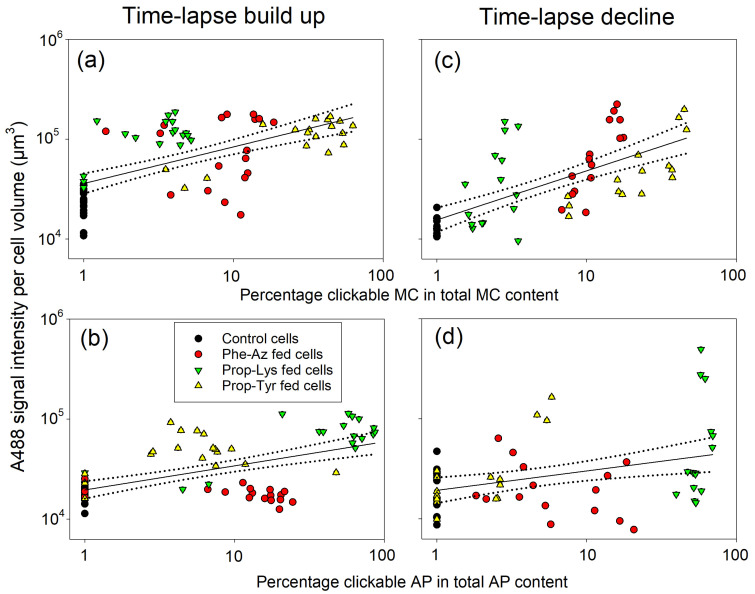 Figure 8
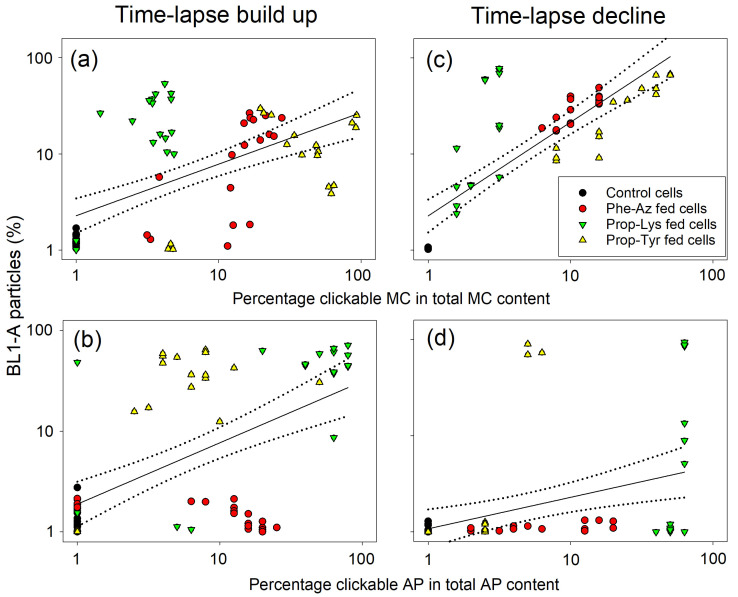 Figure 9
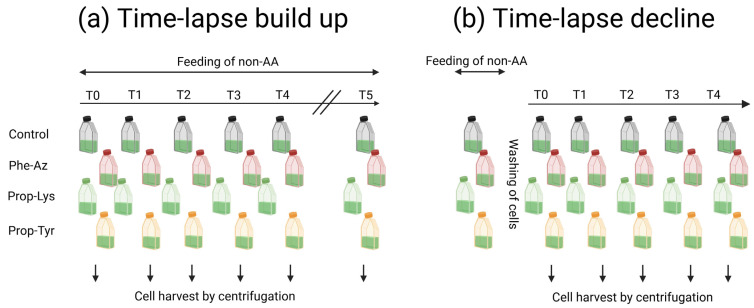 Figure 10
Peer Reviews
No public reviews on file for this paper yet. If you reviewed it on a platform where reviews are public (OpenReview, ICLR, NeurIPS, ICML), you can paste yours below so the community can read it here.
Videos
No videos yet. Explain this paper in a talk, walkthrough, or lecture? Add one.
Taxonomy
Topicsbioluminescence and chemiluminescence research · Microbial Community Ecology and Physiology · Protist diversity and phylogeny