Serum Vitamin E Status in Patients With Type 2 Diabetes Mellitus Among Bangladeshi Population
Monjurul Islam Ripon, Kazi Milenur Rahman Prattay, Uttom Kumar, A. S. M. Monjur Al Hossain, Muhammad Asaduzzaman, B. M. Redwan Matin Zidan, Sreedam Chandra Das

TL;DR
This study found that people with type 2 diabetes in Bangladesh have lower vitamin E levels, especially women and older individuals, suggesting a link between antioxidant status and diabetes.
Contribution
The study is the first to investigate serum vitamin E levels in Bangladeshi T2DM patients, revealing sex- and age-related differences.
Findings
T2DM patients had significantly lower serum vitamin E levels compared to healthy individuals.
Female T2DM patients had lower vitamin E levels than male patients.
Serum vitamin E levels decreased significantly with increasing age in T2DM patients.
Abstract
Background: Type 2 diabetes mellitus (T2DM) links to oxidative stress in both its origin and progression. Vitamin E has the potential to be a highly effective therapeutic intervention in fighting against T2DM as it protects cells against oxidative stress. While some interventional studies have explored the effect of vitamin E on T2DM, there is a lack of cross-sectional studies globally, and none to our knowledge on the Bangladeshi population. Consequently, it is worthwhile to investigate the serum vitamin E levels in Bangladeshi T2DM patients. Methods: 94 T2DM patients and 30 healthy subjects were evaluated for their serum vitamin E concentration for a comparative cross-sectional study. Mean serum concentrations were compared between these two groups, as well as among different sex and age groups using independent sample t-test and one-way ANOVA, as appropriate. Results: The serum…
Genes, proteins, chemicals, diseases, species, mutations and cell lines named across the full text — each resolved to its canonical identifier and authoritative record.
Click any figure to enlarge with its caption.
 Figure 1
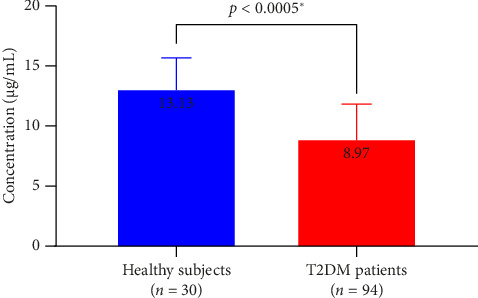 Figure 2
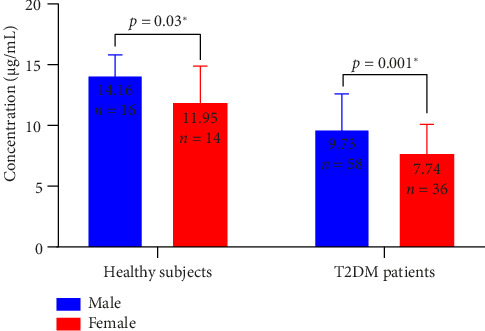 Figure 3
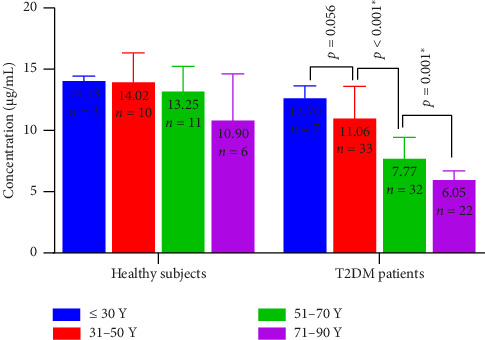 Figure 4
Peer Reviews
No public reviews on file for this paper yet. If you reviewed it on a platform where reviews are public (OpenReview, ICLR, NeurIPS, ICML), you can paste yours below so the community can read it here.
Videos
No videos yet. Explain this paper in a talk, walkthrough, or lecture? Add one.
Taxonomy
TopicsDiabetes, Cardiovascular Risks, and Lipoproteins · Adipokines, Inflammation, and Metabolic Diseases · Liver Disease Diagnosis and Treatment