Effectiveness of Pyrethroid-Piperonyl Butoxide Nets Versus Standard Pyrethroid-Only Nets in Preventing Malaria in Children Under 10 Years Living in Kisantu Health Zone, Democratic Republic of the Congo
Gillon Ilombe, Joris Losimba Likwela, Philippe Lukanu, Aimée Lulebo, Nicole Muela, Joachim Mariën, Kennedy Makola Mbanzulu, Baby Mabanzila, Junior Rika Matangila, Fiacre Agossa, Eric Mukomena, Sylvie Linsuke, Albert Kalonji, Pascal Lutumba, Jean-Pierre Van Geertruyden

TL;DR
This study found that insecticide nets combining piperonyl butoxide and pyrethroids were more effective at reducing malaria in children in the DRC compared to standard pyrethroid-only nets.
Contribution
The study evaluates the real-world effectiveness of PBO-pyrethroid nets in a high-malaria area, showing improved malaria control compared to standard nets.
Findings
Malaria infection incidence was consistently lower in the PBO-deltamethrin group compared to the deltamethrin-only group.
Mosquito densities decreased initially but increased after six months, with better long-term control in the PBO group.
Bio-efficacy of PBO-deltamethrin nets was better after 12 months, though chemical durability declined over time.
Abstract
Democratic Republic of the Congo (DRC) is among the countries that have a high malaria incidence. In an effort to combat this public health challenge, innovative tools and strategies are being developed and evaluated. Among the new generation of nets with improved effectiveness of insecticides, those treated with a combination of piperonyl butoxide (PBO) and pyrethroids appear to be a promising malaria control tool. This study evaluated the effectiveness of this combination under community conditions of use in the DRC. A quasi-experimental study was carried out from January to December 2018, in Kisantu Health Zone. Thirty villages were randomly allocated as clusters (1:1) to receive one of two types of long-lasting insecticidal nets (LLIN) treated with deltamethrin alone, or PBO with deltamethrin. After the intervention, the assessments were conducted monthly, quarterly, and every six…
Genes, proteins, chemicals, diseases, species, mutations and cell lines named across the full text — each resolved to its canonical identifier and authoritative record.
Click any figure to enlarge with its caption.
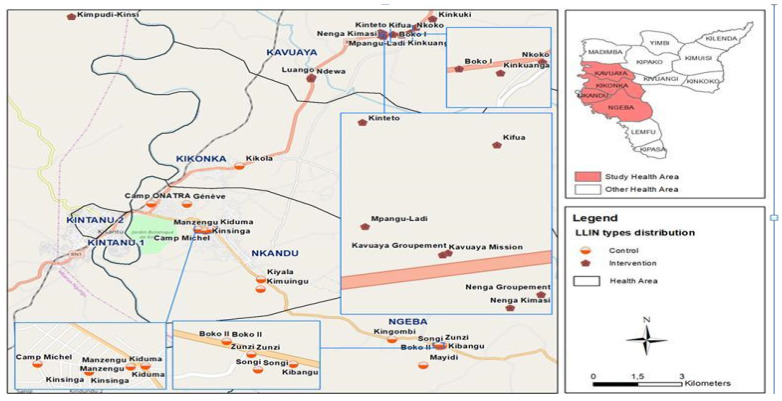 Figure 1
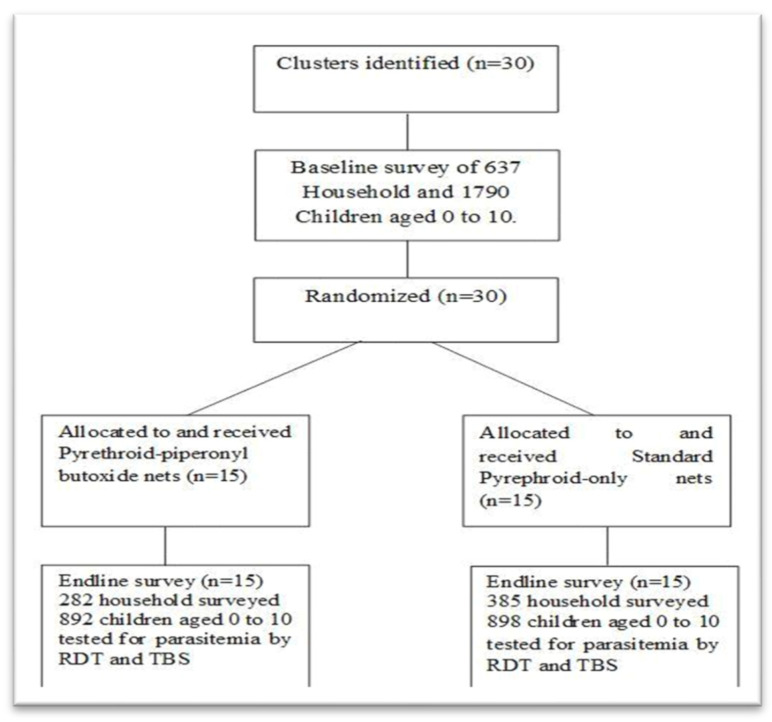 Figure 2
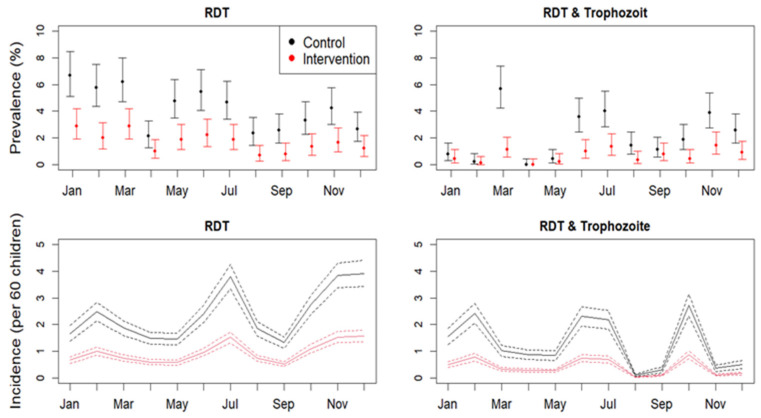 Figure 3
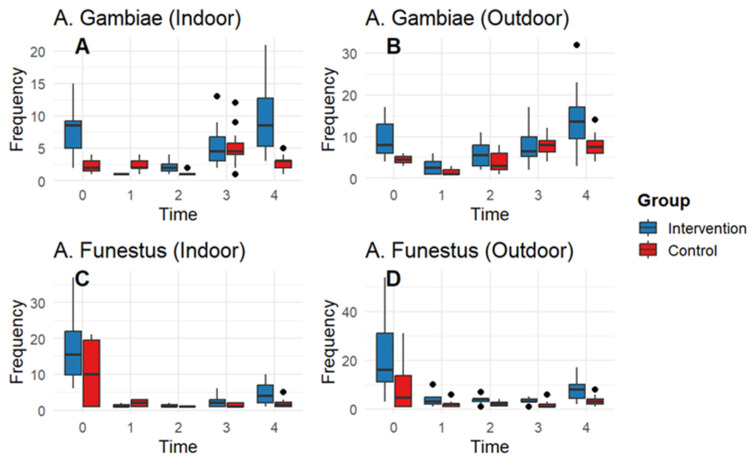 Figure 4
Peer Reviews
No public reviews on file for this paper yet. If you reviewed it on a platform where reviews are public (OpenReview, ICLR, NeurIPS, ICML), you can paste yours below so the community can read it here.
Videos
No videos yet. Explain this paper in a talk, walkthrough, or lecture? Add one.
Taxonomy
TopicsMalaria Research and Control · Mosquito-borne diseases and control · Diverse Scientific Research Studies