Dual-Toxin-Producing Clostridium botulinum Strain Isolated from a Foodborne Botulism Case in Korea: Genomic and Functional Insights
Eun-Sun Choi, Chi-Hwan Choi, Jun-Ho Jeon, So-Hyeon Kim, Hyun-Ju Song, Hwajung Yi, Gi-eun Rhie, Yoon-Seok Chung

TL;DR
A rare dual-toxin-producing Clostridium botulinum strain was isolated from a foodborne botulism case in Korea, showing temperature-dependent toxin expression and highlighting the need for improved diagnostic tools.
Contribution
First report of a dual-toxin-producing C. botulinum strain linked to foodborne botulism in Korea with genomic and functional insights.
Findings
The strain CB-2014001 contains both bont/B and bont/F gene clusters, corresponding to subtypes B5 and F2.
Toxin expression is temperature-dependent, with BoNT/F predominant at 30 °C and BoNT/B at 37 °C.
The strain shows high sequence identity with known Bf-type C. botulinum strains like CDC 3281 and An436.
Abstract
Clostridium botulinum produces one of the most potent biological toxins and causes botulism, a rare but potentially fatal neuroparalytic disease. In 2014, a foodborne botulism case was reported in Korea, and a strain (CB-2014001) was isolated. Initial characterization identified it as a BoNT/B-producing strain based on mouse bioassay and conventional PCR. However, subsequent genomic analysis revealed the presence of dual BoNT gene clusters, bont/B and bont/F, corresponding to subtypes B5 and F2, respectively. Therefore, we aimed to analyze the genetic characteristics and toxin expression profiles of the isolated strain. The strain showed high sequence identity with Bf-type strains such as CDC 3281 and An436. Functional assays confirmed simultaneous expression of both BoNT/B and /F toxins at 35 °C, and temperature-dependent assays revealed predominant expression of BoNT/F at 30 °C and…
Genes, proteins, chemicals, diseases, species, mutations and cell lines named across the full text — each resolved to its canonical identifier and authoritative record.
Click any figure to enlarge with its caption.
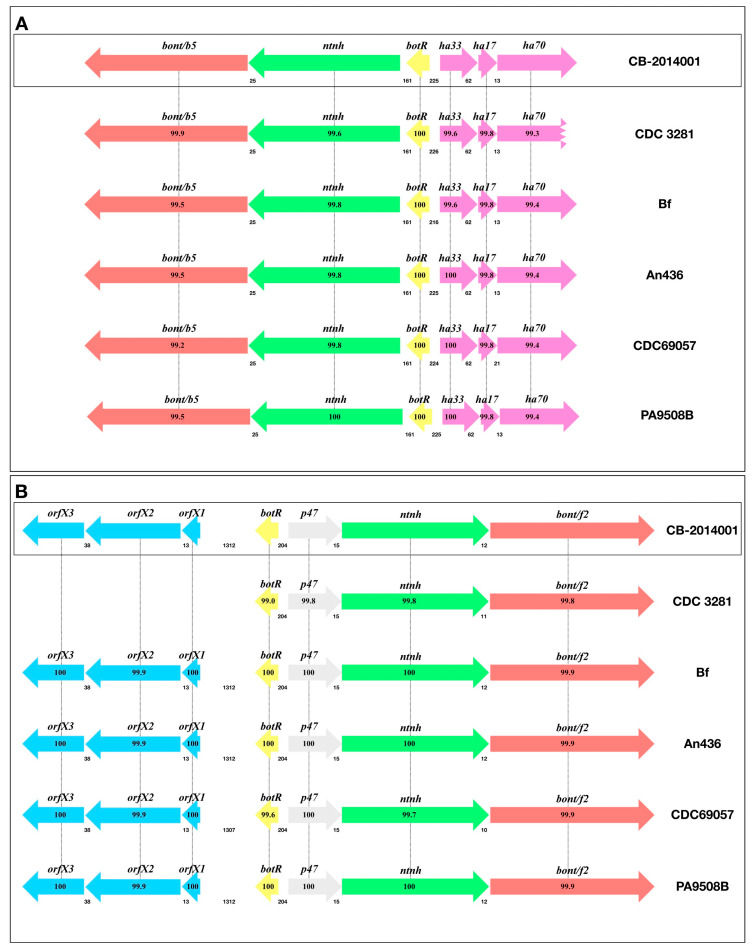 Figure 1
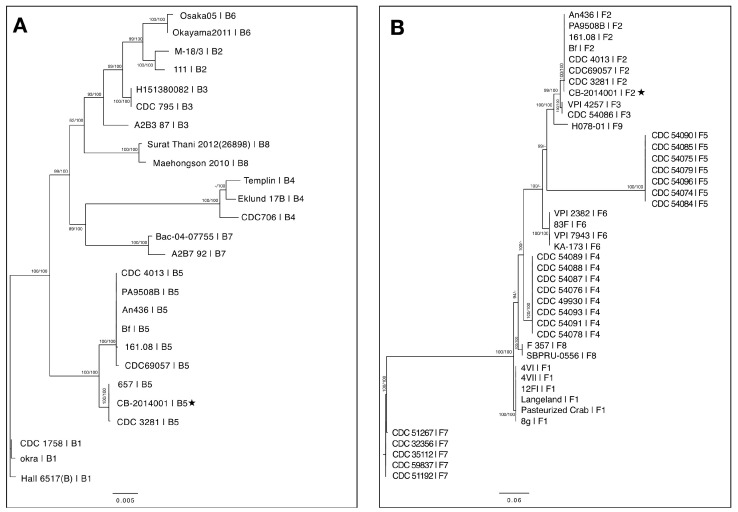 Figure 2
Peer Reviews
No public reviews on file for this paper yet. If you reviewed it on a platform where reviews are public (OpenReview, ICLR, NeurIPS, ICML), you can paste yours below so the community can read it here.
Videos
No videos yet. Explain this paper in a talk, walkthrough, or lecture? Add one.
Taxonomy
TopicsBotulinum Toxin and Related Neurological Disorders · Hereditary Neurological Disorders · Streptococcal Infections and Treatments