Molecular Assays on Cutaneous Swabs as an Effective, Non-Invasive Diagnostic Technique for Cutaneous Leishmaniasis: Results from a Retrospective Study Conducted in Italy
Anna Barbiero, Andrea Aiello, Nunziata Ciccone, Simona Pollini, Francesca Malentacchi, Maria Grazia Colao, Gian Maria Rossolini, Costanza Fiorelli, Daniela Massi, Alberto Antonelli, Sara Cuffari, Trentina Di Muccio, Alessandro Bartoloni, Michele Spinicci, Lorenzo Zammarchi

TL;DR
This study shows that non-invasive cutaneous swabs with molecular tests can effectively diagnose cutaneous leishmaniasis, offering a patient-friendly alternative to biopsies.
Contribution
The study demonstrates that cutaneous swabs with molecular assays have 100% sensitivity for diagnosing CL, outperforming traditional methods in some cases.
Findings
Molecular assays on cutaneous swabs showed 100% sensitivity for detecting Leishmania spp.
PCR on swabs identified three CL cases missed by biopsy histology and smear microscopy.
Non-invasive swab sampling could become a first-line diagnostic tool for CL.
Abstract
Background: The case confirmation of CL relies on the direct demonstration of the parasite in clinical specimens from skin tissues. Despite most research efforts focusing on biopsy samples as the preferred diagnostic specimen for the detection of Leishmania spp., the use of non-invasive sampling, such as cutaneous swabs, combined with the use of molecular assays, has shown promising results. Methods: We conducted a retrospective study aimed at comparing the performance of different invasive and non-invasive diagnostic techniques, employed for the diagnosis of CL, in an Italian tertiary care center. Results: We observed 29 cases of CL between 2008 and June 2024. Considering the demonstration of Leishmania spp. on culture, biopsy PCR, histology, or smear microscopy as the reference diagnostic test for CL, molecular assays on cutaneous swabs showed a sensitivity of 100% (95% C.I.…
Genes, proteins, chemicals, diseases, species, mutations and cell lines named across the full text — each resolved to its canonical identifier and authoritative record.
Click any figure to enlarge with its caption.
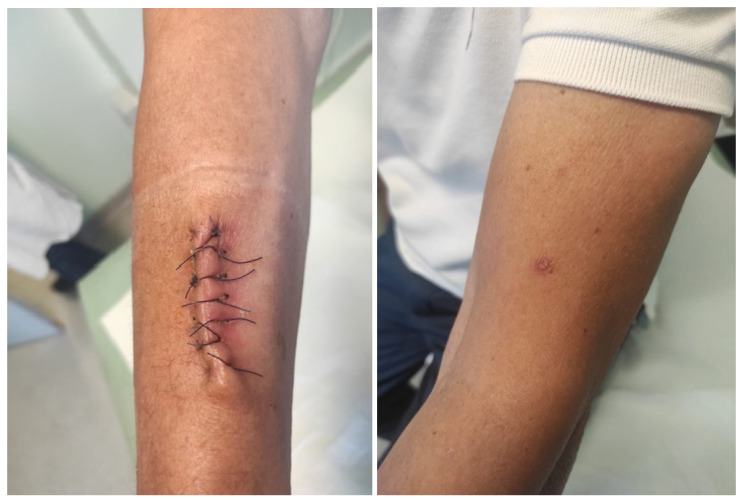 Figure 1
Peer Reviews
No public reviews on file for this paper yet. If you reviewed it on a platform where reviews are public (OpenReview, ICLR, NeurIPS, ICML), you can paste yours below so the community can read it here.
Videos
No videos yet. Explain this paper in a talk, walkthrough, or lecture? Add one.
Taxonomy
TopicsResearch on Leishmaniasis Studies · Trypanosoma species research and implications