Clinical and Pathological Features of Flexural Deformities Associated with Myopathies in Foals
Maria Pia Pasolini, Luigi Auletta, Davide De Biase, Emanuela Vaccaro, Chiara Del Prete, Chiara Montano, Mariaelena de Chiara, Evaristo Di Napoli, Orlando Paciello, Giuseppe Piegari

TL;DR
This study explores muscle biopsy findings in foals with flexural deformities to better understand their underlying causes and improve diagnosis.
Contribution
The study demonstrates the diagnostic value of muscle biopsies in identifying specific myopathies in foals with congenital flexural deformities.
Findings
Muscle biopsies revealed various myopathies, including core-like myopathy and polysaccharide storage myopathy.
Clinical symptoms alone may not distinguish between different underlying muscle disorders in foals.
Histopathological analysis is suggested as a valuable diagnostic tool for flexural deformities in equine medicine.
Abstract
Congenital flexural deformities (CFDs) are common in foals. The affected sites, severity of symptoms, and response to therapy vary from case to case. The etiopathogenesis is often unknown, and diagnosis is typically based on clinical examination, sometimes accompanied by radiological assessment. In contrast, children with congenital contractures require a complex diagnostic workup, which often includes a muscle biopsy. This study aimed to describe the diagnostic utility and findings of muscle biopsies in foals with flexural limb deformities. Muscle changes were observed in all assessed cases of CFDs. The most frequently identified muscle disorders included core-like myopathy, mild nonspecific myopathy, mitochondrial myopathy, polysaccharide storage myopathy, and congenital fiber-type disproportion. These findings suggest that muscle biopsy can provide valuable information for…
Genes, proteins, chemicals, diseases, species, mutations and cell lines named across the full text — each resolved to its canonical identifier and authoritative record.
Click any figure to enlarge with its caption.
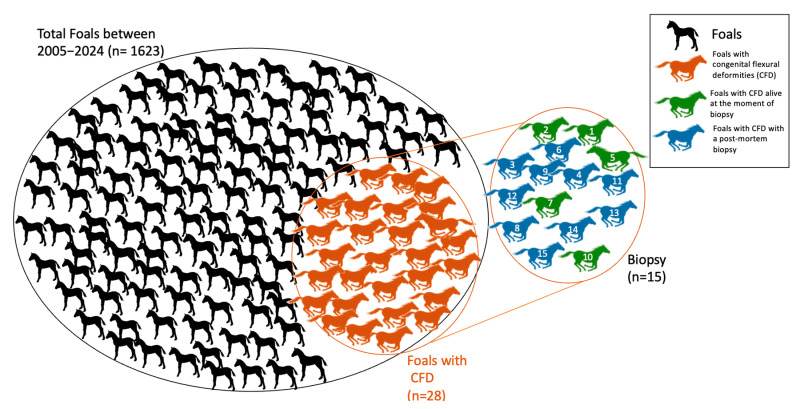 Figure 1
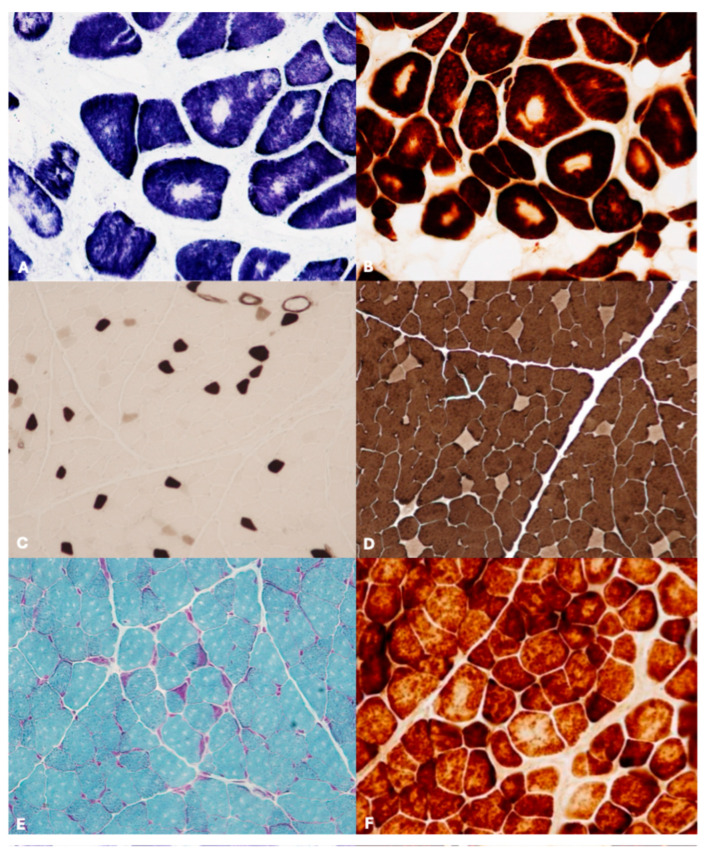 Figure 2
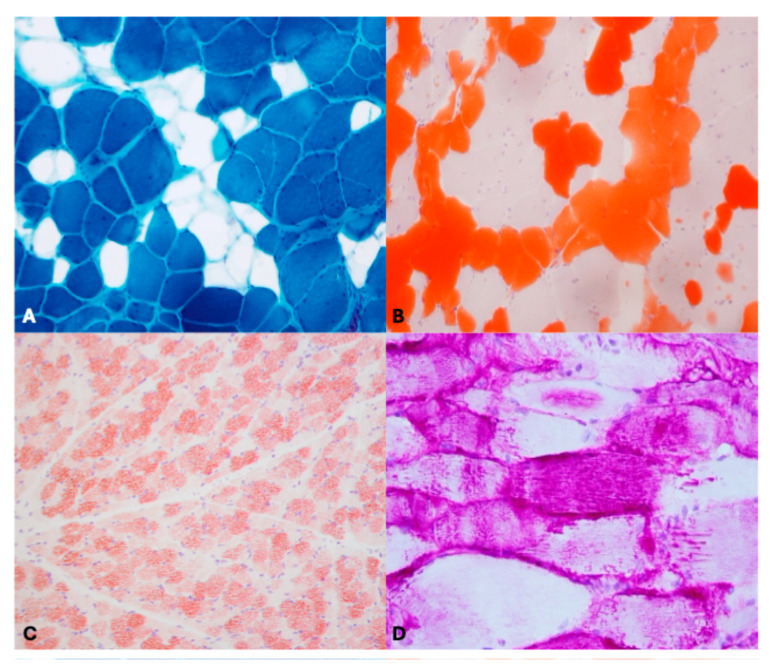 Figure 3
Peer Reviews
No public reviews on file for this paper yet. If you reviewed it on a platform where reviews are public (OpenReview, ICLR, NeurIPS, ICML), you can paste yours below so the community can read it here.
Videos
No videos yet. Explain this paper in a talk, walkthrough, or lecture? Add one.
Taxonomy
TopicsVeterinary Equine Medical Research · Hereditary Neurological Disorders · Veterinary Orthopedics and Neurology