Similar Microsatellite Allelic Distribution Between Anopheles darlingi Population Collected by Human Landing Catch or Mosquito Magnet Traps in French Guiana
Laetitia Ferraro, Sébastien Briolant, Mathieu Nacher, Samuel Vezenegho, Antoine Adde, Christophe Nguyen, Pascal Gaborit, Jean Issaly, Romuald Carinci, Vincent Pommier de Santi, Romain Girod, Isabelle Dusfour, Hervé Bogreau

TL;DR
This study shows that Anopheles darlingi mosquitoes collected using different methods in French Guiana are genetically similar, suggesting both methods are suitable for molecular studies.
Contribution
The study demonstrates that genetic differentiation does not exist between Anopheles darlingi collected via human landing catch or Mosquito Magnet traps in French Guiana.
Findings
No significant genetic differentiation was observed between Anopheles darlingi collected via human landing catch or Mosquito Magnet traps.
DAPC analysis revealed a single genetic cluster among the sampled mosquitoes.
Phenotypic variations did not translate into detectable population structure.
Abstract
Anopheles darlingi is a major malaria vector in South America. Understanding its population dynamics is critical for designing effective vector control strategies. While various Anopheles collection methods exist, they may sample distinct populations. Microsatellite genotyping across nine loci was performed to characterize An. darlingi populations, which were collected in French Guiana between 6:30 p.m. and 7:00 a.m. using human landing catch (HLC) or Mosquito Magnet® (MM) traps. Traps were arranged in a 3 × 3 Latin square design to minimize possible effects of geographical position. Pairwise FST index and discriminant analyses of principal components (DAPC) were used to make comparisons. A total of 431 An. darlingi were analyzed. No significant genetic differentiation was observed between collection methods or time slots (FST values non-significant, p > 0.25), with DAPC revealing a…
Genes, proteins, chemicals, diseases, species, mutations and cell lines named across the full text — each resolved to its canonical identifier and authoritative record.
Click any figure to enlarge with its caption.
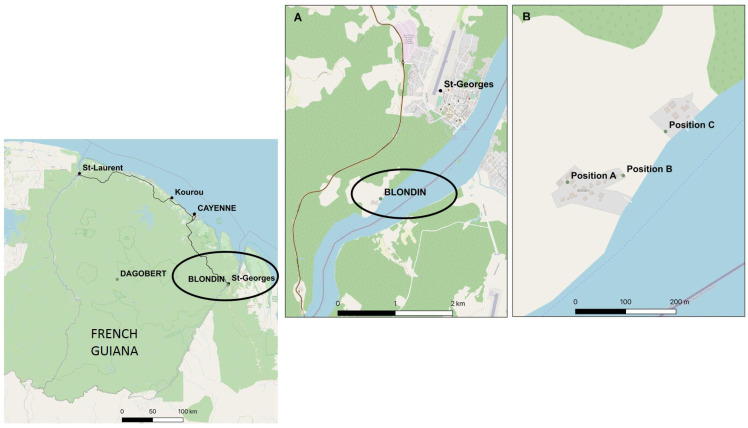 Figure 1
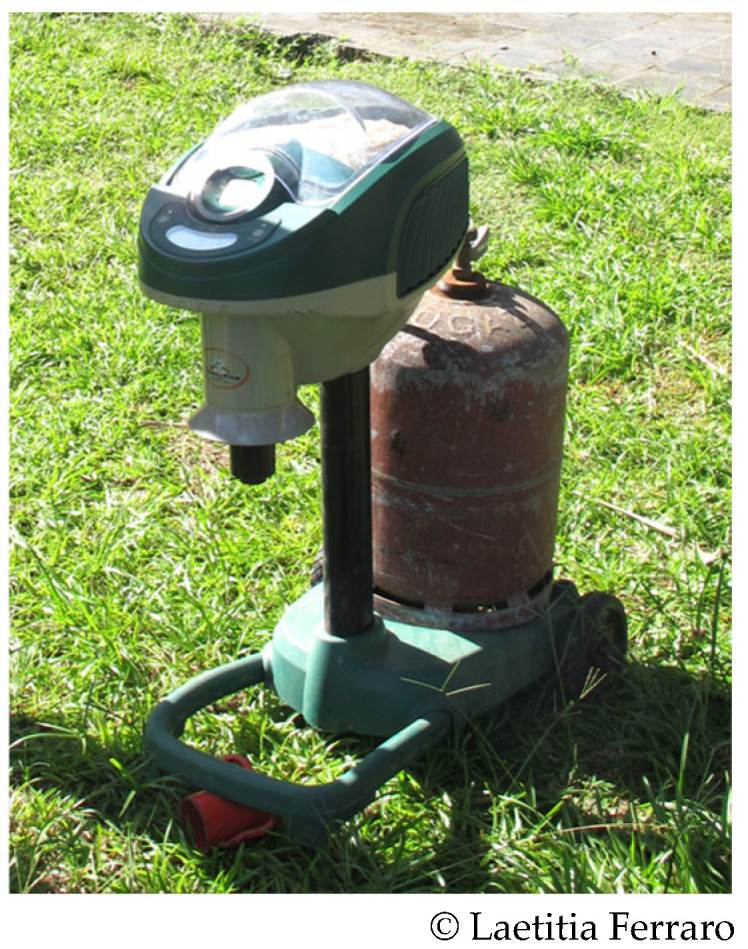 Figure 2
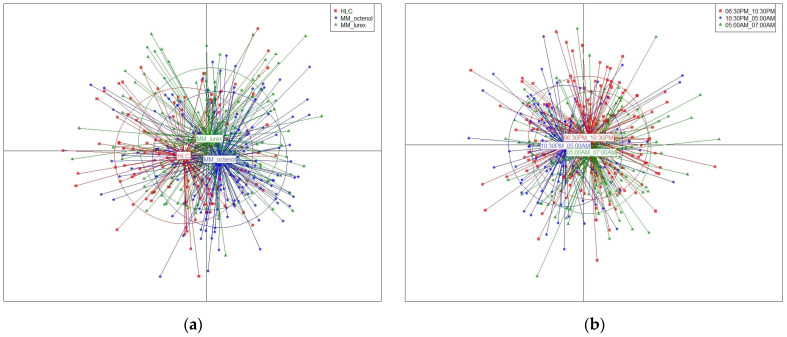 Figure 3
Peer Reviews
No public reviews on file for this paper yet. If you reviewed it on a platform where reviews are public (OpenReview, ICLR, NeurIPS, ICML), you can paste yours below so the community can read it here.
Videos
No videos yet. Explain this paper in a talk, walkthrough, or lecture? Add one.
Taxonomy
TopicsMosquito-borne diseases and control · Malaria Research and Control · Insect Pest Control Strategies