Characterization of the Virome in Mosquitoes Across Distinct Habitats in the Yucatán Peninsula, Mexico
Erika N. Hernández-Villegas, Hugo G. Castelán-Sánchez, Andres Moreira-Soto, Ana Laura Vigueras-Galván, Marco A. Jiménez-Rico, Oscar Rico-Chávez, Stephany Rodríguez-González, María José Tolsá-García, David Roiz, Paola Martínez-Duque, Roger Arana-Guardía, Omar García-Súarez

TL;DR
This study identifies and characterizes viruses in mosquitoes from different habitats in Mexico's Yucatán Peninsula, highlighting how mosquito species influence viral diversity.
Contribution
The first characterization of mosquito-associated viromes in the Yucatán Peninsula, revealing novel viral species and the role of mosquito species in shaping viromes.
Findings
Sixteen viral species from 14 families were identified in 20 mosquito species from the Yucatán Peninsula.
Vertebrate-associated viruses were found in urban habitats, while insect-associated viruses were also detected, including the first report of Mercadeo virus in Mexico.
Mosquito species, rather than habitat, primarily drive differences in viral community composition.
Abstract
Human activities and land use changes have a major impact on the distribution and diversity of mosquito vectors and their associated viruses. This study describes the diversity and differential abundance of viruses associated with mosquito species from four habitats of the Yucatan Peninsula, Mexico. Using next-generation sequencing (NGS), we analyzed 61 genomic libraries belonging to 20 mosquito species to characterize the viral community. A total of 16 viral species were identified, representing 14 different viral families. Most identified viruses were associated with insects, plants, and fungi. Additionally, vertebrate associated viral families, including Herpesviridae, Peribunyaviridae, Nairoviridae, and Arenaviridae, were detected in mosquitoes from urban habitats. Notably, insect-associated viruses like Hubei mosquito virus 4 and Hubei virga-like virus 2 were identified, along with…
Genes, proteins, chemicals, diseases, species, mutations and cell lines named across the full text — each resolved to its canonical identifier and authoritative record.
Click any figure to enlarge with its caption.
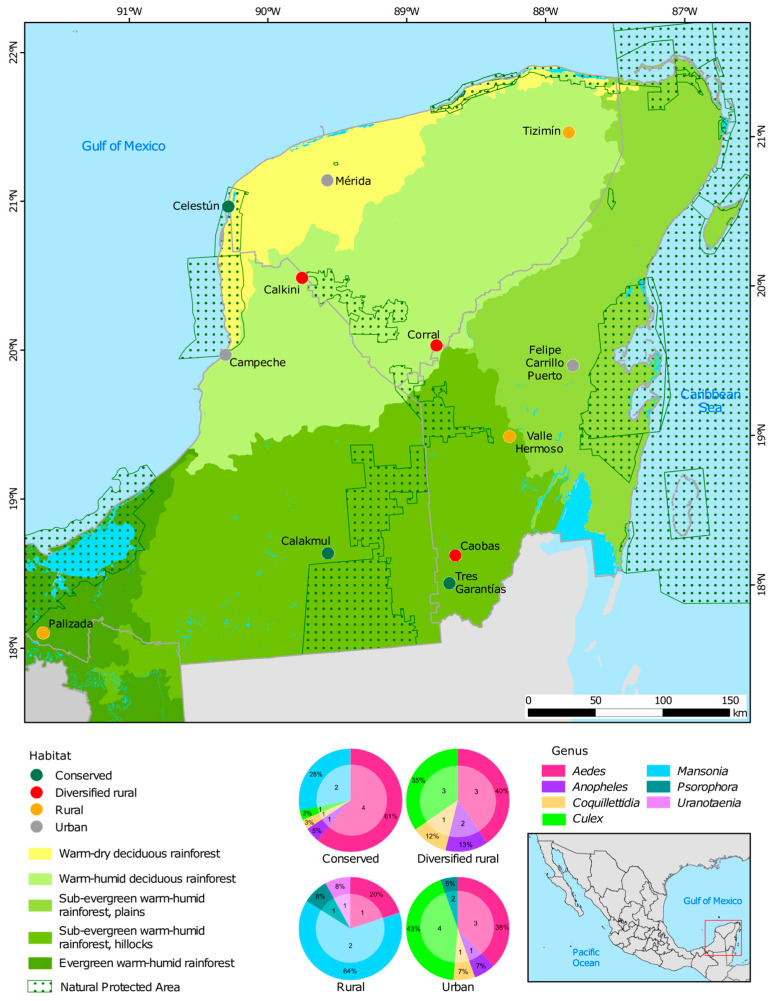 Figure 1
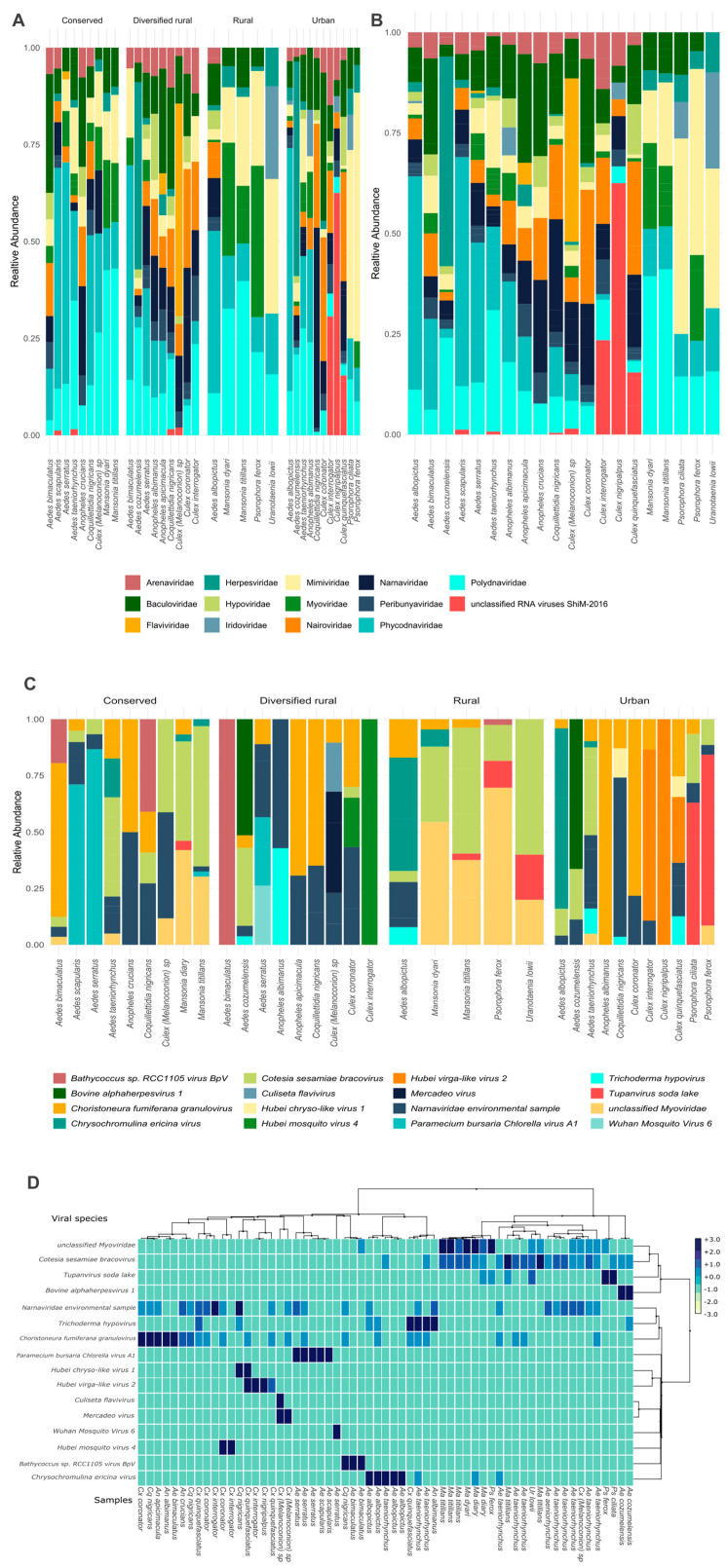 Figure 2
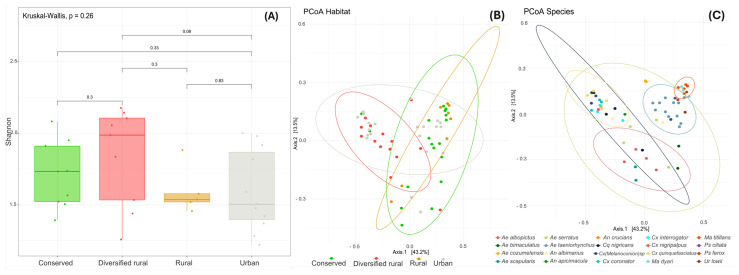 Figure 3
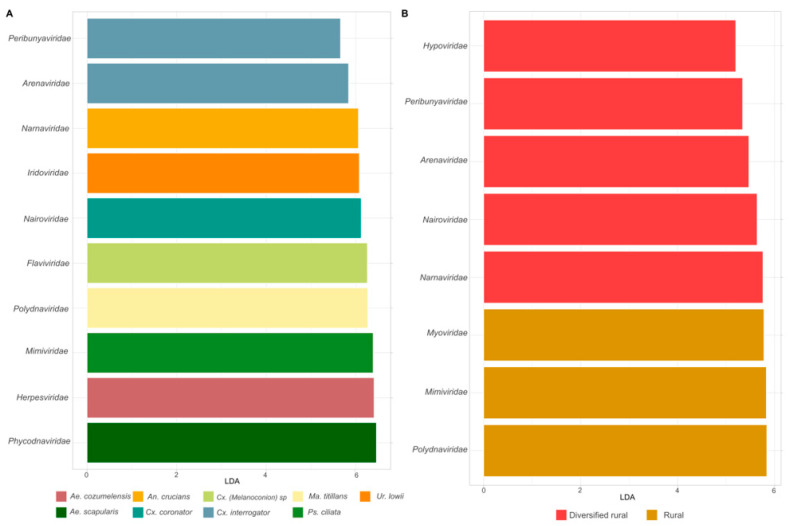 Figure 4
Peer Reviews
No public reviews on file for this paper yet. If you reviewed it on a platform where reviews are public (OpenReview, ICLR, NeurIPS, ICML), you can paste yours below so the community can read it here.
Videos
No videos yet. Explain this paper in a talk, walkthrough, or lecture? Add one.
Taxonomy
TopicsMosquito-borne diseases and control · Insect symbiosis and bacterial influences · Viral Infections and Vectors