Oxidant/Antioxidant Equilibrium and Neurotransmitter Levels in Camelids Used for Circus Activities: A Preliminary Study
Raffaella Cocco, Federica Arrigo, Sara Sechi, Maria Rizzo, Giuseppe Piccione, Francesca Arfuso

TL;DR
This study looked at how circus life affects the stress and emotional states of dromedaries, camels, and llamas by measuring their oxidative stress and neurotransmitter levels.
Contribution
The study introduces a novel approach to assessing animal welfare in circuses by analyzing species-specific oxidant/antioxidant and neurotransmitter profiles.
Findings
Dromedaries and llamas showed higher oxidative stress than camels.
Camels had greater antioxidant capacity compared to other species.
Dromedaries had higher dopamine levels than llamas, indicating greater emotional reactivity.
Abstract
This study examined the welfare of dromedaries, camels, and llamas under circus management by analyzing their emotional states and oxidant/antioxidant balance. Blood samples from five animals per species were tested for neurotransmitters and oxidative stress markers. Dromedaries and llamas showed higher oxidative stress (d-Roms) than camels, while camels had greater antioxidant capacity (BAP). Dromedaries also had more dopamine than llamas, suggesting greater emotional reactivity. These preliminary findings highlight species-specific differences in how circus environments may affect animals’ well-being and emphasize the need for further research. The conditions of animals in captivity have long been a cause for concern, and for that reason should be carefully assessed. In circus activities, animals are used for different purposes, but their needs are different due to their…
Genes, proteins, chemicals, diseases, species, mutations and cell lines named across the full text — each resolved to its canonical identifier and authoritative record.
Click any figure to enlarge with its caption.
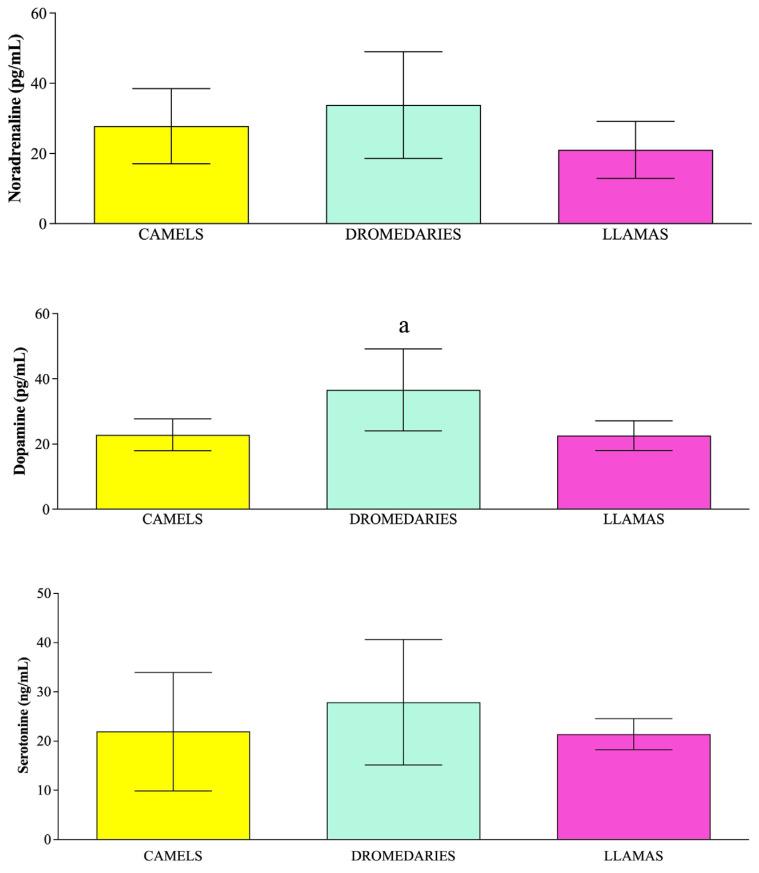 Figure 1
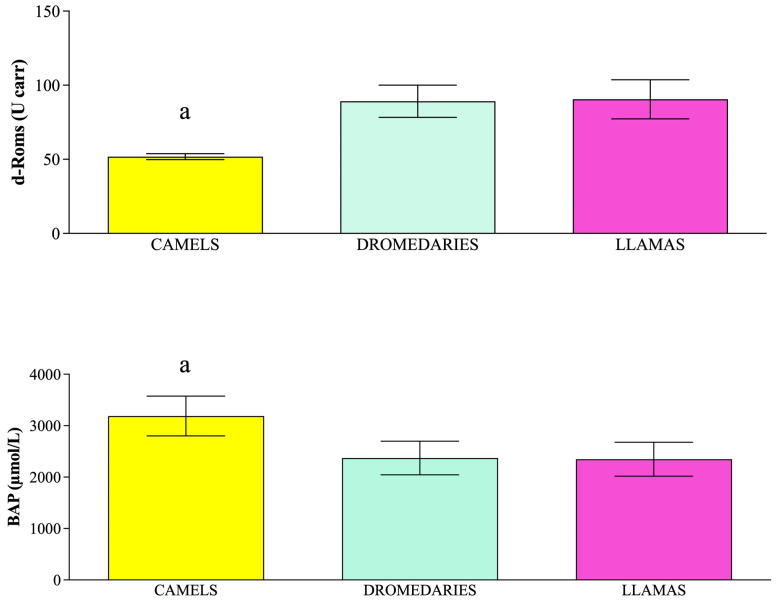 Figure 2
Peer Reviews
No public reviews on file for this paper yet. If you reviewed it on a platform where reviews are public (OpenReview, ICLR, NeurIPS, ICML), you can paste yours below so the community can read it here.
Videos
No videos yet. Explain this paper in a talk, walkthrough, or lecture? Add one.
Taxonomy
TopicsAnimal Behavior and Welfare Studies · Bee Products Chemical Analysis · Circadian rhythm and melatonin