Pleomorphic Lobular Carcinoma of the Mammary Gland in Women and Female Dogs: A Comparative Clinical-Pathological and Immunophenotypic Analysis
Evelyn Ane Oliveira, Lize Amanda Basaglia Borges, Thaynan Cunha Vieira, Bárbara Jaime dos Santos, Fernanda Rezende Souza, Karen Yumi Ribeiro Nakagaki, Cristiana Buzelin Nunes, Geovanni Dantas Cassali

TL;DR
This study compares pleomorphic lobular breast cancer in women and dogs, finding similarities and differences in tumor features, supporting the use of dogs as a model for breast cancer research.
Contribution
The study identifies shared and distinct immunophenotypic features of pleomorphic lobular carcinoma in humans and dogs, supporting the canine model for comparative oncology.
Findings
Canine PLC tumors show higher cell proliferation and consistent PR positivity, differing from human tumors.
Both species show E-cadherin loss, potentially linked to cancer spread.
Dogs predominantly exhibit the Luminal B subtype, while humans show equal prevalence of Luminal A and B.
Abstract
Pleomorphic lobular carcinoma is a rare and aggressive type of breast cancer in both women and female dogs. This study aimed to better understand this tumor by comparing cases from humans and dogs. Tissue samples were analyzed using traditional staining and immunohistochemical techniques to assess pathological and immunophenotypic features. The findings showed that, although the tumors in both species share many similarities in their appearance and behavior, there are important differences, particularly in how they express hormone receptors and proliferation rate. In dogs, these tumors showed a higher rate of cell growth and consistent positivity for the progesterone receptor, while in women, most tumors were positive for both estrogen and progesterone receptors. Both species showed a loss of a protein important for cell adhesion, which may relate to neoplastic cell dissemination.…
Genes, proteins, chemicals, diseases, species, mutations and cell lines named across the full text — each resolved to its canonical identifier and authoritative record.
Click any figure to enlarge with its caption.
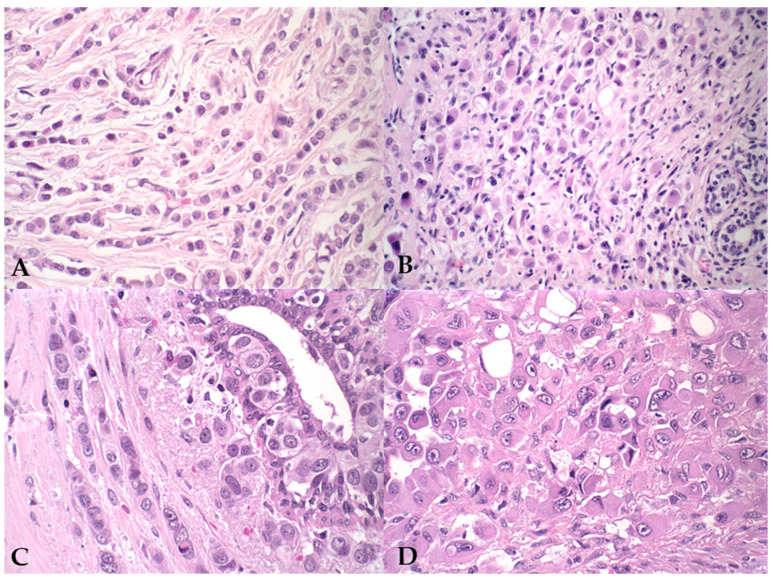 Figure 1
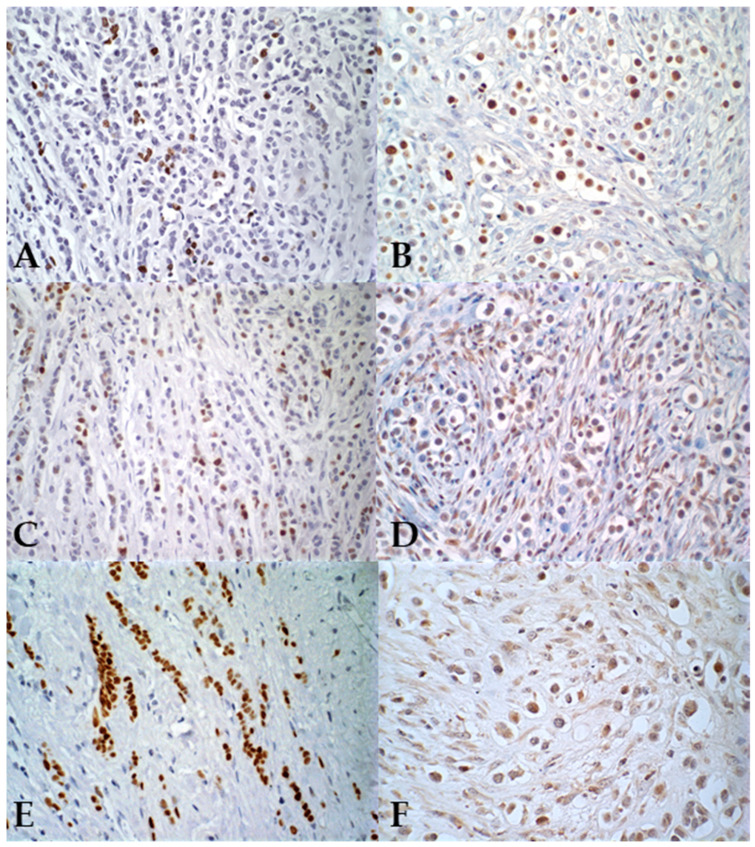 Figure 2
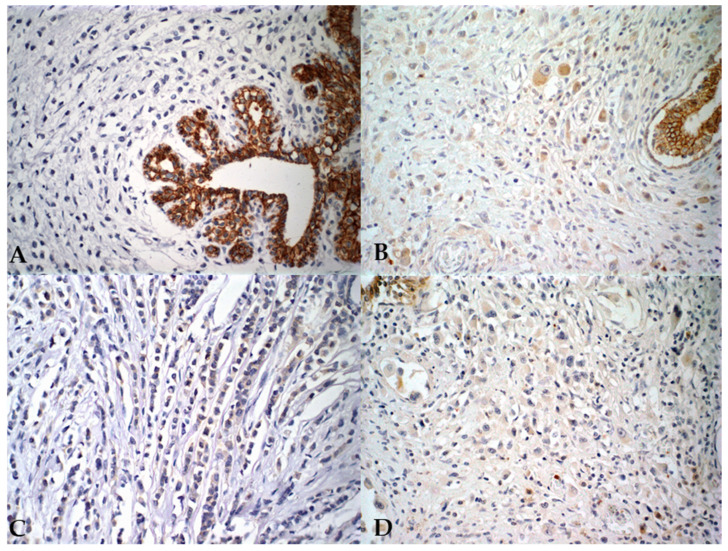 Figure 3
Peer Reviews
No public reviews on file for this paper yet. If you reviewed it on a platform where reviews are public (OpenReview, ICLR, NeurIPS, ICML), you can paste yours below so the community can read it here.
Videos
No videos yet. Explain this paper in a talk, walkthrough, or lecture? Add one.
Taxonomy
TopicsVeterinary Oncology Research · Infectious Diseases and Mycology · Hedgehog Signaling Pathway Studies