Continuous Assessment of Mental Workload During Complex Human–Machine Interaction: Inferring Cognitive State from Signals External to the Operator
Axel Roques, Dimitri Keriven Serpollet, Alice Nicolaï, Stéphane Buffat, Yannick James, Nicolas Vayatis, Ioannis Bargiotas, Pierre-Paul Vidal

TL;DR
This paper introduces a machine-learning model to estimate mental workload in helicopter pilots using operational data, which outperforms physiological signals.
Contribution
A novel machine-learning model for real-time mental workload estimation using operational data in complex human-machine interactions.
Findings
The machine-learning model achieved high performance metrics (ROC AUC score 0.836, F1 score 0.842).
Operational data outperformed physiological signals in predicting mental workload.
Abstract
The use of complex human–machine interfaces (HMIs) has grown rapidly over the last few decades in both industrial and personal contexts. Now more than ever, the study of mental workload (MWL) in HMI operators appears essential: when mental demand exceeds task load, cognitive overload arises, increasing the risk of work-related fatigue or accidents. In this paper, we propose a data-driven approach for the continuous estimation of the MWL of professional helicopter pilots in realistic simulated flights. Physiological and operational parameters were used to train a novel machine-learning model of MWL. Our algorithm achieves good performance (ROC AUC score 0.836 ± 0.081, the maximum F1 score 0.842 ± 0.078 and PR AUC score 0.820 ± 0.097) and shows that the operational information outperforms the physiological signals in terms of predictive power for MWL. Our results pave the way towards…
Genes, proteins, chemicals, diseases, species, mutations and cell lines named across the full text — each resolved to its canonical identifier and authoritative record.
Click any figure to enlarge with its caption.
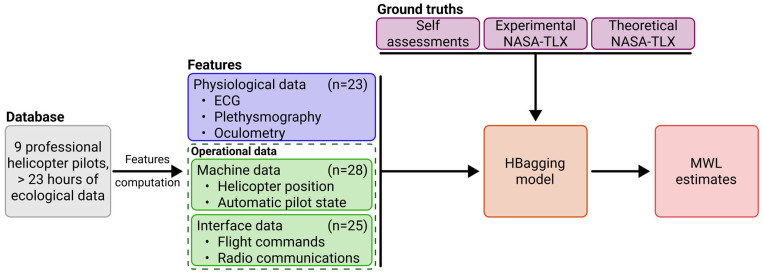 Figure 1
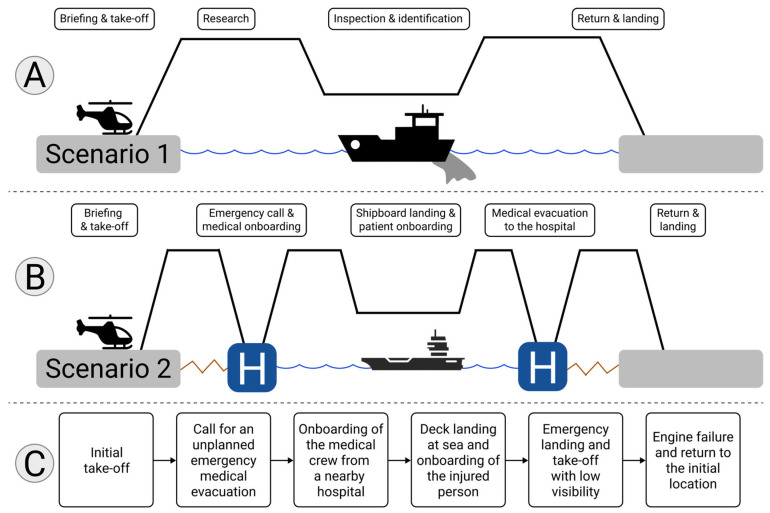 Figure 2
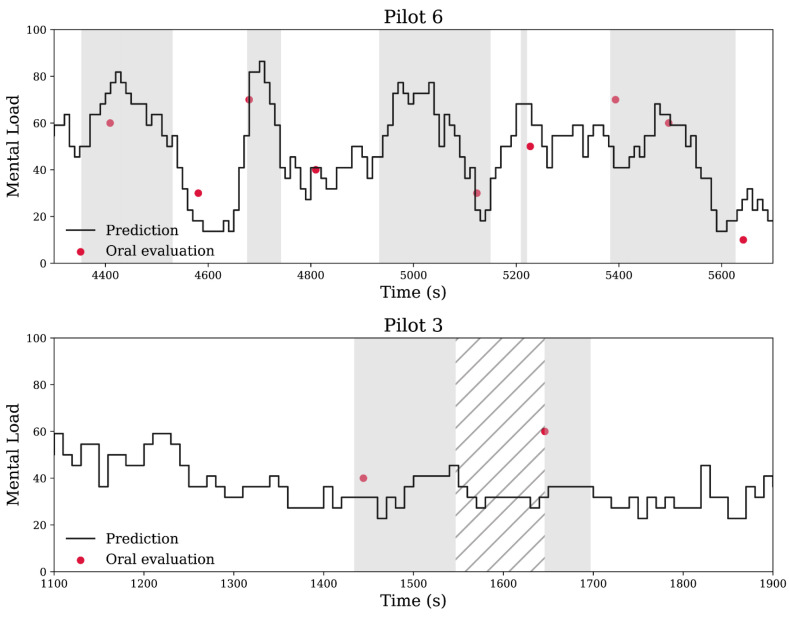 Figure 3
Peer Reviews
No public reviews on file for this paper yet. If you reviewed it on a platform where reviews are public (OpenReview, ICLR, NeurIPS, ICML), you can paste yours below so the community can read it here.
Videos
No videos yet. Explain this paper in a talk, walkthrough, or lecture? Add one.
Taxonomy
TopicsHuman-Automation Interaction and Safety · Technology and Human Factors in Education and Health · Occupational Health and Safety Research