Physiological Correspondence Between Different Indexes of High-Intensity Endurance Exercise in Young Male Runners
Danilo A. Massini, Renato A. C. Caritá, Tiago A. F. Almeida, Anderson G. Macedo, Víctor Hernández-Beltrán, José M. Gamonales, Mário C. Espada, Dalton M. Pessôa Filho

TL;DR
This study compares three physiological markers of exercise intensity in young male runners to determine if they can be used interchangeably.
Contribution
The study reports the agreement between critical speed, respiratory compensation point, and 50%Δ in running for the first time.
Findings
No significant differences were found in VO2 and running speed between critical speed, respiratory compensation point, and 50%Δ.
Individual variability in physiological responses limits the interchangeability of these exercise intensity indexes.
Observed biases suggest caution in using these indexes as fully interchangeable in practice.
Abstract
Critical speed (CS), the respiratory compensation point (RCP), and the midpoint between gas exchange threshold and maxial oxygen uptake (VO2max) (i.e., 50%Δ) have been considered indexes able to demarcate the boundary between the heavy and severe exercise domains. However, the agreement between these indexes—and therefore the validity of using them reciprocally—remains to be reported in running. The current study analyzed the agreement between RCP, 50%Δ, and CS. Twelve young runners performed an incremental test to assess VO2max, RCP, and 50%Δ, with CS estimated by the linear model of time-limited trials at 90, 95, and 110% of the speed corresponding to VO2max. One-way ANOVA showed no differences when comparing VO2 and running speed at CS vs. 50%Δ vs. RCP (47.5 ± 4.4 vs. 46.6 ± 4.4 vs. 47.8 ± 4.5 mLO2∙kg−1∙min−1; and 13.9 ± 1.3 vs. 13.7 ± 1.3 vs. 14.0 ± 1.4 km∙h−1; p > 0.05 for all…
Genes, proteins, chemicals, diseases, species, mutations and cell lines named across the full text — each resolved to its canonical identifier and authoritative record.
Click any figure to enlarge with its caption.
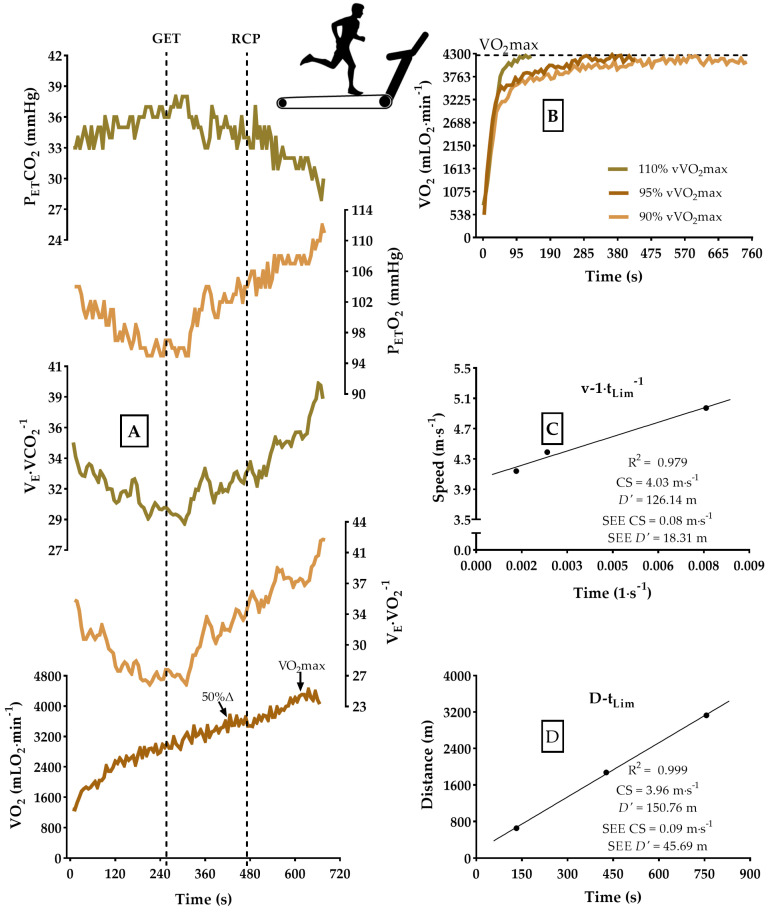 Figure 1
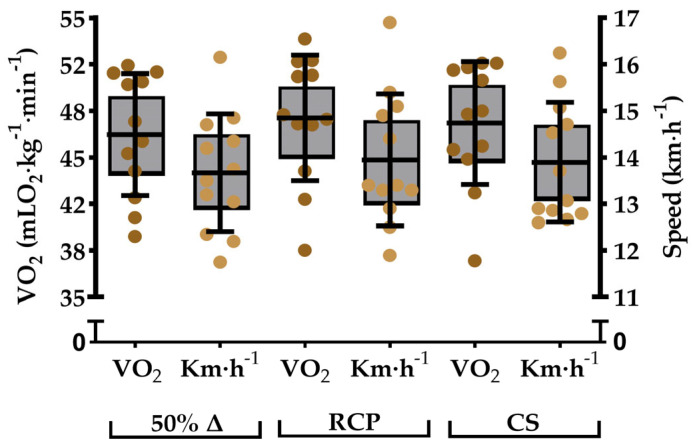 Figure 2
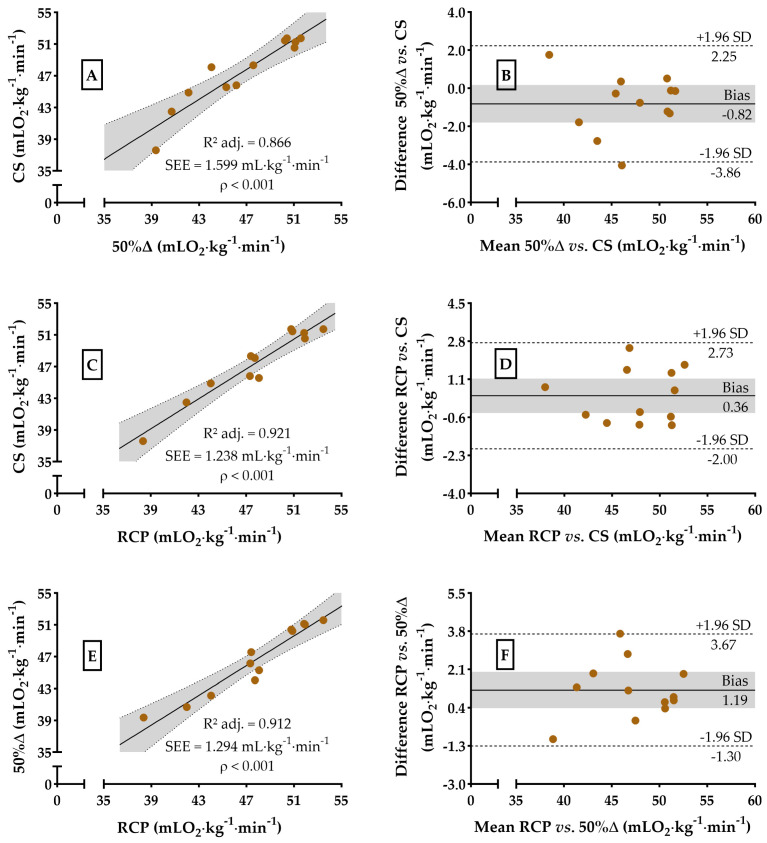 Figure 3
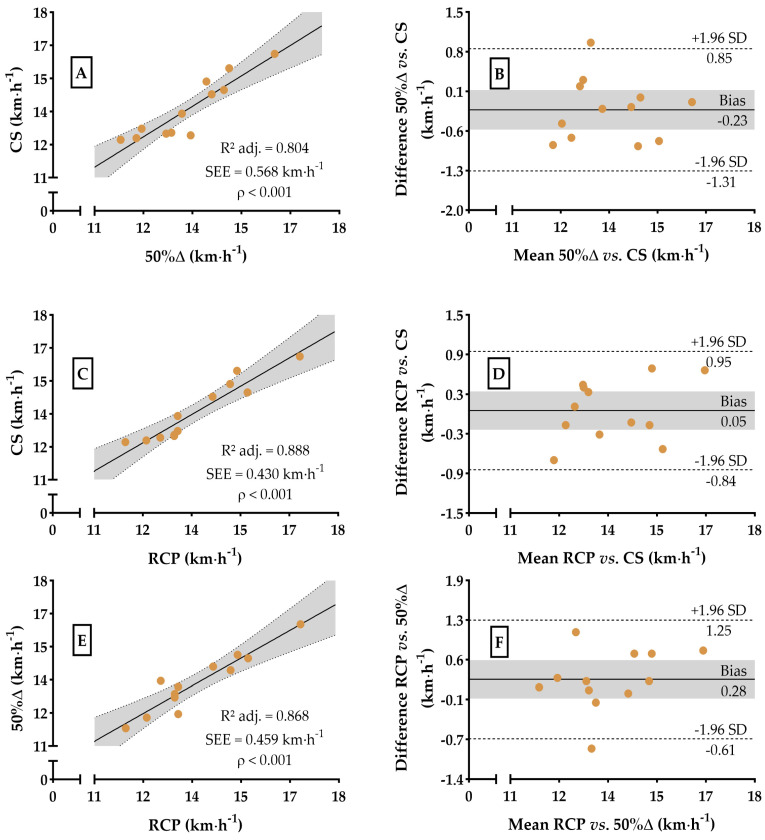 Figure 4
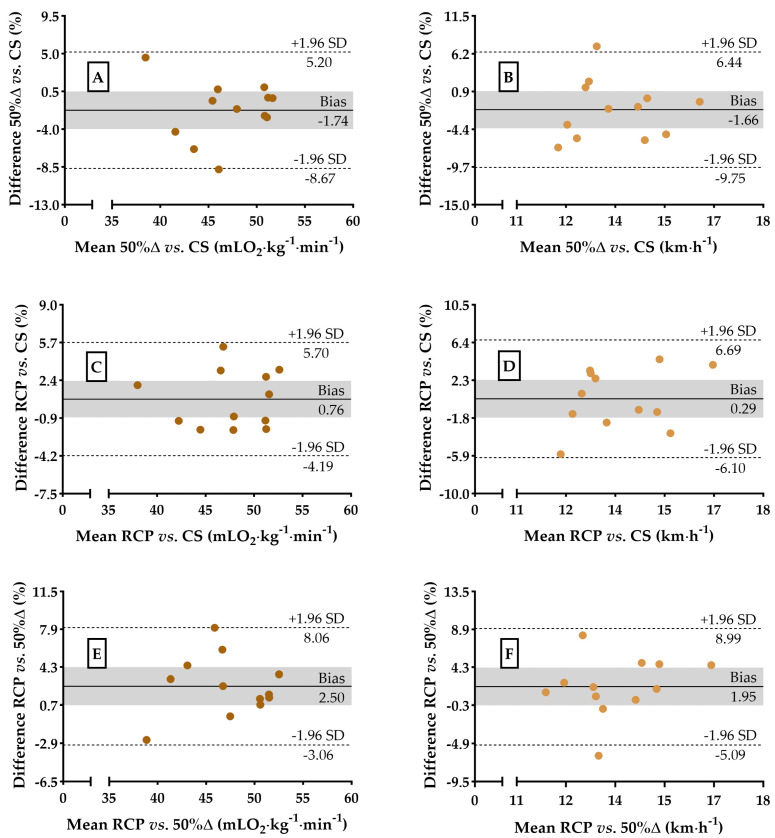 Figure 5
Peer Reviews
No public reviews on file for this paper yet. If you reviewed it on a platform where reviews are public (OpenReview, ICLR, NeurIPS, ICML), you can paste yours below so the community can read it here.
Videos
No videos yet. Explain this paper in a talk, walkthrough, or lecture? Add one.
Taxonomy
TopicsSports Performance and Training · Cardiovascular and exercise physiology · Exercise and Physiological Responses