Easy ROMP of Quinine Derivatives Toward Novel Chiral Polymers That Discriminate Mandelic Acid Enantiomers
Mariusz Majchrzak, Karol Kacprzak, Marta Piętka, Jerzy Garbarek, Katarzyna Taras-Goślińska

TL;DR
This paper introduces a new method to create chiral polymers using quinine derivatives that can distinguish between enantiomers of mandelic acid.
Contribution
The study presents a general and practical approach for ROMP polymerization of cinchona alkaloid derivatives to create chiral polymers with enantioselective properties.
Findings
The polymers were synthesized with controlled length and solubility using Cu(I)-catalyzed click chemistry and ROMP.
The resulting polymers showed excellent thermal stability and a preference for the (R)-stereoisomer of mandelic acid.
The method allows for regular decoration of the polymer chain with quinine moieties, which is not achievable with typical immobilization methods.
Abstract
A novel and general approach to the practical ROMP polymerization of cinchona alkaloid derivatives providing novel hybrid materials having quinine attached on a poly(norbornene-5,6-dicarboxyimide) matrix is presented. The concept involves an easy modification of quinine (in general, any cinchona alkaloid) toward clickable 9-azide that reacts with N-propargyl-cis-5-norbornene-exo-2,3-dicarboxylic imide in Cu(I)-catalyzed Huisgen cycloaddition (click chemistry). The resulting monomers undergo a controllable ROMP reaction that leads to novel polymers of a desired length and solubility. This sequence allows for the facile preparation of a regularly decorated polymeric material having one quinine moiety per single mer of the polymer chain inaccessible using typical immobilization methods. A poly(norbornene-5,6-dicarboxyimide) type of polymeric matrix was selected due to the high reactivity…
Genes, proteins, chemicals, diseases, species, mutations and cell lines named across the full text — each resolved to its canonical identifier and authoritative record.
Click any figure to enlarge with its caption.
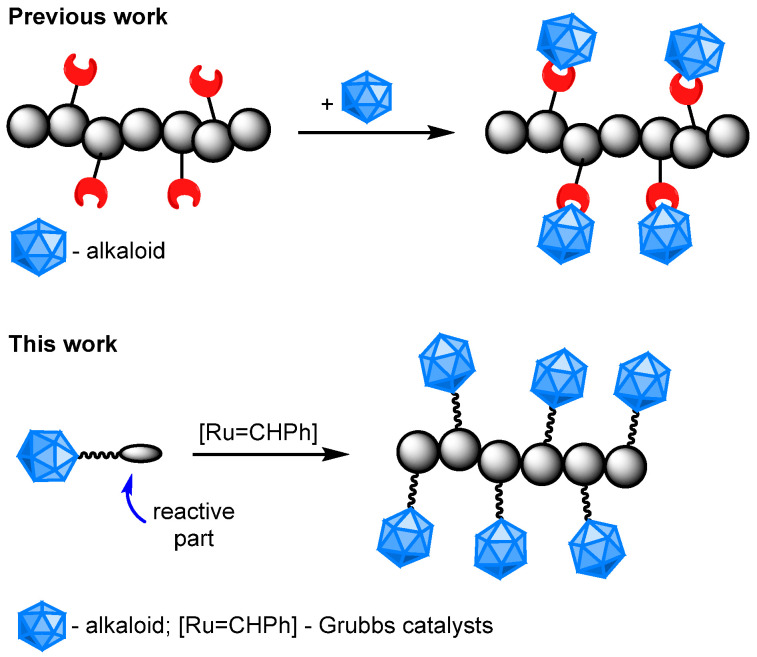 Figure 1
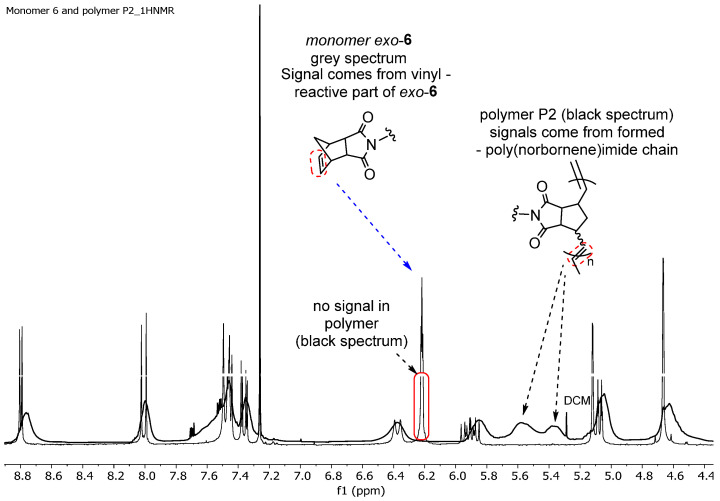 Figure 2
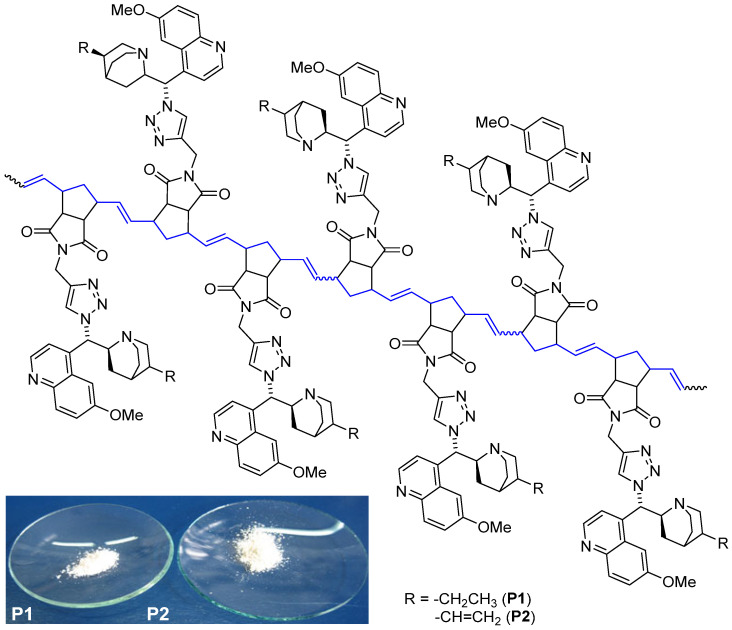 Figure 3
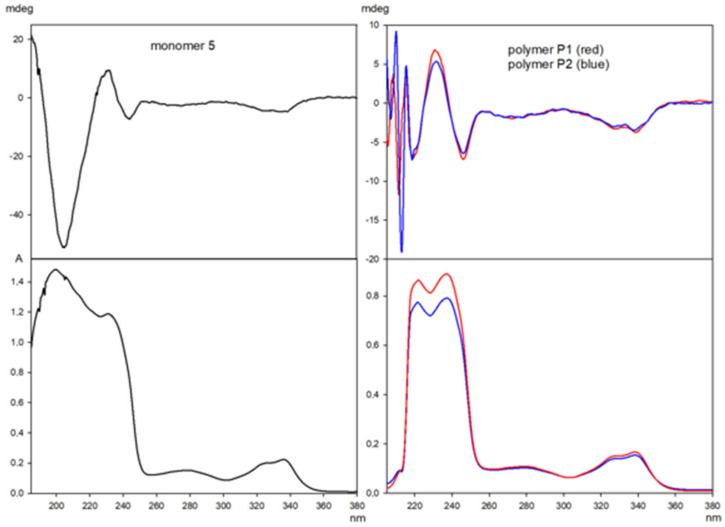 Figure 4
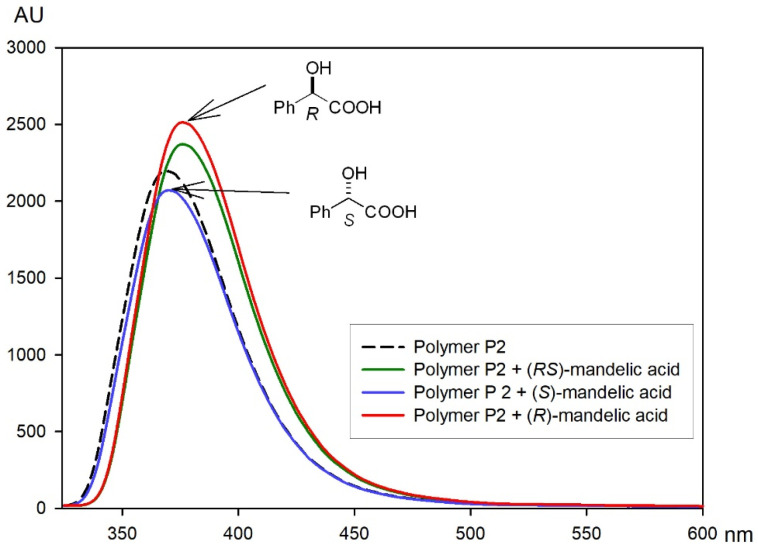 Figure 5
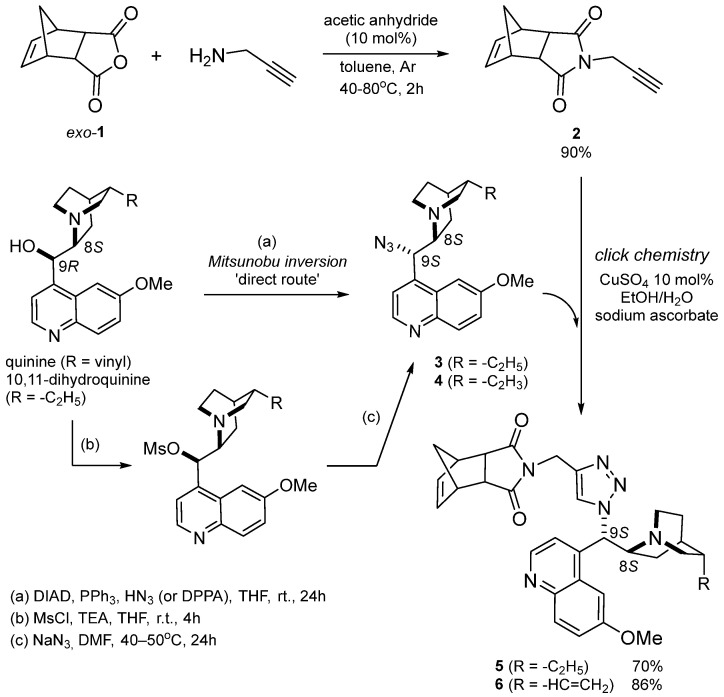 Figure 6
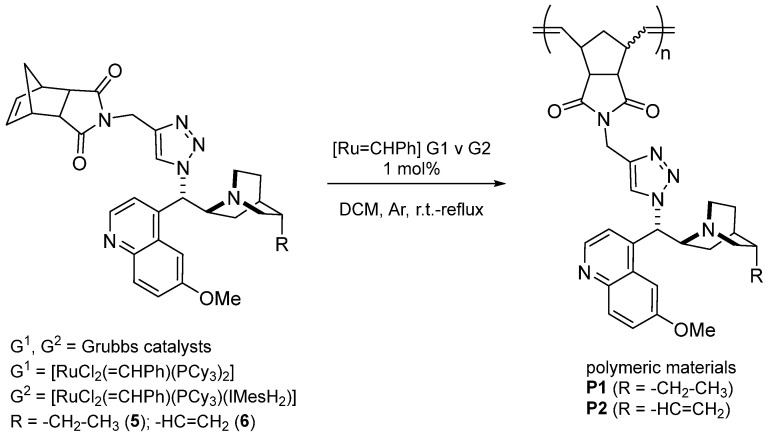 Figure 7
Peer Reviews
No public reviews on file for this paper yet. If you reviewed it on a platform where reviews are public (OpenReview, ICLR, NeurIPS, ICML), you can paste yours below so the community can read it here.
Videos
No videos yet. Explain this paper in a talk, walkthrough, or lecture? Add one.
Taxonomy
TopicsChemical Synthesis and Analysis · Click Chemistry and Applications · Analytical Chemistry and Chromatography