Morphological and Molecular Evidence for a New Species Within Styrax (Styracaceae) from a Karst Area in Southwest Guangxi, China
Guoxing Peng, Tongjun Liang, Jipeng Liang, Yitian Wang, Liaocheng Zhao, Rui Zhang, Yusong Huang, Zhi Li, Weibin Xu, Ming Tang

TL;DR
A new plant species, Styrax chongzuoensis, was discovered in limestone regions of Guangxi, China, and is distinct from similar species based on leaf shape and genetic analysis.
Contribution
The discovery and description of a new endemic plant species, supported by morphological and molecular phylogenetic evidence.
Findings
Styrax chongzuoensis differs from Styrax fortunei by leaf shape and flower count.
Phylogenetic analysis shows S. chongzuoensis is closely related to Styrax japonicus.
The species is narrowly distributed in limestone areas of Chongzuo, Guangxi.
Abstract
Styrax chongzuoensis, a novel endemic species with a narrow distribution in limestone regions of Chongzuo, Guangxi, China, is described herein. This new species seems somewhat similar to Styrax fortunei, but significantly differs from it by having long ovate or long lanceolate leaves, often with an asymmetrical base (vs. obovate-elliptic to elliptic, often with a symmetrical base) and fertile shoots with fewer flowers (1, or rarely 2 or 3, vs. many, always more than 10). Phylogenetic analyses based on the chloroplast coding sequences indicated that S. chongzuoensis and Styrax japonicus are sister taxa to each other, both clustered in the series Cyrta within Styrax. Overall, the integration of morphological and phylogenetic evidence indicates that S. chongzuoensis actually represents a new species. Color plates of S. chongzuoensis are illustrated, and a distribution map and conservation…
Genes, proteins, chemicals, diseases, species, mutations and cell lines named across the full text — each resolved to its canonical identifier and authoritative record.
Click any figure to enlarge with its caption.
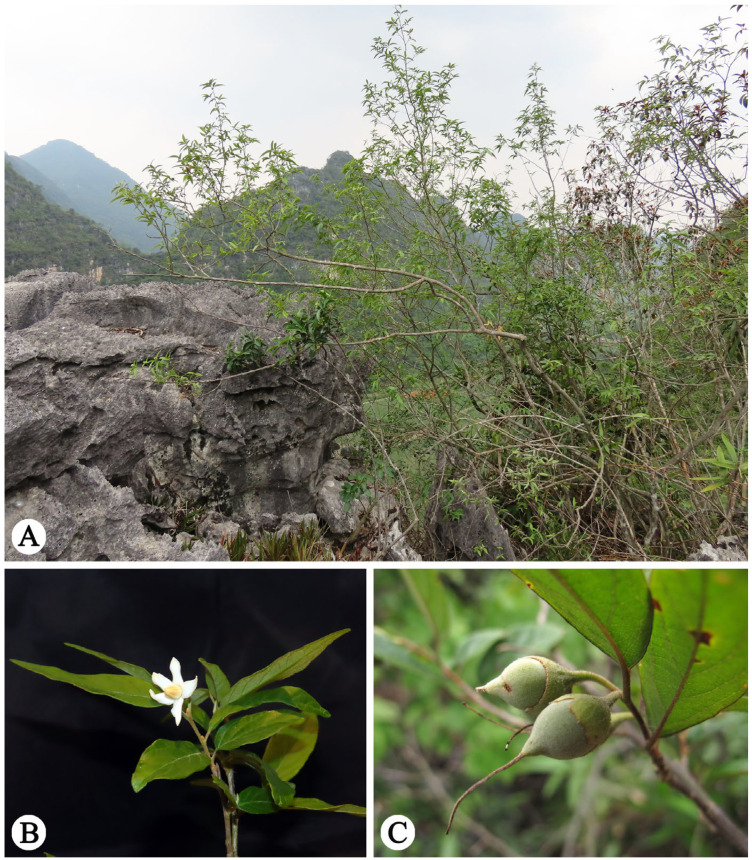 Figure 1
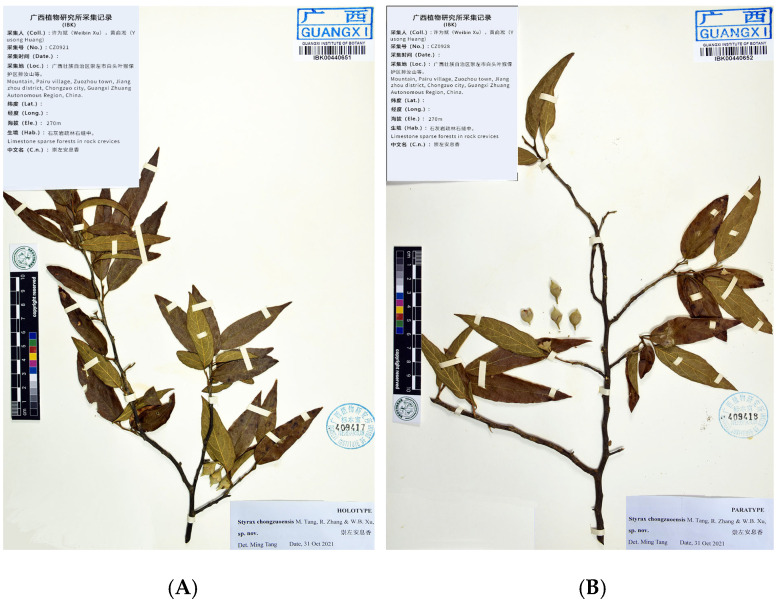 Figure 2
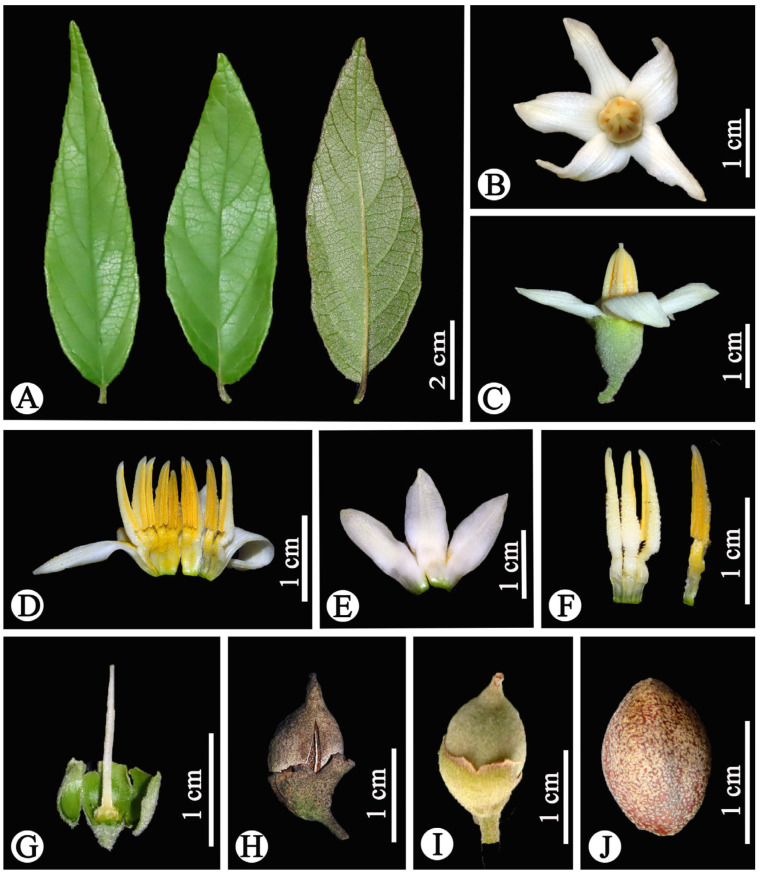 Figure 3
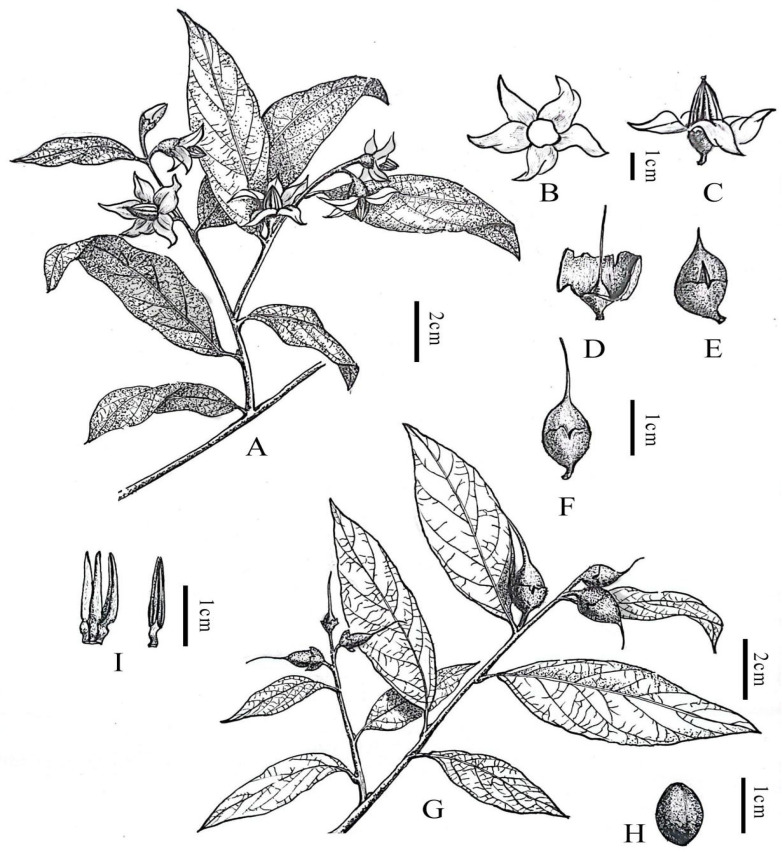 Figure 4
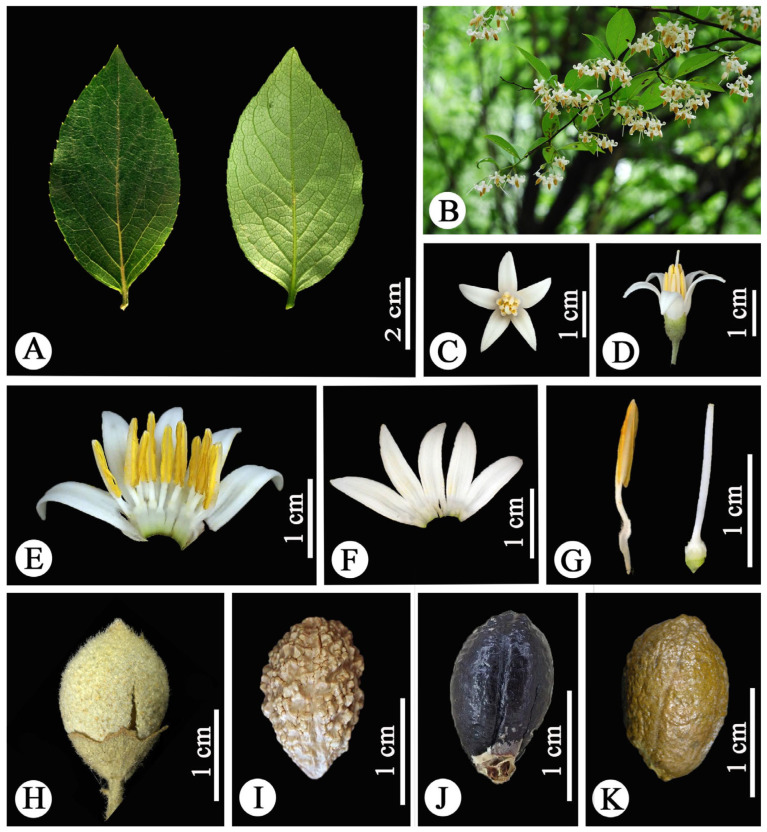 Figure 5
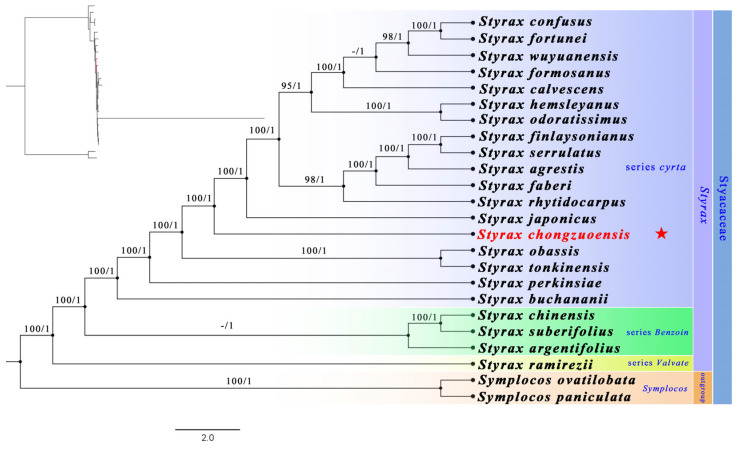 Figure 6
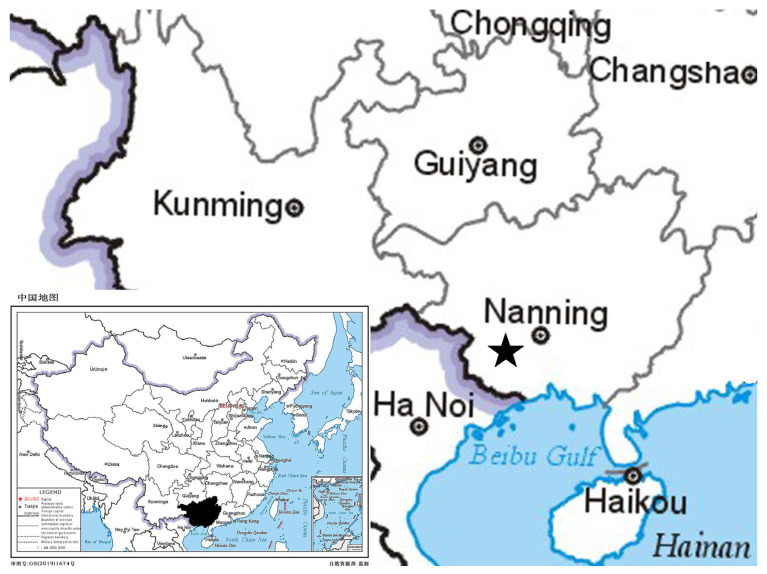 Figure 7
- —National Key R&D Program of China
- —National Natural Science Foundation of China
- —Project of the National Plant Specimen Resource Center (NPSRC)
Peer Reviews
No public reviews on file for this paper yet. If you reviewed it on a platform where reviews are public (OpenReview, ICLR, NeurIPS, ICML), you can paste yours below so the community can read it here.
Videos
No videos yet. Explain this paper in a talk, walkthrough, or lecture? Add one.
Taxonomy
TopicsPlant and Fungal Species Descriptions · Plant Diversity and Evolution · Plant Parasitism and Resistance
1. Introduction
Styrax Linnaeus (1753: 444) comprises ca. 140 species of trees and shrubs, mainly distributed across tropical and subtropical regions in eastern and southeastern Asia, the New World, and the Mediterranean region [1,2,3]. In China, initial records of flora recorded about 30 species and 7 varieties [4,5], which were subsequently revised to 30 species and 3 varieties in recent studies [6,7,8,9].
Styrax is an economically important genus, highly valued in garden landscapes for its white, fragrant flowers [10,11]. Furthermore, resin extracts from certain species have been widely used in the production of spices and medicinal products, enhancing their commercial significance [9].
As part of a comprehensive monograph study on Chinese Styrax species, we conducted extensive field investigations, particularly in the limestone areas of Guangxi and Yunnan provinces, where we discovered a previously undescribed species, S. hwangiae [3]. During subsequent fieldwork in October 2022, two shrubby Styrax individuals at the fruiting stage were discovered on limestone outcrops in Chongzuo, Guangxi. These plants exhibited distinctive traits, including thickly chartaceous lanceolate leaves, often with an asymmetrical base, and an infructescence bearing few fruits, which differs from all other Chinese Styrax species. Subsequent field observations during the flowering season were conducted to collect materials for further research. Combined morphological and molecular analyses revealed that it represents an undescribed species, which we formally propose here as S. chongzuoensis.
2. Methods and Material
2.1. Morphological Analysis
Living specimens of the putative new species were observed in their natural habitat within a karst mountain population in Chongzuo, Guangxi, China. The overall morphology including the plant’s habit, stems, leaves, flowers, and fruits was photographed by a digital camera and then observed and measured with a ruler. Comparisons of the new species with other Styrax in China and adjacent Vietnam were conducted using specimen examination and a study of the literature.
2.2. Species Sampling, DNA Extraction, and Data Collection
We selected 22 species of Styrax including our putative new species, of which 18 species from the series Cyrta, three species from ser. Benzoin, and one from ser. Valvate. Among all the Styrax species, 21 are distributed in China and Vietnam [2,3,7,8,12]. Two Symplocos species were designated as an outgroup. Whole-plastome sequencing was performed for Styrax chongzuoensis, while the complete chloroplast genome for the other species was obtained from GenBank. The voucher information and GenBank numbers of the materials used in this study are shown in Table A1.
The total genomic DNA of the new species Styrax chongzuoensis was extracted from silica-dried leaves using the modified CTAB method. DNA integrity was assessed via 1% (w/v) agarose gel electrophoresis, and DNA quality was evaluated using a NanoDrop spectrophotometer 2000 (Thermo Scientifc, Waltham, MA, USA). The DNA samples were subsequently sent to Novogene Bioinformatics Technology Co., Ltd. (Beijing, China), for library construction. Paired-end (2 × 150 bp) libraries were constructed using the Nova-PE150 strategy, generating over 2 Gb of genome skimming data for each sample.
The raw reads were processed using Trimmomatic v. 0.39 [13] to remove unpaired and low-depth reads, thereby enhancing the accuracy and quality of the assembly. The filtered data was assembled into the complete chloroplast (cp) genomes and nuclear ribosomal DNA (nrDNA) sequences with GetOrganelle v. 1.7.7 [14]. Bandage v.5.6.0 [15] was used to visualize the assembly results and check for circularization. After confirming circularization, the automated annotation of the complete chloroplast genome based on the reference sequence of Styrax wuyuanensis S. M. Hwang (MW166213) was performed using CPGAVAS2 [16], followed by manual correction with Geneious Prime v.11.0.1.
2.3. Phylogenetic Analysis
We imported all chloroplast sequences into Geneious Prime v.11.0.1 and extracted the coding sequences (CDS) for downstream analyses. Sequence alignment was conducted with MAFFT 7.450 [17]. Maximum likelihood (ML) analysis was implemented in IQ-TREE v2.1.3 [18], and bootstrap analysis was conducted with 20,000 ultrafast bootstraps. The best-fit BIC model was determined by ModelFinder [19]. Bayesian inference (BI) was constructed by MrBayes 3.2.6 [20] with 3,000,000 generations, sampling every 1000 generations, which was ultimately needed to ensure the assessment of convergence within the valid range (mean standard deviation of split frequency < 0.01 and effective sample size > 200). The sampled data are “burn-in” and the first 25% of the final processing are used to estimate the posterior probabilities (PPs). Percentile (MLBS) values ≥ 70 [21] indicated strong bootstrap support (MLBS), and PP values ≥ 0.95 [22] were considered strong support. Finally, the phylogenetic trees were visualized by Figtree1.4.
3. Results
3.1. General Morphology
Styrax chongzuoensis bears unique morphological traits within Styrax (Figure 1, Figure 2, Figure 3 and Figure 4). It mostly resembles S. fortunei Hance in flower shape (Table 1). However, it shows clear differences in many morphological features. Styrax chongzuoensis is a shrub or small tree (≤5 m), often with many branches at the lower part, while S. fortunei is a larger tree (up to 20 m) with a defined trunk (Figure 5. Table 1). In addition, S. chongzuoensis has long ovate or long lanceolate leaf blades, often with an asymmetrical base and covered with dense stellate tomentum abaxially, while the leaf blades of S. fortunei are always obovate-elliptic to elliptic, with a symmetrical base, and sparsely stellate-pubescent abaxially (Figure 5. Table 1). Additionally, Styrax chongzuoensis often has a single flower, or sometimes two or three flowers clustering at branchlet tips, and has curved-point fruits, while S. fortunei often has many flowers clustering into panicles, and has round fruits with a short point (Figure 5. Table 1).
3.2. Phylogenetics
Our maximum likelihood (ML) and Bayesian inference (BI) approaches yielded highly similar tree structures that align closely with prior research [9]. Both analyses strongly supported the placement of Styrax chongzuoensis within the Styrax sect. Cyrta lineage, with maximum statistical confidence (MLBS = 100%; PP = 1.00). Genetic data from chloroplast coding DNA sequences revealed that this species forms a distinct evolutionary branch that clusters closest to ser. Benzoin group members (Figure 6).
4. Taxonomic Treatment
Styrax chongzuoensis M. Tang, R. Zhang & W.B. Xu, sp. nov.
Figure 1, Figure 2, Figure 3 and Figure 4
Chinese name: “chóng zuò ān xī xiāng” (崇左安息香)
Type: Tiandeng hill, Pairu village, Zuozhou town, Chongzuo city, Guangxi Zhuang Autonomous Region, China, in sparse forests on limestone karst hilltops, alt. 270 m, 27 May 2014, WB Xu & YS Huang CZ0921 (holotype, IBK!; isotypes, IBK, JXAU!) (Figure 2).
Diagnosis: Styrax chongzuoensis is most similar to S. fortunei in flower shape, but could be distinguished by leaf shape and coverings (long ovate or long lanceolate, densely hairy abaxially vs. obovate-elliptic to elliptic, sparsely hairy abaxially), inflorescence (often solitary, or 2 or 3 flowers in racemes, vs. many flowers clustering in large, branched panicles), and fruit shape (with a curved point vs. fruit round with a short point).
Description: Deciduous shrub or small tree, 2–5 m tall; bark gray or dark gray. Leaves thickly chartaceous, narrowly long ovate or long lanceolate, 5–15 × 2.5–6.5 cm, entire, apically acuminate, base broadly cuneate, often asymmetrical, adaxially glabrous, abaxially densely yellowish-brown stellate or scalelike tomentum, lateral veins 5–8 per side; petiole 5–10 mm long, densely yellowish-brown hairs. Inflorescences terminal or axillary, often single flower, or racemes, 2 or 3 clustered at branchlet tips; peduncle, pedicel, bracteoles, and calyx densely yellowish-brown hairs; pedicel ca. 5 mm long, stellate-tomentose; bracteoles subulate or nearly subulate, ca. 3.0 mm long; calyx cup-shaped, corolla lobes 4–5, oblong, elliptical to obovate; corolla white, widely campanulate, 10–15 × 3–3.5 mm; stamens 9–11, slightly shorter than corolla, filaments curved at middle, style 10–13 mm long; fruit ovate or slightly broadly ovate, 13–17 × 8–10 mm, apiculate, cusp longer and slightly curved; seeds ovate, brown, 12–15 × 7–9 mm, rusty-brown stellate trichomes.
Phenology: Flowering from April to June; fruiting from August to October.
Etymology: This species is named after its type locality, Chongzuo city, Guangxi Zhuang Autonomous Region, China.
Distribution and habitat: Styrax chongzuoensis is endemic to Chongzuo city, Guangxi Zhuang Autonomous Region, China (Figure 7). It grows in sparse forests of limestone in karst hill tops at altitudes of 270 m.
Conservation status: The Tuozhu Area, Jiangzhou District, Chongzuo city, Guangxi White-headed Langur Nation Reserve is the first site in China where Styrax chongzuoensis was recorded. It is understood that the Guangxi Chongzuo White-headed Langur Nation Reserve is a wildlife-type nature reserve, and the peaked rocky mountains of the reserve are mainly dominated by shrubs, small trees, and thorny vine species, with a fragmented community structure of vegetation and very fragile habitats. At present, the population of S. chongzuoensis was found within a radius of 1 km and does not exceed 10 mature individuals, which can only be found in the extremely narrow distribution area of the karst mountain tops in the region. However, due to the surrounding adjoining farmland and villages, the low elevation of the mountain, the very sparse vegetation, the fragile ecological environment, and the existence of a certain degree of anthropogenic interference, it may face deforestation or other unforeseen habitat disturbance and destruction; thus, the species is at a high risk of extinction, and it should be considered Critically Endangered (CR) according to the IUCN Criteria [23].
Additional specimens examined: Pairu Village, Zuozhou town, Chongzuo city, Guangxi Zhuang Autonomous Region, China. alt. 240 m, 13 April 2021, WB Xu et al. 14,236 (paratypes, IBK!, JXAU!); same locality. alt. 270 m, 31 October. 2021, WB Xu & YS Huang CZ0921 (paratypes, IBK!, JXAU!).
5. Notes
The genus Styrax still likely contains undescribed or cryptic species in understudied regions, particularly karst areas that should be prioritized for botanical investigation. These limestone landscapes exhibit exceptional edaphic and topographic heterogeneity [24], creating specialized microhabitats that foster plant diversification and speciation. This is evidenced by recent discoveries of endemic taxa in Orchidaceae, Begonia, Conandron, and Primulina [25,26,27,28].
Recent botanical surveys in the karst regions of Guangxi and Yunnan have revealed three novel species and one new regional record within the genus Styrax [3]. Notably, specimens of the newly described Styrax hwangiae were previously misclassified as S. chinensis Hu & S. Y. Liang—a species widely distributed across southern China and northern Southeast Asia. However, S. hwangiae exhibits distinct morphological characteristics including smaller leaves, calyces with branched stellate hairs, and beaked fruit apices [3]. The Southeast Asian karst zone, particularly the areas bordering southern/western Yunnan and southwestern Guangxi, contains extensive limestone formations covering approximately 10% of the region’s landmass. This geologically unique area represents one of the world’s most significant biodiversity hotspots, harboring exceptional concentrations of endemic flora and fauna. Its distinctive ecosystem makes it particularly valuable for studying the evolutionary patterns and biogeographical distribution of Styrax species. Despite its ecological significance, current field research efforts in these karst habitats remain insufficient [29,30]. Our findings suggest that additional undocumented Styrax taxa may exist in these understudied regions, highlighting the urgent need for intensified botanical surveys focused on limestone-specific vegetation communities.
The reference list from the paper itself. Each links out to its DOI / PubMed record.
- 1Fritsch P.W. Phylogeny of Styrax based on morphological characters, with implications for biogeography and infrageneric classification Syst. Bot.19992435537810.2307/2419695 · doi ↗
- 2Li G. Fritsch P.W. A taxonomic revision of taxa in Styrax series Cyrta (Styracaceae) with valvate corollas J. Bot. Res. Inst. Texas.20181257964110.17348/jbrit.v 12.i 2.962 · doi ↗
- 3Xu W.B. Yang P. Huang Y.S. Zhang R. Tang M. Styrax hwangiae (Styracaceae), a new species endemic to limestone areas of Guangxi, China Phytotaxa 202147817117810.11646/phytotaxa.478.1.13 · doi ↗
- 4Hwang S.M. Grimes J. Styrax L Flora of China Wu Z.Y. Raven P.H. Science Press Beijing, China Missouri Botanical Garden Press St. Louis, MO, USA 1996253263
- 5Zhou H. Yang W. Li M. Yu X.L. Styrax rhytidocarpus (Styracaceae), a new species from Hunan, China Phytotaxa 2015230879110.11646/phytotaxa.230.1.9 · doi ↗
- 6Huang Y.L. Fritsch P.W. Shi S.H. A revision of the imbricate group of Styrax series Cyrta (Styracaceae) in Asia Syst. Bot.20039049155310.2307/3298541 · doi ↗
- 7Ruan Y.Q. Yu Y.L. Yu F. Deng X.G. Liu Y.L. Wu X.H. Tang M. Reinstatement of the Chinese endemic species Styrax zhejiangensis Phytotaxa 201913310511310.3897/phytokeys.133.37942 PMC 681137531662616 · doi ↗ · pubmed ↗
- 8Zhang R. Zhao W. Liu Y. Fan Y. Tang M. Rediscovery of Styrax buchananii and S. chrysocarpus, with supplemental descriptions adding fruit and floral characters, respectively Phytotaxa 202147917318210.11646/phytotaxa.479.2.3 · doi ↗