Helicobacter pylori Seroprevalence and Its Associations with Sociodemographic Characteristics, Environmental Factors, and Gastrointestinal Complaints: A Cross-Sectional Study in the Adult Population of Kaunas City, Lithuania
Paulius Jonaitis, Janina Petkeviciene, Violeta Salteniene, Egle Ciupkeviciene, Laimas Jonaitis, Mantas Kriukas, Dalia Luksiene, Vaiva Lesauskaite, Juozas Kupcinskas, Limas Kupcinskas

TL;DR
This study found that over 60% of adults in Kaunas, Lithuania, have been exposed to Helicobacter pylori, a cancer-causing bacteria, with higher rates in older men and those with lower education.
Contribution
The study provides updated, large-scale data on H. pylori seroprevalence in Lithuania and identifies sociodemographic and environmental risk factors.
Findings
The overall H. pylori seroprevalence was 63.1% in Lithuanian adults.
Seropositivity was highest in males aged 55–69 at 80.3%.
Lower education and childhood lack of access to municipal or heated water were linked to higher infection rates.
Abstract
Background and Objectives: Helicobacter pylori, classified as a Group I carcinogen, is the main risk factor for gastric cancer, one of the leading causes of cancer mortality globally. Lithuania reports one of the highest gastric cancer rates in Europe, yet recent large-scale epidemiological data on H. pylori prevalence are lacking. This study aimed to assess the current seroprevalence of H. pylori in Lithuanian adults and its associations with sociodemographic, environmental factors, and dyspeptic symptoms. Materials and Methods: A cross-sectional study was conducted between 2020 and 2023 at the Lithuanian University of Health Sciences in Kaunas city. Randomly selected adults aged 25–69 years underwent venous blood sampling for H. pylori IgG antibody testing (Serion ELISA) and completed a questionnaire on demographic–environmental factors and dyspeptic symptoms in the past 30 days.…
Genes, proteins, chemicals, diseases, species, mutations and cell lines named across the full text — each resolved to its canonical identifier and authoritative record.
Click any figure to enlarge with its caption.
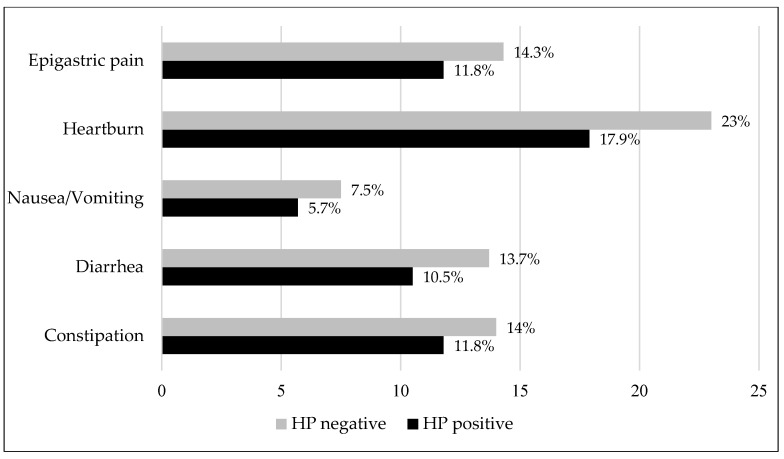 Figure 1
Peer Reviews
No public reviews on file for this paper yet. If you reviewed it on a platform where reviews are public (OpenReview, ICLR, NeurIPS, ICML), you can paste yours below so the community can read it here.
Videos
No videos yet. Explain this paper in a talk, walkthrough, or lecture? Add one.
Taxonomy
TopicsHelicobacter pylori-related gastroenterology studies · Galectins and Cancer Biology · Eosinophilic Esophagitis
1. Introduction
Helicobacter pylori (H. pylori) is a Gram-negative bacterium that colonizes the human stomach and has the ability to persist for decades. It is recognized as one of the most common chronic bacterial infections worldwide. Even though many carriers remain asymptomatic, chronic infection may lead to severe gastric diseases. This bacterium is the primary cause of chronic gastritis and is associated with numerous conditions, such as gastric cancer (GC), peptic ulcer disease (PUD), mucosa-associated lymphoid tissue lymphoma, and others [1,2,3]. Moreover, H. pylori, which was classified as a definite (Group I) carcinogen by the International Agency for Research on Cancer (IARC) in 1994, is the biggest risk factor in the etiopathogenesis of non-cardia GC—one of the leading causes of cancer-related deaths globally [4]. According to the Global Cancer Observatory (GLOBOCAN) database from 2022, GC ranks fifth in both incidence and mortality among various types of cancer [5].
Although the prevalence of H. pylori globally is declining, it is estimated that approximately 40–50% of the World’s population is still infected with this bacterium. Higher prevalence rates are observed in developing countries with poor sanitation and crowded living conditions, as well as low socioeconomic status, whereas developed Western countries have lower prevalence rates [3,6,7]. This bacterial infection is typically acquired in childhood through an oral–oral or fecal–oral transmission route. Socioeconomic factors such as sanitation, access to clean water, and education level influence the risk of acquiring H. pylori infection, while lifestyle factors like diet, smoking, and alcohol consumption may affect the progression of H. pylori-associated conditions [8].
There is a lack of epidemiological data on H. pylori in Eastern and Central European countries, including Lithuania. A population-based epidemiological study in Latvia revealed a high (79.2%) prevalence of H. pylori infection [9]. In the Tartu population of Estonia, the prevalence of H. pylori antibodies was found to be 69% [10]. Similarly, in the neighboring Poland, 78.5% of randomly selected residents in Lublin tested positive for H. pylori [11]. The prevalence of H. pylori infection in Lithuania and its associated conditions has been examined in several smaller studies, with rates ranging from 36% in children to approximately 70% in middle-aged adults with dyspeptic symptoms. One of the more recent studies revealed a dramatic decrease in the seroprevalence of H. pylori over 25 years among Lithuanian medical students, from 52% in 1995 to 14% in 2020 [12,13,14,15]. However, epidemiological data on the general population in Lithuania remain very limited.
Furthermore, the incidence of GC in Lithuania remains one of the highest in Europe, with an age-standardized rate per 100,000 inhabitants of 18.4 in males and 7.2 in females based on the GLOBOCAN 2022 data [5]. The high burden of GC in Lithuania and neighboring countries highlights the critical public health importance of addressing H. pylori infection and the need for ongoing surveillance and effective management strategies [16].
The European guidelines for H. pylori diagnostics and treatment are presented in the recently updated Maastricht VI/Florence Consensus Report, which is also followed in Lithuania. These guidelines state that validated serological tests for IgG anti-H. pylori antibodies can be used for primary diagnosis in cases when endoscopy is not indicated, and there is no history of previous H. pylori eradication [1]. A recent study using data from the European Registry on H. pylori Management (Hp-EuReg) in Lithuania concluded that the diagnostics and treatment of H. pylori infection only partially met international guidelines [17].
Therefore, this study aimed to assess the seroprevalence of Helicobacter pylori infection in the adult population of Kaunas city, Lithuania, and analyze its associations with sociodemographic and environmental factors, as well as dyspeptic symptoms, in a broader cohort.
2. Materials and Methods
2.1. Study Setting and Ethics
The seroprevalence of H. pylori IgG antibodies was assessed in a study entitled “Chronic Diseases and their Risk Factors in the Adult Population”. This study was conducted among residents of Kaunas, the second-largest city in Lithuania, aged 25 to 69 years. A random sample of Kaunas males and females aged 25–69 years, stratified by sex and age, was randomly selected from the Lithuanian population register (n = 6000). The study began in 2020 but was interrupted due to the COVID-19 pandemic and resumed in 2023. In total, 3426 individuals participated in the study until 21 June 2024. The response rate was 57.1%. H. pylori IgG antibodies were assessed in a subsample of individuals who were screened by 23 June 2023. Invitations were mailed to the selected individuals to come for a health check-up at the Hospital of Lithuanian University of Health Sciences (LUHS) Kaunas Clinics.
The study was approved by the Kaunas Regional Biomedical Research Ethics Committee (protocol number BE-2-49, issued on 5 June 2018). Written informed consent was obtained from all participants.
2.2. Study Subjects
By 23 June 2023, blood serum samples from 1046 participants were tested for H. pylori IgG antibodies. The H. pylori study population comprised 526 males (50.3%) and 520 females (49.7%). The mean age of the participants was 47.2 years, with a standard deviation of 11.5 years.
2.3. Data Collection and Variables
All study participants completed a questionnaire that included questions about factors potentially associated with the prevalence of H. pylori infection. The questionnaire covered the following factors: (1) social and demographic characteristics, such as sex, age, marital status, level of education, and place of residence during childhood; (2) environmental factors, including the number of family members during childhood, the source of drinking water, and access to hot tap water in childhood; and (3) dyspeptic complaints. Participants were categorized into four age groups: 25–34, 35–44, 45–54, and 55–69 years old. They were also grouped into three groups based on education level: (1) basic education: primary, incomplete secondary, and secondary education; (2) intermediate education: technical school or vocational training; (3) advanced education: college or university degree (bachelor’s, master’s or doctoral degree).
Participants were asked if they had previously been tested for H. pylori. The possible responses were “no”, “yes, the bacterium was not detected”, “yes, the bacterium was detected”, and “I don’t know”. The subsequent question was “If you have been diagnosed with H. pylori, have you used any medications to eradicate the bacteria?” The possible answers were “no”, “yes”, and “I don’t know”.
Additionally, participants were asked binary (yes/no) questions if they had experienced dyspeptic complaints within the past 30 days, including epigastric pain, heartburn, nausea/vomiting, diarrhea, and constipation. The intensity of the symptoms was not evaluated.
2.4. H. pylori IgG Antibodies Testing
A blood sample was collected from a peripheral vein to test for H. pylori IgG antibodies. Human IgG antibodies against H. pylori were detected in serum using a diagnostic quantitative enzyme-linked immunosorbent assay (ELISA) kit (SERION ELISA^®^ Classic Helicobacter pylori IgG, Wurzburg, Germany), following the manufacturer’s protocol. The optical density of the reaction solution was measured using a Sunrise microplate reader (Tecan Trading AG, Zurich, Switzerland) at a wavelength of 405 nm, with a reference wavelength of 620 nm. Measurements were analyzed using Magellan™ Standard software (Tecan Trading AG, Zurich, Switzerland).
2.5. Exclusion from Further Analysis
In total, 132 participants answered that they had previously received H. pylori eradication therapy. In this study, we had no access to the medical history or records of study participants; therefore, we could not ensure that they had really been previously diagnosed with H. pylori infection, received eradication therapy, or if the eradication success had been confirmed. To avoid any inaccurate data, these subjects were excluded from the analysis of current seroprevalence and its associations with other independent factors.
2.6. Statistical Analysis
Statistical analysis was performed using the statistical package IBM SPSS Statistics 27.0 (IBM Corp.: Armonk, NY, USA, released 2020).
The prevalence of H. pylori IgG antibodies was expressed in percentages. The proportions of H. pylori seropositive individuals in different groups were compared using a χ^2^ test and Z-test with Bonferroni correction for multiple comparisons. To calculate the total prevalence of H. pylori IgG antibodies, the indicators were standardized by age using the age structure of the Kaunas city population as the reference.
A logistic regression analysis was conducted to assess the association between H. pylori antibody positivity (the dependent variable) and various sociodemographic and environmental factors. Initially, separate models were created for each variable. Following that, all variables—such as sex, age, education, and childhood environmental conditions (including living location, access to tap water, and hot water supply)—were combined into a single model for multivariable analysis. The selected level of statistical significance was p < 0.05.
3. Results
3.1. Demographic and Socioeconomic Data
A total of 1046 residents from Kaunas participated in the H. pylori seroprevalence study. The largest age group was 55–69 years old (30.3%), comprising 28.9% of total males and 31.7% of total females. The smallest age group was 25–34 years old (17.1%), accounting for 19.2% of total males and 15% of total females. Over half (59%) of the participants had attained advanced education. Notably, 75.8% of the participants reported having grown up in urban areas and having access to centralized drinking water and hot tap water during childhood. Additionally, almost half of the study participants (47.9%) grew up in households with four members. Detailed demographic and environmental data are shown in Table 1.
3.2. Seroprevalence of H. pylori IgG Antibodies
The age-standardized seroprevalence of H. pylori IgG antibodies in the population of Kaunas city, aged 25–69 years, was 63.1% (95% CI 60.4–66.7). H. pylori seroprevalence was higher in males (66.3%) compared to females (60.2%). Statistically significant differences in seroprevalence between males and females were observed in the oldest age group (55–69 years). Overall, the proportion of seropositive individuals increased with age, particularly among males. The highest seroprevalence of IgG H. pylori antibodies was observed among men aged 55–69 years (80.3%) and women aged 45–54 years (67.2%). Conversely, the lowest prevalence was found in the youngest age group (25–34 years old), with about 48% in both genders. The detailed seroprevalence of H. pylori and the comparison between different age groups is presented in Table 2.
3.3. Seroprevalence of H. pylori Antibodies in Relation to the Analyzed Independent Factors
The prevalence of Helicobacter pylori IgG antibodies was statistically significantly higher among participants with basic education compared to those with intermediate or advanced education. Participants who had access to tap water and hot water during childhood had a statistically significantly lower prevalence of H. pylori compared to those having no access to a municipal water supply or heated water. The place of residence and the number of household members during childhood did not influence the prevalence of H. pylori infection. Detailed information is presented in Table 3.
Univariable logistic regression analysis indicated that males had higher odds of H. pylori infection compared to females, and the likelihood of infection increased with age (Table 4). The highest odds of infection were found among respondents with the lowest level of education. Additionally, individuals who experienced poor hygienic conditions during childhood, specifically those without access to tap water or a hot water supply, had greater odds of seropositivity.
A multivariable logistic regression analysis confirmed that being male and older age were positively associated with the odds of H. pylori seropositivity. In contrast, the odds of infection decreased as education levels increased. Furthermore, the associations between H. pylori antibody positivity and the source of drinking water, as well as access to hot water during childhood, were found to be statistically non-significant. Detailed data are presented in Table 4.
3.4. History of Previous H. pylori Antibodies Testing and Eradication
Most participants (70.5%) reported that they had never been serologically tested for H. pylori. Nearly one in ten (11.6%) had been tested previously but received a negative result, while 15% tested positive. Among those who had been tested, the seroprevalence of H. pylori was 56.5% (157 out of 278 participants). Detailed data are presented in Table 5.
3.5. Dyspeptic Symptoms and Their Association with H. pylori Seroprevalence
Some of the participants reported experiencing gastrointestinal complaints in the past 30 days—around one-fifth of the participants experienced heartburn, which was the most frequent complaint. No statistically significant associations were found between the seroprevalence of H. pylori and gastrointestinal complaints, although there was a trend for these complaints to be more prevalent in H. pylori-seronegative participants (Figure 1).
4. Discussion
The findings of our study reveal the high seroprevalence of H. pylori infection in the city of Kaunas, Lithuania, and its associations with sociodemographic and environmental factors, as well as dyspeptic complaints. The overall age-standardized seroprevalence of H. pylori in our study (63.1%) likely reflects trends observed in neighboring countries as well; the most recent studies have shown a high H. pylori seroprevalence of 55% in Latvia, 84% in Polish adults, and approximately 60% in Ukrainian adults [18,19,20]. Our results confirm that the seroprevalence of H. pylori in Lithuania is markedly higher than that seen in Western Europe, where it is ~40%, emphasizing persistent disparities despite socioeconomic improvements. However, based on the previous local studies and the global trend of declining prevalence of H. pylori, we can estimate that the actual prevalence of H. pylori in Lithuania may be slightly lower than our current study findings suggest [13,14,15]. Some participants, who reported being treatment-naïve, might have actually been prescribed eradication therapy in the past, and a small number of patients were unaware of whether they had been tested for H. pylori or prescribed the treatment. A second diagnostic test in the H. pylori IgG-positive group could be considered to confirm the diagnosis.
Age-specific analysis in our study confirmed the “cohort effect”—the prevalence was higher among older cohorts. Our findings have shown a steady increase in prevalence with age, peaking at 80.3% in males aged 55–69, with the lowest prevalence in the youngest cohort of 25–34 years old. A higher prevalence in older populations and a declining prevalence among younger people in Lithuania have already been observed in previously published studies [12,13,14,15,17]. This trend reflects differences in exposure to poor sanitation during childhood, aligning with the “cohort effect” observed in global studies, where older populations exhibit higher H. pylori infection rates due to poorer socioeconomic conditions in their childhood [21].
Educational attainment emerged as one of the main determinants of H. pylori prevalence, with the highest rates observed among participants with basic education compared to those with advanced education. This association is consistent with most studies highlighting education as a proxy for better hygiene, nutrition, and healthcare access [22,23]. Access to drinking water was also associated with H. pylori prevalence: participants who relied on drinking water from wells had significantly higher infection rates compared to those using municipal water supplies. Similar trends were observed when evaluating access to hot water; its absence in childhood was associated with significantly higher prevalence. These findings also align with available evidence linking poor water quality and sanitation to higher infection rates. Interestingly, no significant differences were found when evaluating childhood living environment (urban vs. rural), contrary to available global data suggesting higher rates in rural areas [24,25,26,27].
The relationship between H. pylori and dyspeptic symptoms has been widely evaluated and discussed in existing studies, and the results are controversial. Even though some studies report a clear relationship between the prevalence of H. pylori and the intensity of dyspeptic symptoms [28], other studies do not support these findings [29], which was also a case in our current study.
The high seroprevalence of H. pylori in Lithuania, particularly among older and less educated populations, underscores the need for targeted public health interventions to reduce the incidence of GC and its associated health burden. Population screening and treatment for H. pylori infection to control gastric cancer has been proposed as a cost-effective strategy in high-risk populations [30,31]. This approach has already been successfully implemented in a few Asian countries [32]. As Lithuania belongs to a European area of high GC incidence, H. pylori screening and eradication programs focused on high-risk groups, along with efforts to improve socioeconomic conditions, could significantly reduce infection rates and the burden of GC. Currently, several European Union projects are ongoing in multiple European countries, evaluating the need for GC screening, possible implementation strategies, and providing essential missing evidence [16]. Lithuania is also a consortium member in some of these projects.
Finally, the strengths and limitations of our study need to be noted. Our research contributes to the epidemiological data of H. pylori in Lithuania and the surrounding region and is the largest-scale study evaluating the seroprevalence of this bacterial infection in our country to date. The high seroprevalence clearly indicates that a large proportion of the Lithuanian population is at a higher risk of developing GC; therefore, the results of this study might contribute to the process of implementing GC screening strategies in the near future, such as the “screen-and-treat” strategy. On the other hand, one of the main limitations of our research is the lack of access to official medical documentation on H. pylori diagnostics and eradication in previously treated subjects. Since we had to take the word of the study participants about any possible previous eradication prescriptions, these subjects were excluded from further analysis. Even though the number of such subjects was low (13%), if we had medical records of previous H. pylori diagnostics and treatment, this could have contributed to the evaluation of H. pylori IgG antibody titers after the treatment. Another limitation is related to the constraints of serology testing for H. pylori infection, as it may indicate a past infection rather than a current positive status for H. pylori. While serological testing is suitable for epidemiological studies at the population level, future research using stool antigen testing could provide a clearer understanding of the prevalence of H. pylori infection in the country.
5. Conclusions
The IgG seroprevalence of H. pylori in adult Kaunas residents aged 25–69 years was high. Higher infection rates were detected in respondents with lower educational attainment, lack of access to municipal water supplies, or lack of access to hot water in childhood. Our study confirmed the “cohort effect”: higher seroprevalence was observed in the older population. No association was found between H. pylori seroprevalence and dyspeptic symptoms.
The high seroprevalence of anti-H. pylori IgG in Lithuania, a country with a high incidence of gastric cancer, further raises the question of whether population-based or age-group-specific GC screening strategies—such as “screen-and-treat” for H. pylori—should be introduced to reduce the incidence and burden of GC.
The reference list from the paper itself. Each links out to its DOI / PubMed record.
- 1Malfertheiner P. Megraud F. Rokkas T. Gisbert J.P. Liou J.-M. Schulz C. Gasbarrini A. Hunt R.H. Leja M. O’Morain C. Management of Helicobacter pylori infection: The Maastricht VI/Florence consensus report Gut 2022711724176210.1136/gutjnl-2022-32774535944925 · doi ↗ · pubmed ↗
- 2Chey W.D. Howden C.W. Moss S.F. Morgan D.R. Greer K.B. Grover S. Shah S.C. ACG Clinical Guideline: Treatment of Helicobacter pylori Infection Am. J. Gastroenterol.20241191730175310.14309/ajg.000000000000296839626064 · doi ↗ · pubmed ↗
- 3Malfertheiner P. Camargo M.C. El-Omar E. Liou J.-M. Peek R. Schulz C. Smith S.I. Suerbaum S. Helicobacter pylori infection Nat. Rev. Dis. Prim.202391910.1038/s 41572-023-00431-837081005 PMC 11558793 · doi ↗ · pubmed ↗
- 4Ahn H.J. Lee D.S. Helicobacter pylori in gastric carcinogenesis World J. Gastrointest. Oncol.2015745546510.4251/wjgo.v 7.i 12.45526690981 PMC 4678392 · doi ↗ · pubmed ↗
- 5Bray F. Laversanne M. Sung H. Ferlay J. Siegel R.L. Soerjomataram I. Jemal A. Global cancer statistics 2022: GLOBOCAN estimates of incidence and mortality worldwide for 36 cancers in 185 countries CA Cancer J. Clin.20247422926310.3322/caac.2183438572751 · doi ↗ · pubmed ↗
- 6Hooi J.K.Y. Lai W.Y. Ng W.K. Suen M.M.Y. Underwood F.E. Tanyingoh D. Malfertheiner P. Graham D.Y. Wong V.W.S. Wu J.C.Y. Global Prevalence of Helicobacter pylori Infection: Systematic Review and Meta-Analysis Gastroenterology 201715342042910.1053/j.gastro.2017.04.02228456631 · doi ↗ · pubmed ↗
- 7Chen Y.-C. Malfertheiner P. Yu H.-T. Kuo C.-L. Chang Y.-Y. Meng F.-T. Wu Y.-X. Hsiao J.-L. Chen M.-J. Lin K.-P. Global Prevalence of Helicobacter pylori Infection and Incidence of Gastric Cancer Between 1980 and 2022 Gastroenterology 202416660561910.1053/j.gastro.2023.12.02238176660 · doi ↗ · pubmed ↗
- 8Brown L.M. Helicobacter pylori: Epidemiology and routes of transmission Epidemiol. Rev.20002228329710.1093/oxfordjournals.epirev.a 01804011218379 · doi ↗ · pubmed ↗