Investigation of Efficient Mixing Enhancement in a Droplet Micromixer with Short Mixing Length at Low Reynolds Number
Yuanfang Qiu, Xueze Zhang, Mengzhen Hao, Xu Yin, Mengling Zhou, Shichao Ma, Yuanting Zhang, Naiqian Jiang, Li Xie, Xichen Yuan, Honglong Chang

TL;DR
This paper presents a new droplet micromixer that improves mixing efficiency at low Reynolds numbers for use in microfluidic devices.
Contribution
A novel droplet micromixer combining Taylor flow and serpentine channels achieves high mixing efficiency at low Reynolds numbers.
Findings
Taylor flow improves mixing efficiency nine-fold compared to single-phase flow under identical conditions.
The mixer achieves 95% mixing efficiency within 2 cm and 0.5–0.8 s at low Reynolds numbers.
The design is simple to manufacture and suitable for integration into Lab-on-a-Chip devices.
Abstract
Rapid mixing is widely prevalent in the field of microfluidics, encompassing applications such as biomedical diagnostics, drug delivery, chemical synthesis, and enzyme reactions. Mixing efficiency profoundly impacts the overall performance of these devices. However, at the micro-scale, the flow typically presents as laminar flow due to low Reynolds numbers, rendering rapid mixing challenging. Leveraging the vortices within a droplet of the Taylor flow and inducing chaotic convection within the droplet through serpentine channels can significantly enhance mixing efficiency. Based on this premise, we have developed a droplet micromixer that integrates the T-shaped channels required for generating Taylor flow and the serpentine channels required for inducing chaotic convection within the droplet. We determined the range of inlet liquid flow rate and gas pressure required to generate Taylor…
Genes, proteins, chemicals, diseases, species, mutations and cell lines named across the full text — each resolved to its canonical identifier and authoritative record.
Click any figure to enlarge with its caption.
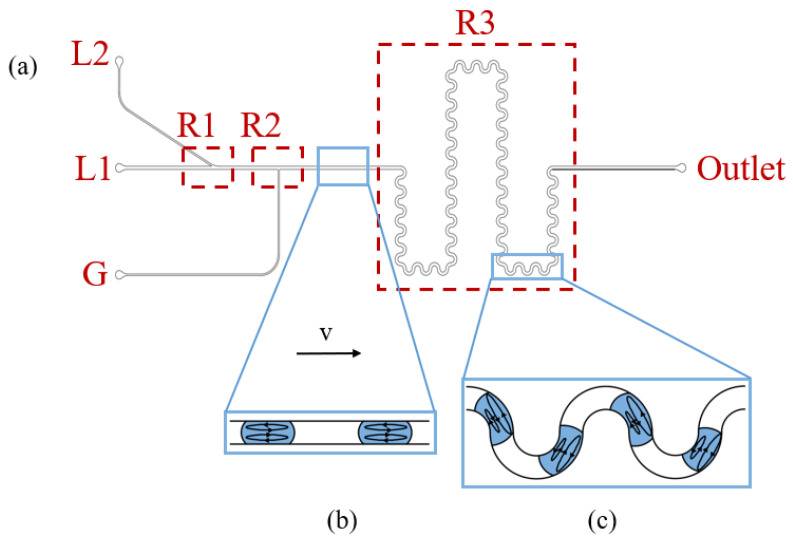 Figure 1
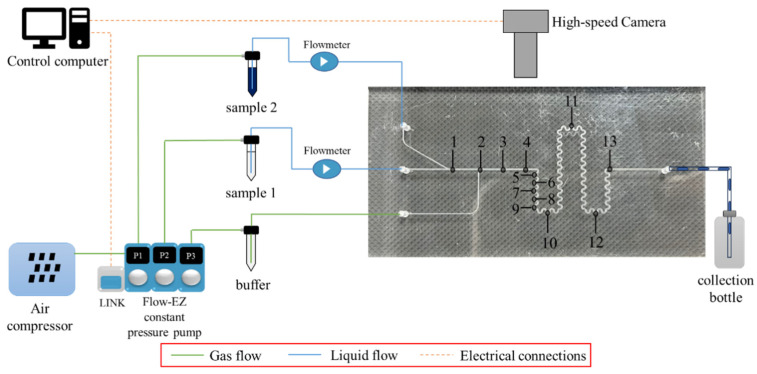 Figure 2
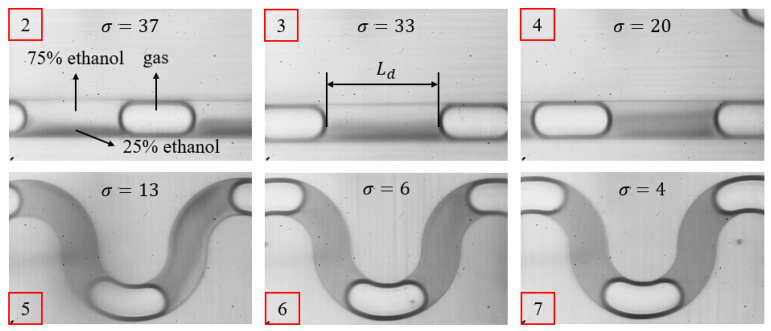 Figure 3
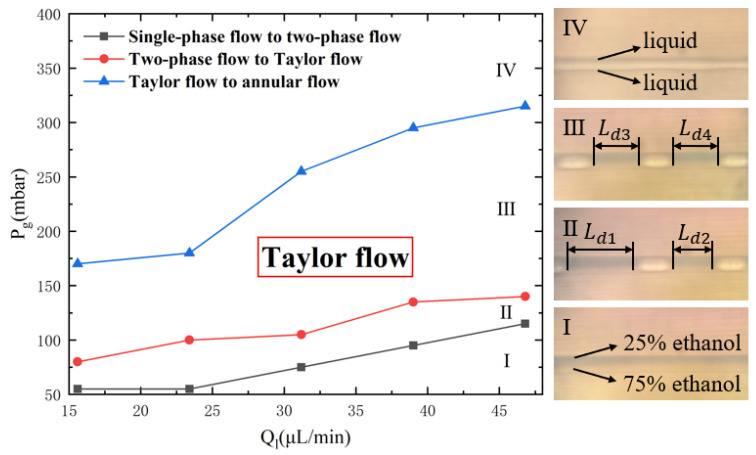 Figure 4
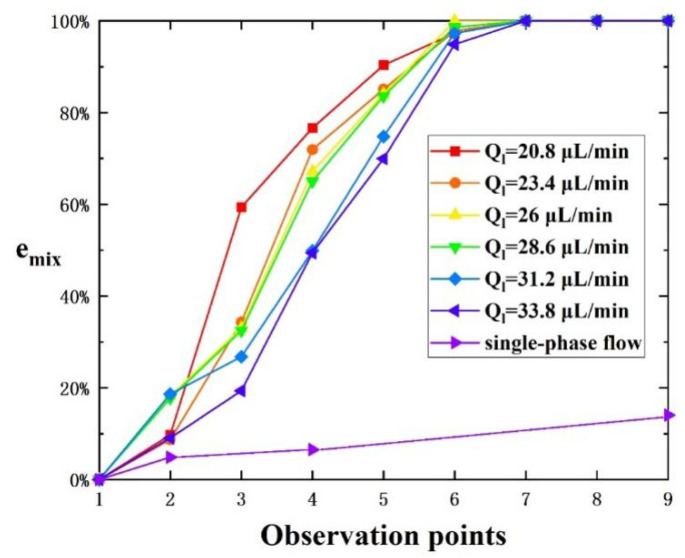 Figure 5
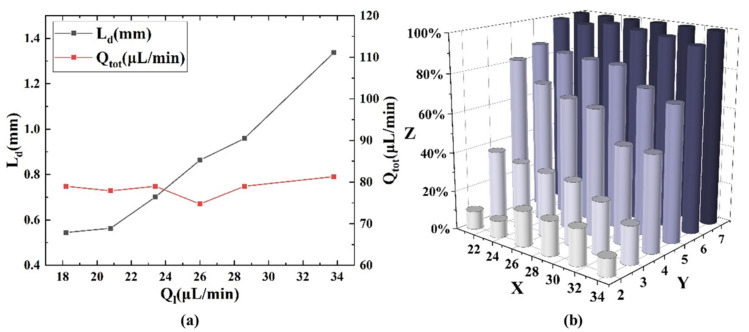 Figure 6
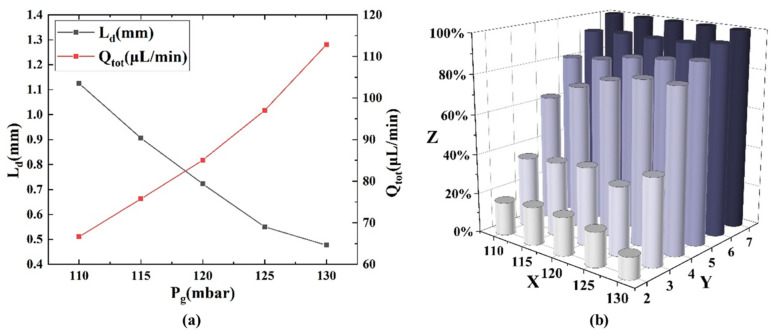 Figure 7
Peer Reviews
No public reviews on file for this paper yet. If you reviewed it on a platform where reviews are public (OpenReview, ICLR, NeurIPS, ICML), you can paste yours below so the community can read it here.
Videos
No videos yet. Explain this paper in a talk, walkthrough, or lecture? Add one.
Taxonomy
TopicsInnovative Microfluidic and Catalytic Techniques Innovation · Microfluidic and Capillary Electrophoresis Applications · Nanomaterials and Printing Technologies