Clinical Significance of Peripheral Arterial Disease Evaluation in Patients with Antineutrophil Cytoplasmic Antibody-Associated Vasculitis
Jeong Yeop Whang, Lucy Eunju Lee, Jang Woo Ha, Oh Chan Kwon, Yong-Beom Park, Sang-Won Lee

TL;DR
This study shows that peripheral arterial disease evaluation can help identify kidney issues and predict future complications in patients with a specific type of vasculitis.
Contribution
The study is the first to show that abnormal skin perfusion pressure can predict kidney involvement and future end-stage kidney disease in AAV patients.
Findings
Abnormal skin perfusion pressure was significantly linked to kidney and skin symptoms in AAV patients.
Abnormal skin perfusion pressure may predict future progression to end-stage kidney disease.
Only a small percentage of patients had abnormal results in pulse volume recording/ankle-brachial index and transcutaneous oxygen pressure tests.
Abstract
Background and Objectives: This study investigated the frequency and clinical significance of subclinical but substantial peripheral arterial disease (PAD), identified using PAD evaluation, including pulse volume recording/ankle–brachial index (PVR/ABI), transcutaneous oxygen pressure (TcpO2), and skin perfusion pressure (SPP) tests in patients with antineutrophil cytoplasmic antibody-associated vasculitis (AAV). Materials and Methods: This study included 54 patients with PAD evaluation results at or after AAV diagnosis. PVR/ABI and/or TcpO2 and/or SPP were performed on the same day. Abnormal PVR/ABI, TcpO2, and SPP were defined as PVR/ABI < 0.97, TcpO2 < 40 mmHg, and SPP < 50 mmHg, respectively. Poor outcomes included all-cause mortality, end-stage kidney disease (ESKD), cerebrovascular accidents, and acute coronary syndrome after PAD evaluation. Results: The median age of the 54…
Genes, proteins, chemicals, diseases, species, mutations and cell lines named across the full text — each resolved to its canonical identifier and authoritative record.
Click any figure to enlarge with its caption.
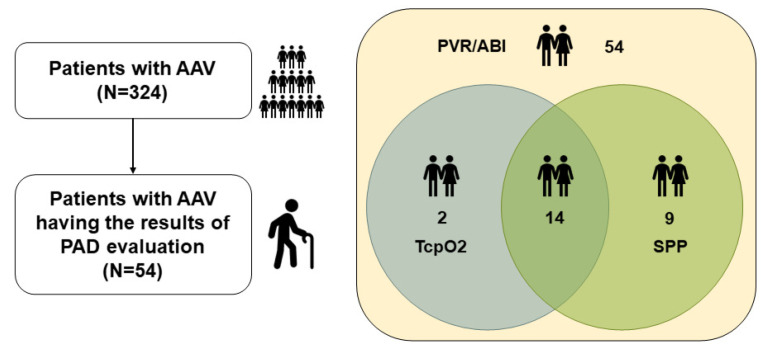 Figure 1
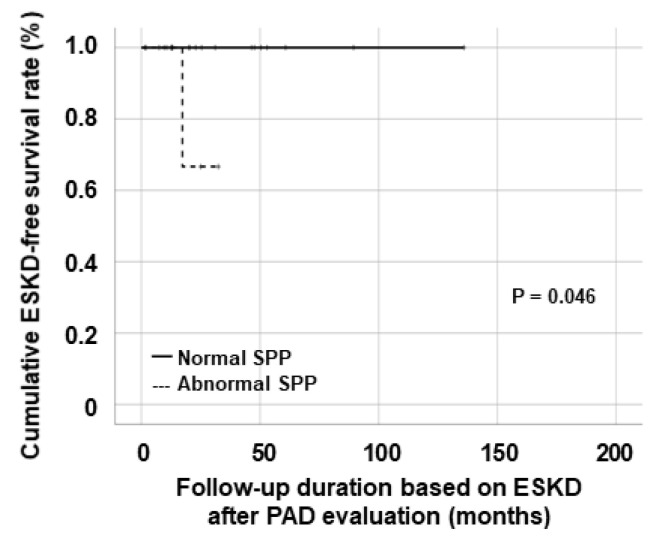 Figure 2
Peer Reviews
No public reviews on file for this paper yet. If you reviewed it on a platform where reviews are public (OpenReview, ICLR, NeurIPS, ICML), you can paste yours below so the community can read it here.
Videos
No videos yet. Explain this paper in a talk, walkthrough, or lecture? Add one.
Taxonomy
TopicsVasculitis and related conditions · Coagulation, Bradykinin, Polyphosphates, and Angioedema · Otitis Media and Relapsing Polychondritis