Artificial Intelligence Performance in Cardiac Magnetic Resonance Strain Analysis for Aortic Stenosis: Validation with Echocardiography and Healthy Controls
Žygimantas Abramikas, Ieva Jasiukevičiūtė, Giedrė Balčiūnaitė, Sigita Glaveckaitė, Darius Palionis, Nomeda Valevičienė

TL;DR
AI improves heart strain analysis in aortic stenosis using MRI, but errors are higher in patients than in healthy controls.
Contribution
Validates AI-based CMR strain analysis in aortic stenosis patients and identifies higher error rates compared to healthy controls.
Findings
AI-based CMR GLS strongly correlates with echocardiographic GLS (r = 0.694) and shows lower variability.
AI-derived GLS is significantly lower in aortic stenosis patients compared to healthy controls.
AI strain analysis had higher error rates in AS patients (18.6%) than in controls (2.44%).
Abstract
Background and Objectives: Aortic stenosis (AS) leads to progressive left ventricular (LV) dysfunction, making early detection crucial. Global longitudinal strain (GLS) is an echocardiographic marker of subclinical LV dysfunction; however, echocardiography has limitations, including operator dependency and acoustic variability. Cardiac magnetic resonance (CMR) is a valuable complementary tool, and artificial intelligence (AI) may enhance strain measurement accuracy, though its role in AS remains underexplored. To evaluate the performance of an AI-based CMR feature tracking tool for the assessment of LV global and segmental GLS in AS patients and compare results with the respective measurements from healthy volunteers (control group), as well as with the GLS obtained using the echocardiographic speckle tracking technique. Materials and Methods: This retrospective study analysed 111 CMR…
Genes, proteins, chemicals, diseases, species, mutations and cell lines named across the full text — each resolved to its canonical identifier and authoritative record.
Click any figure to enlarge with its caption.
 Figure 1
 Figure 2
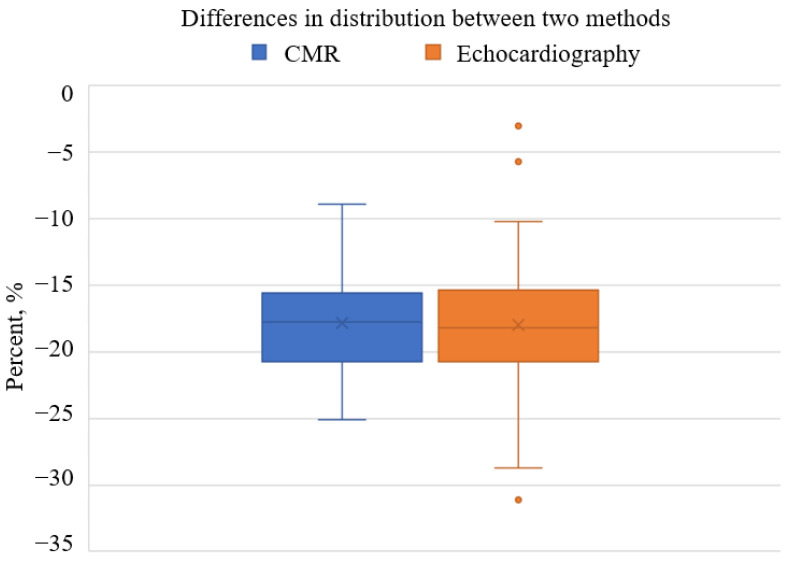 Figure 3
Peer Reviews
No public reviews on file for this paper yet. If you reviewed it on a platform where reviews are public (OpenReview, ICLR, NeurIPS, ICML), you can paste yours below so the community can read it here.
Videos
No videos yet. Explain this paper in a talk, walkthrough, or lecture? Add one.
Taxonomy
TopicsCardiac Imaging and Diagnostics · Cardiac Valve Diseases and Treatments · Cardiovascular Function and Risk Factors