DPPC Membrane Under Lateral Compression and Stretching to Extreme Limits: Phase Transitions and Rupture
Subhalaxmi Das, Nikos Ch. Karayiannis, Supriya Roy

TL;DR
This study explores how a DPPC membrane behaves under extreme lateral compression and stretching, revealing phase transitions and rupture points.
Contribution
The study provides precise pressure ranges for phase transitions and rupture in DPPC membranes under extreme mechanical stress.
Findings
DPPC membranes undergo a phase transition to an undulated state between 40 and 50 bar under compression.
Membrane rupture becomes certain at −200 bar during stretching.
Microsecond-scale simulations are necessary to capture critical phenomena under extreme stress.
Abstract
Dipalmitoylphosphatidylcholine (DPPC), is one of the key bilayer membranes of the phosphatidylcholine (PC) family which constitutes 40–50% of total cellular phospholipids in mammal cells. We investigate the behavior of an initially planar DPPC membrane under lateral pressures from −200 to 150 bar at 323 K using microsecond-scale simulations. We identify, with very high precision, the pressure range for the occurrence of critical phenomena, mainly undulation and rupture. Notably, under compression, the membrane initially thickens, leading to a phase transition to an undulated state between 40 and 50 bar, as gauged by the sharp changes in the diverse structural metrics. Stretching induces systematic membrane thinning, with rupture becoming probable at −170 bar and certain at −200 bar. The reverse compression cycle shows pressure hysteresis with a 10-bar shift, while the reverse stretching…
Genes, proteins, chemicals, diseases, species, mutations and cell lines named across the full text — each resolved to its canonical identifier and authoritative record.
Click any figure to enlarge with its caption.
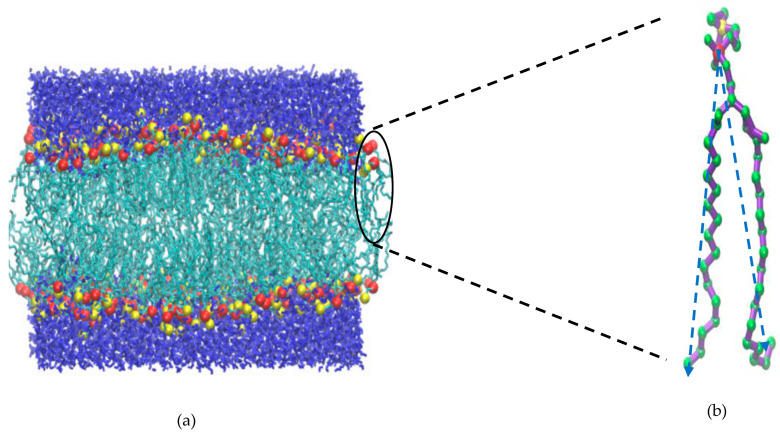 Figure 1
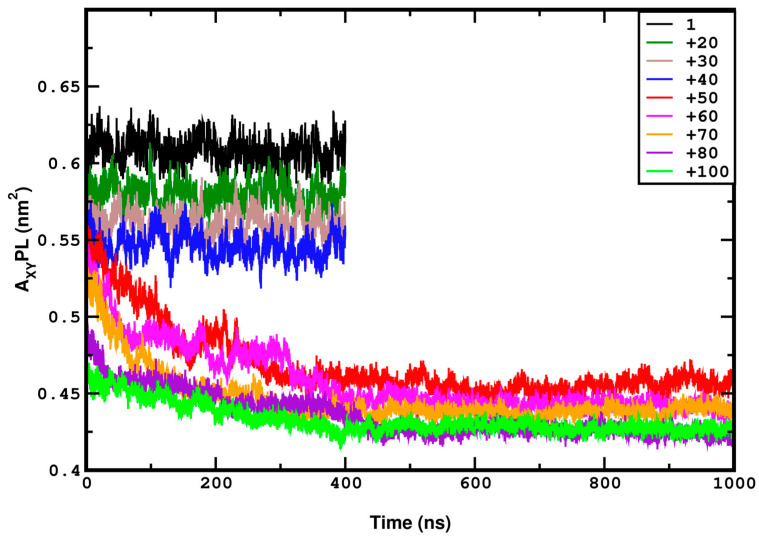 Figure 2
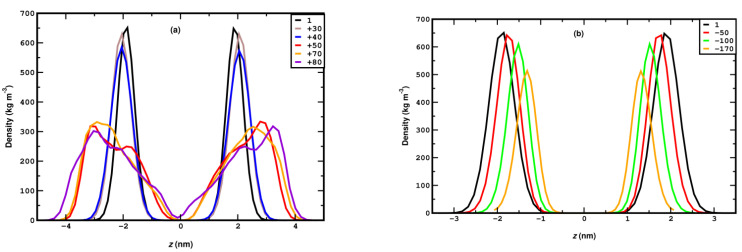 Figure 3
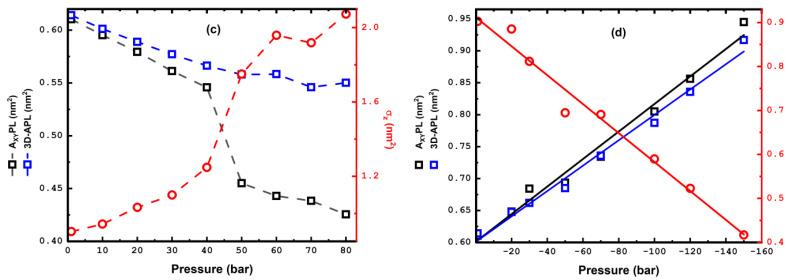 Figure 4
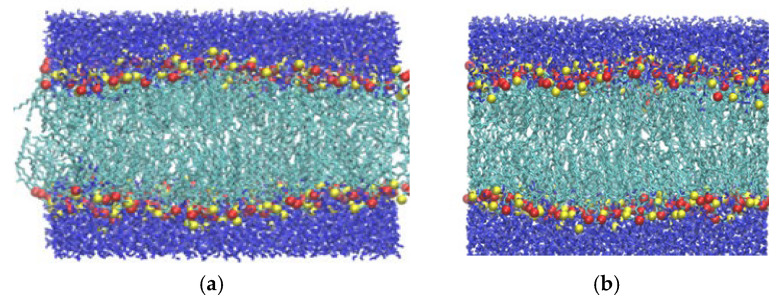 Figure 5
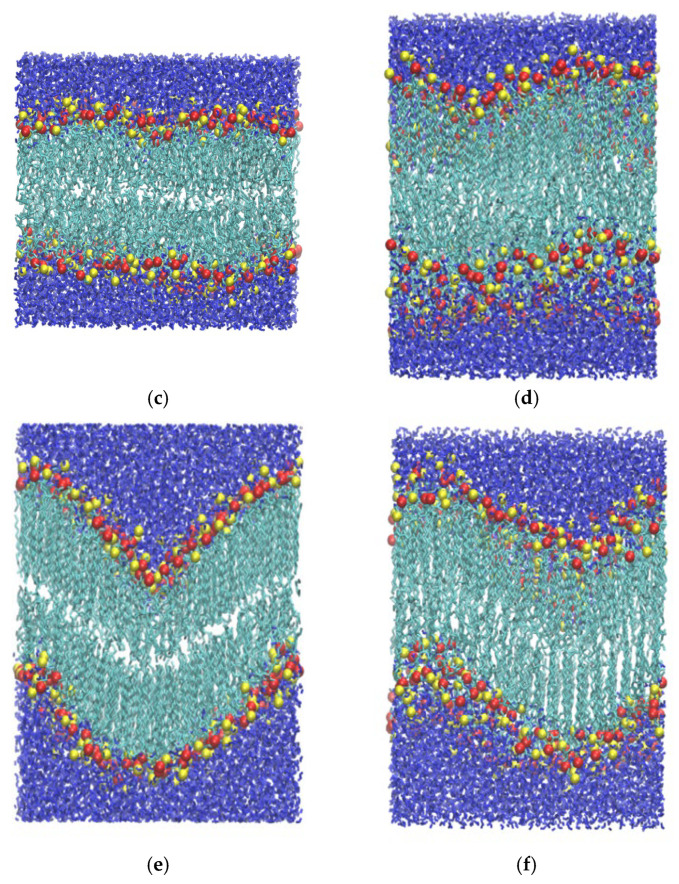 Figure 6
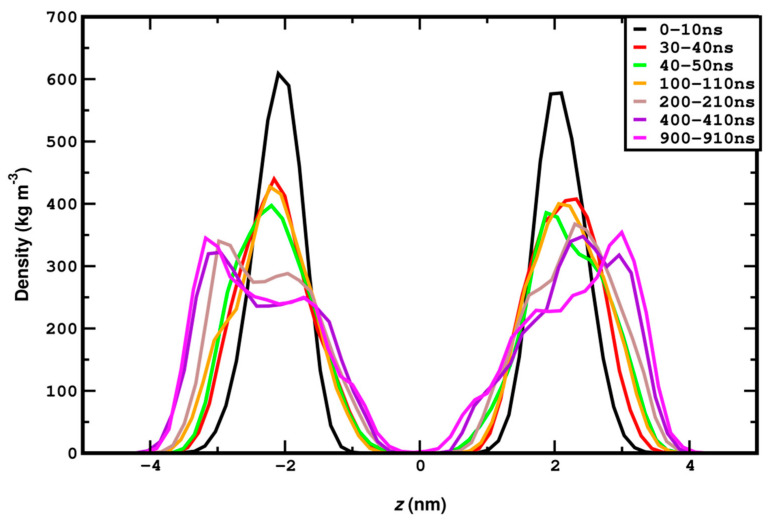 Figure 7
 Figure 8
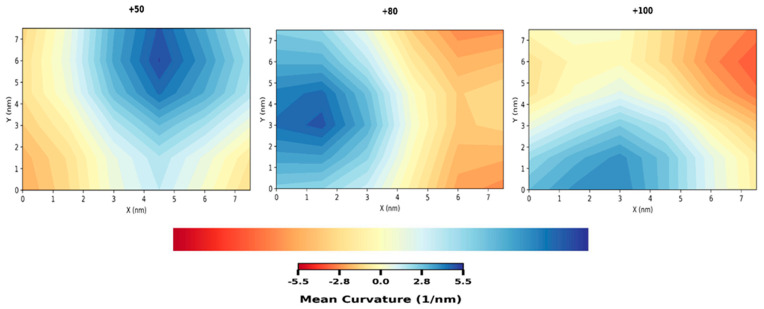 Figure 9
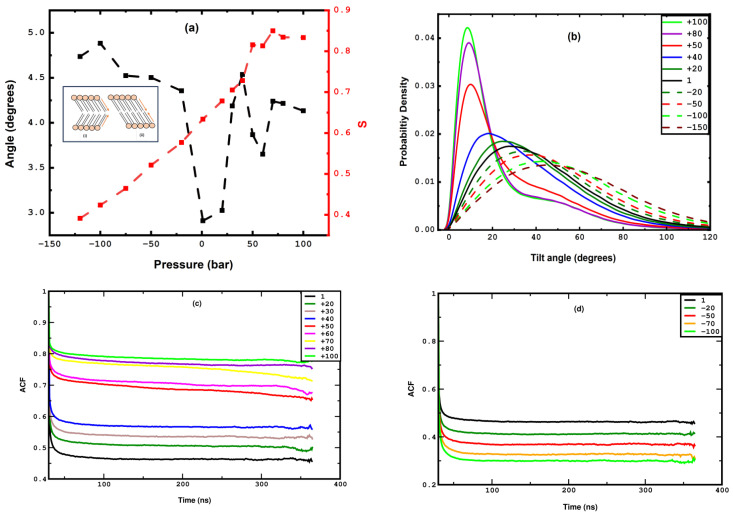 Figure 10
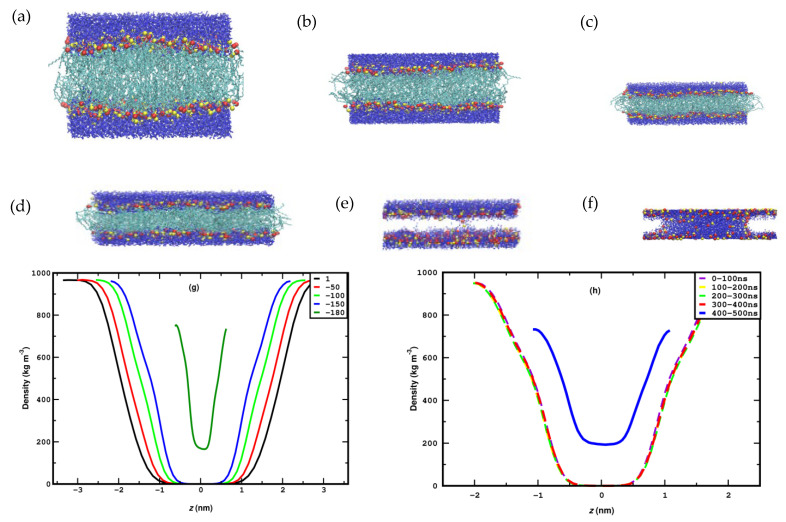 Figure 11
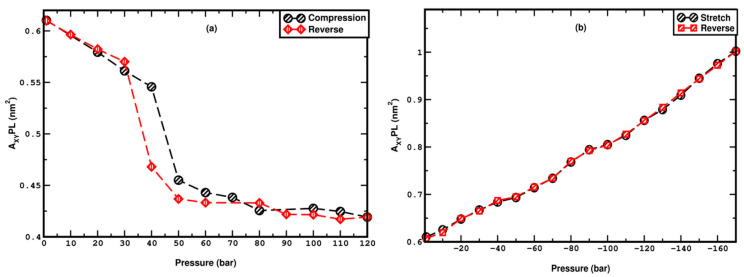 Figure 12
Peer Reviews
No public reviews on file for this paper yet. If you reviewed it on a platform where reviews are public (OpenReview, ICLR, NeurIPS, ICML), you can paste yours below so the community can read it here.
Videos
No videos yet. Explain this paper in a talk, walkthrough, or lecture? Add one.
Taxonomy
TopicsNanopore and Nanochannel Transport Studies · Lipid Membrane Structure and Behavior · Force Microscopy Techniques and Applications