Microstructure Controlling, Properties, and Thermodynamic Analysis of SiC Joints Brazed with Ni-Ti Fillers
Ming Li, Zihao Liu, Jiazhen Yan, Haojiang Shi, Jiang Wu, Renxin Li, Huabei Peng, Ruiqian Zhang, Jiacheng Shang

TL;DR
This paper studies how varying Ti content in Ni-Ti fillers affects the microstructure and strength of SiC ceramic joints during brazing.
Contribution
The study reveals how Ti content controls the interface layer composition and eliminates harmful graphite, improving joint strength.
Findings
Higher Ti content in fillers leads to a thinner interface layer and eliminates graphite.
Shear strength increases from 33 MPa to 125 MPa with increasing Ti content in the filler.
Thermodynamic analysis shows Ti/SiC reactions dominate when Ti exceeds 31 at.%, favoring TiC formation.
Abstract
Silicon carbide (SiC) ceramics were brazed with Ni-Ti fillers at 1350 °C for 10 min. The experimental results show that with the increase in Ti content in the fillers, the interface layer composed of Ni2Si, Ni3Si2, graphite, and TiC becomes thinner due to the inhibition of the Ti/SiC reaction on the Ni/SiC reaction. When Ni-45Ti filler is used, TiC becomes the only phase of the interface layer in the brazing seam. The elimination of graphite improves the mechanical property of the joints. The shear strength of the SiC joints brazed by Ni-15Ti, Ni-30Ti, and Ni-45Ti fillers is 33 MPa, 92 MPa, and 125 MPa, respectively. From the point of thermodynamics, the calculated component point of the Ni/SiC reaction transition to the Ti/SiC reaction is xTi = 31 at.%. When the Ti content is higher than 31 at.%, the ΔGNi/SiC > ΔGTi/SiC, and TiC will be preferentially generated at the interface.…
Genes, proteins, chemicals, diseases, species, mutations and cell lines named across the full text — each resolved to its canonical identifier and authoritative record.
Click any figure to enlarge with its caption.
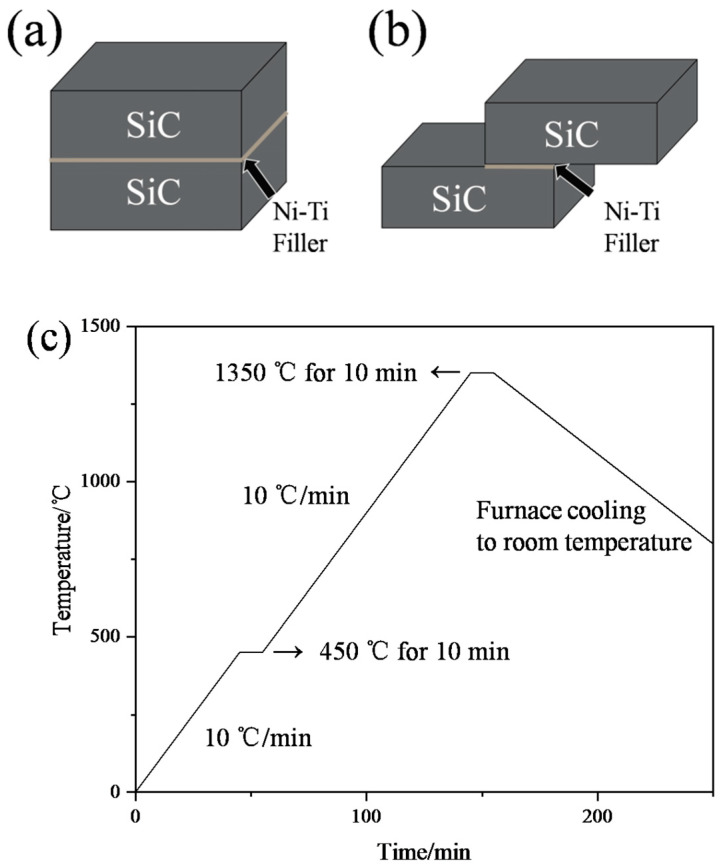 Figure 1
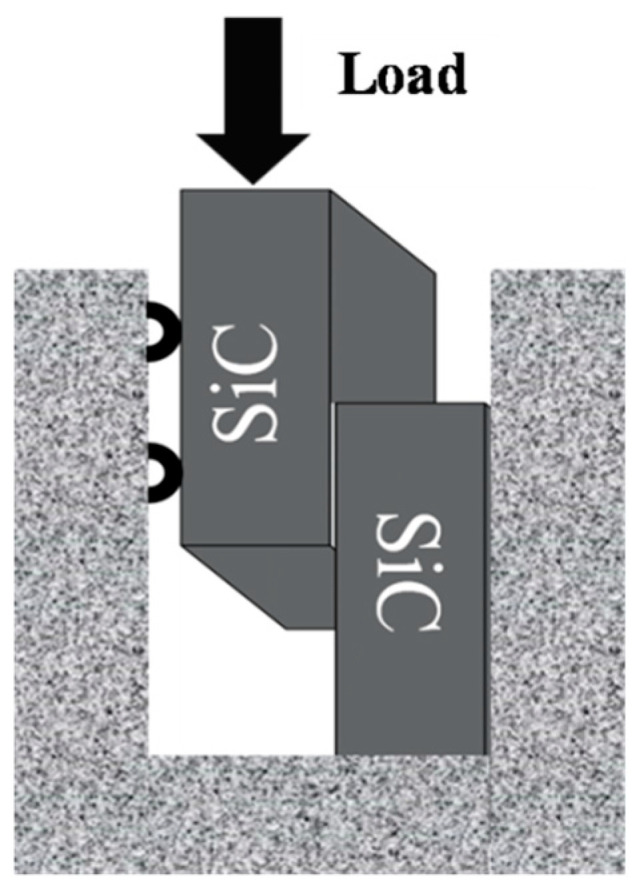 Figure 2
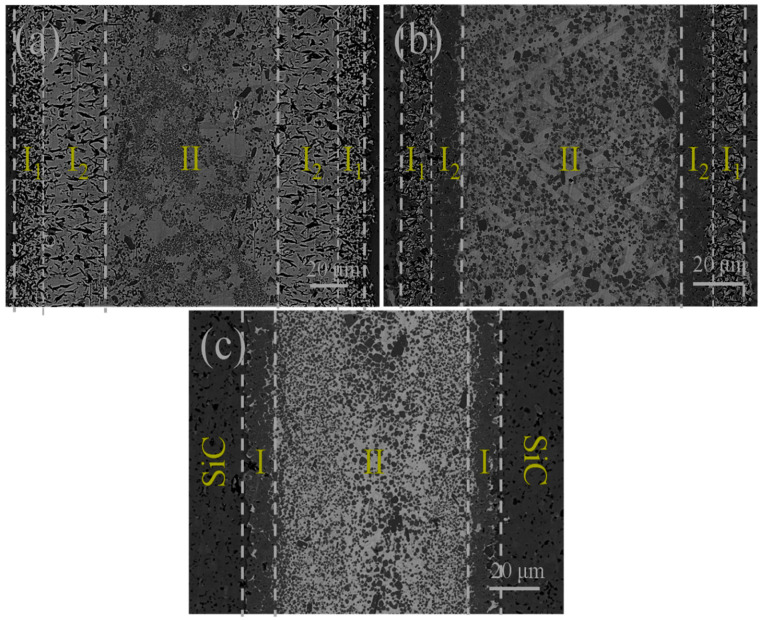 Figure 3
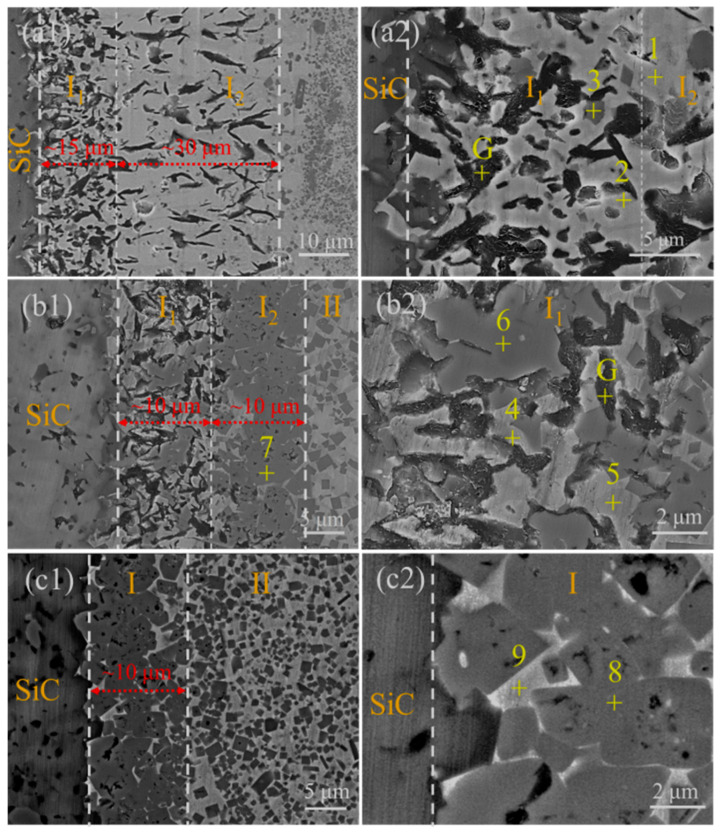 Figure 4
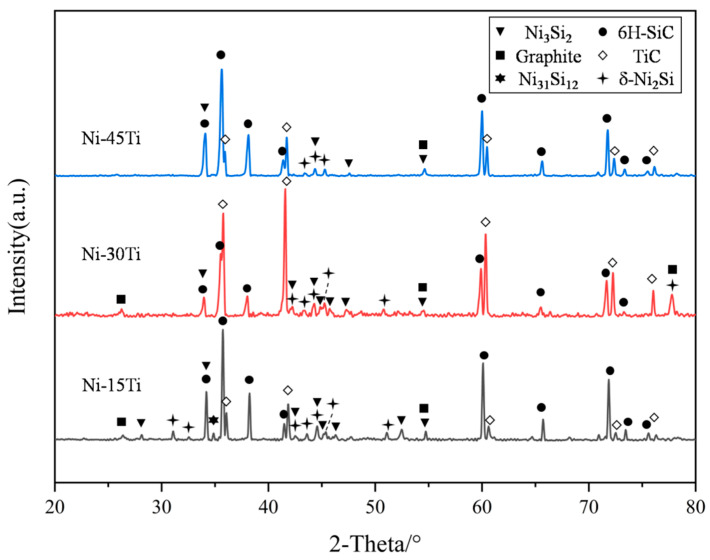 Figure 5
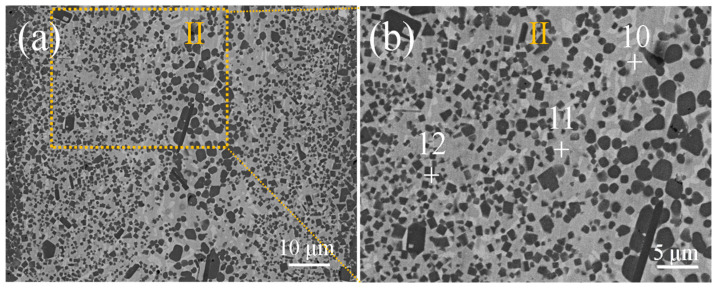 Figure 6
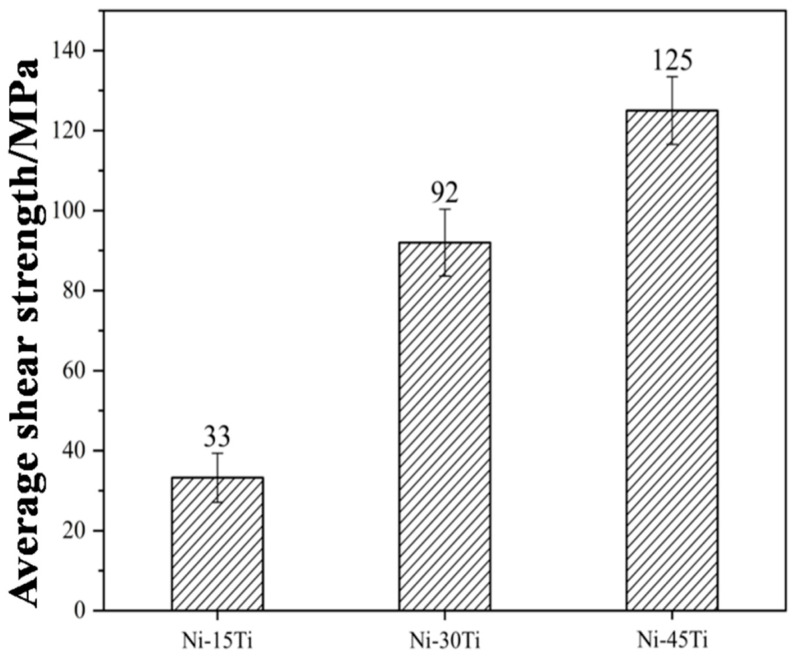 Figure 7
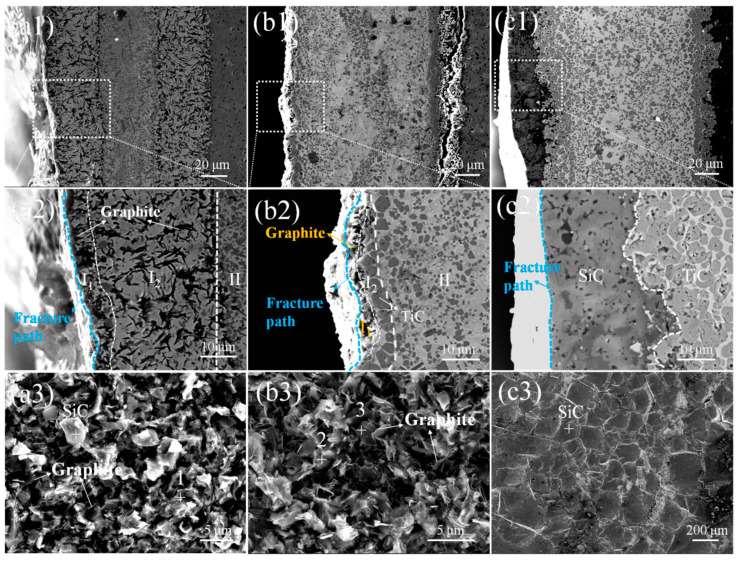 Figure 8
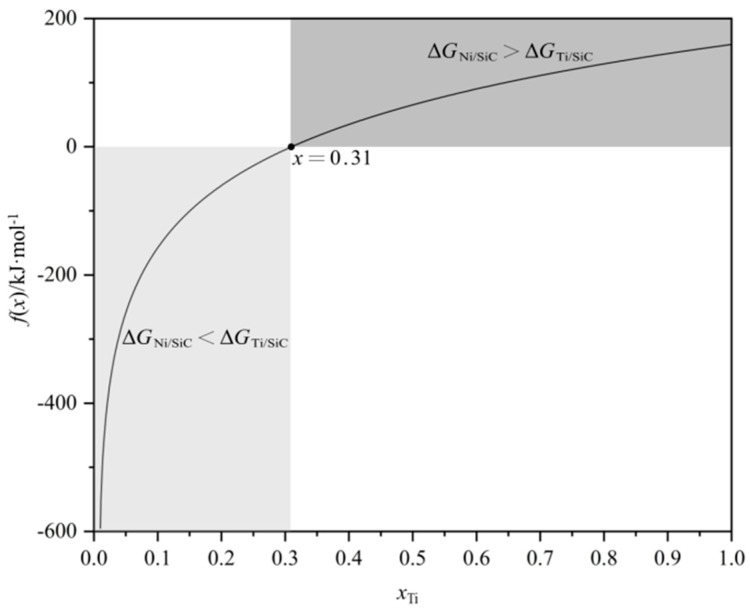 Figure 9
Peer Reviews
No public reviews on file for this paper yet. If you reviewed it on a platform where reviews are public (OpenReview, ICLR, NeurIPS, ICML), you can paste yours below so the community can read it here.
Videos
No videos yet. Explain this paper in a talk, walkthrough, or lecture? Add one.
Taxonomy
TopicsIntermetallics and Advanced Alloy Properties · Advanced materials and composites · High Temperature Alloys and Creep