Exploring the Impact of First Trimester Elevated Lipoprotein(a) Levels on Preeclampsia, Preterm Delivery, and Fetal Growth Restriction
Apostolia Galani, Athanasios Zikopoulos, Anastasios Potiris, Efthalia Moustakli, Stefania Maneta-Stavrakaki, Maria Paraskevaidi, Charikleia Skentou, Konstantinos Zikopoulos, Peter Drakakis, Sofoklis Stavros

TL;DR
High lipoprotein(a) levels in early pregnancy are linked to increased risks of preeclampsia, preterm birth, and fetal growth issues.
Contribution
This study identifies elevated first-trimester lipoprotein(a) as a novel predictor of adverse pregnancy outcomes.
Findings
Women with high lipoprotein(a) had a 64.7% risk of preeclampsia versus 15.5% with normal levels.
Elevated lipoprotein(a) was associated with fetal growth restriction and preterm delivery.
Early screening for lipoprotein(a) may help identify high-risk pregnancies.
Abstract
Background/Objectives: Preeclampsia (PE), characterized by its complex and multisystemic nature, significantly compromises the health outcomes of both mothers and their newborns. According to recent research, its underlying pathophysiological mechanisms may be influenced by abnormalities in lipid metabolism. The purpose of this study is to assess the association between unfavorable pregnancy outcomes and increased lipoprotein(a) levels in the first trimester and the subsequent risk of PE. Methods: A prospective cohort study comprising 150 pregnant women with a gestational age of less than 12 weeks and no history of PE was carried out at the University Hospital of Ioannina. In the first trimester, lipoprotein(a) levels were assessed, and individuals were monitored for the emergence of preeclampsia, preterm birth, gestational hypertension without proteinuria, and fetal growth limitation.…
Genes, proteins, chemicals, diseases, species, mutations and cell lines named across the full text — each resolved to its canonical identifier and authoritative record.
Click any figure to enlarge with its caption.
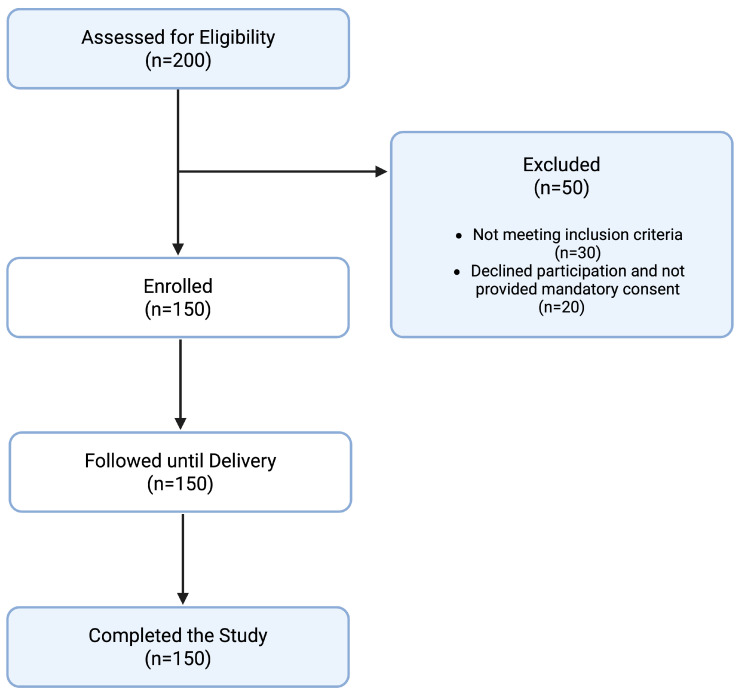 Figure 1
Peer Reviews
No public reviews on file for this paper yet. If you reviewed it on a platform where reviews are public (OpenReview, ICLR, NeurIPS, ICML), you can paste yours below so the community can read it here.
Videos
No videos yet. Explain this paper in a talk, walkthrough, or lecture? Add one.
Taxonomy
TopicsPregnancy and preeclampsia studies · Birth, Development, and Health · Fatty Acid Research and Health