Prognostic Value of the Global Left Ventricular Contractility Index in Patients with Severe Mitral Regurgitation and Preserved Left Ventricular Ejection Fraction
Tony Li, Vinay B. Panday, Jessele Lai, Nicholas Gao, Beth Lim, Aloysius Leow, Sarah Tan, Quek Swee Chye, Ching Hui Sia, William Kong, Tiong Cheng Yeo, Ru San Tan, Liang Zhong, Kian Keong Poh

TL;DR
This study shows that a heart function measure called dσ*/dtmax can predict poor outcomes in patients with severe mitral valve issues and normal heart pumping.
Contribution
The study demonstrates that dσ*/dtmax is an independent predictor of adverse outcomes in severe mitral regurgitation with preserved ejection fraction.
Findings
Reduced dσ*/dtmax was independently associated with composite adverse outcomes in severe mitral regurgitation patients.
A cut-off of 2.15 s−1 for dσ*/dtmax was identified to predict adverse outcomes.
The association remained significant after adjusting for age, sex, and other clinical factors.
Abstract
Introduction: Assessment of left ventricular (LV) systolic function is important in valvular heart disease. The global LV contractility index, dσ*/dtmax, is load-independent and has been reported to be associated with clinical outcomes in heart failure and aortic stenosis. We aim to assess if dσ*/dtmax could predict adverse outcomes in patients with severe mitral regurgitation (MR). Methodology: We studied dσ*/dtmax in a cohort of 127 patients with isolated severe primary MR and preserved LVEF ≥ 60%. Patients with prior valvular intervention or concurrent valvular disease were excluded. We tested dσ*/dtmax against a composite of adverse outcomes including all-cause mortality, heart failure hospitalization, and mitral valve intervention. Results: The cohort had a mean age of 58 years old and was predominantly male. Of the 127 patients, eight (6.3%) needed subsequent hospitalization for…
Genes, proteins, chemicals, diseases, species, mutations and cell lines named across the full text — each resolved to its canonical identifier and authoritative record.
Click any figure to enlarge with its caption.
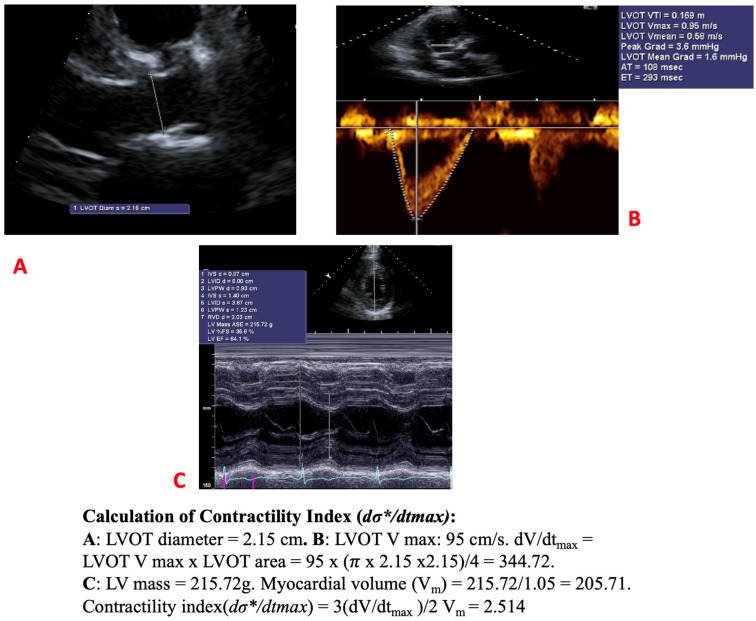 Figure 1
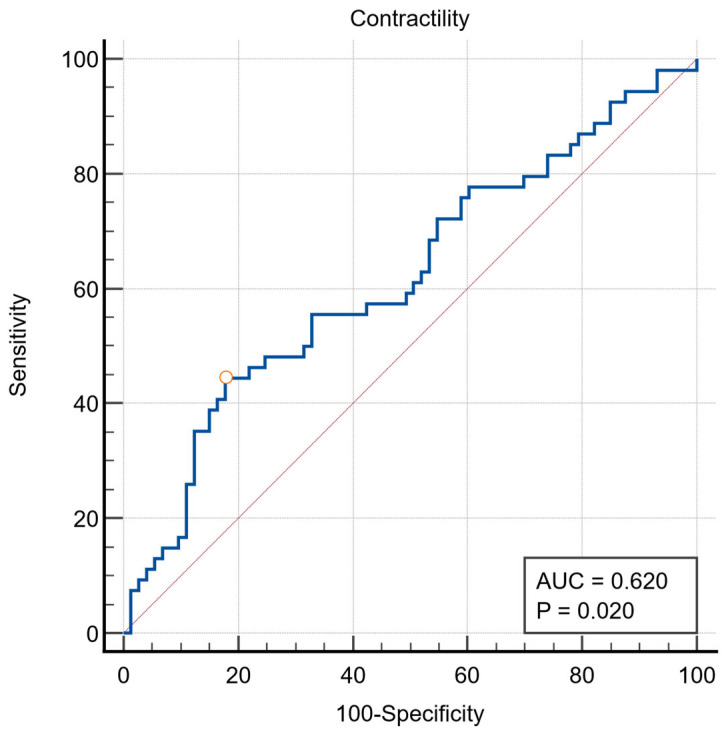 Figure 2
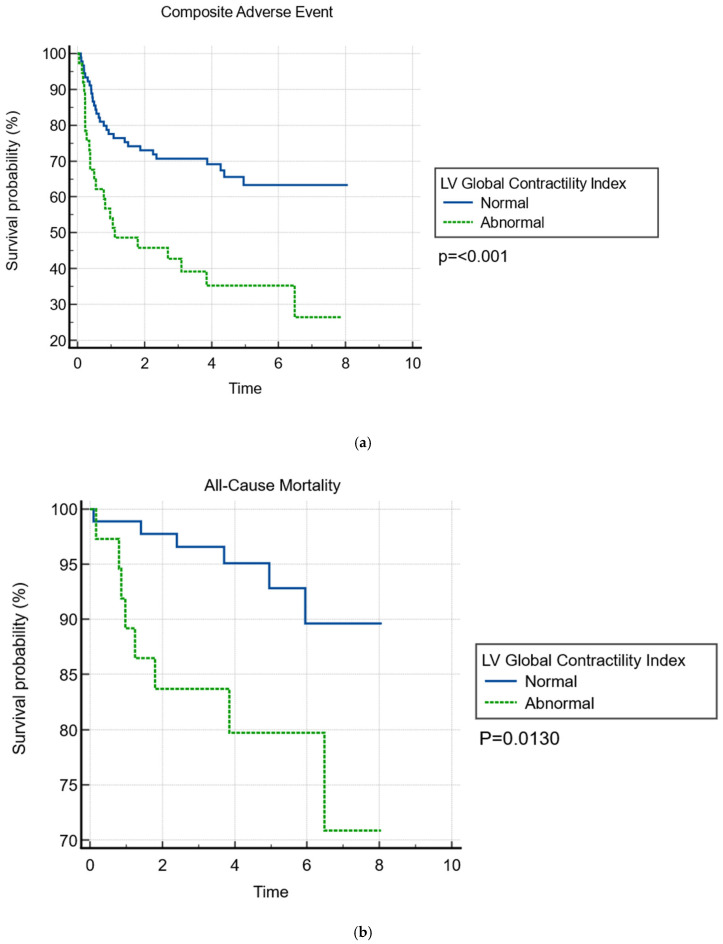 Figure 3
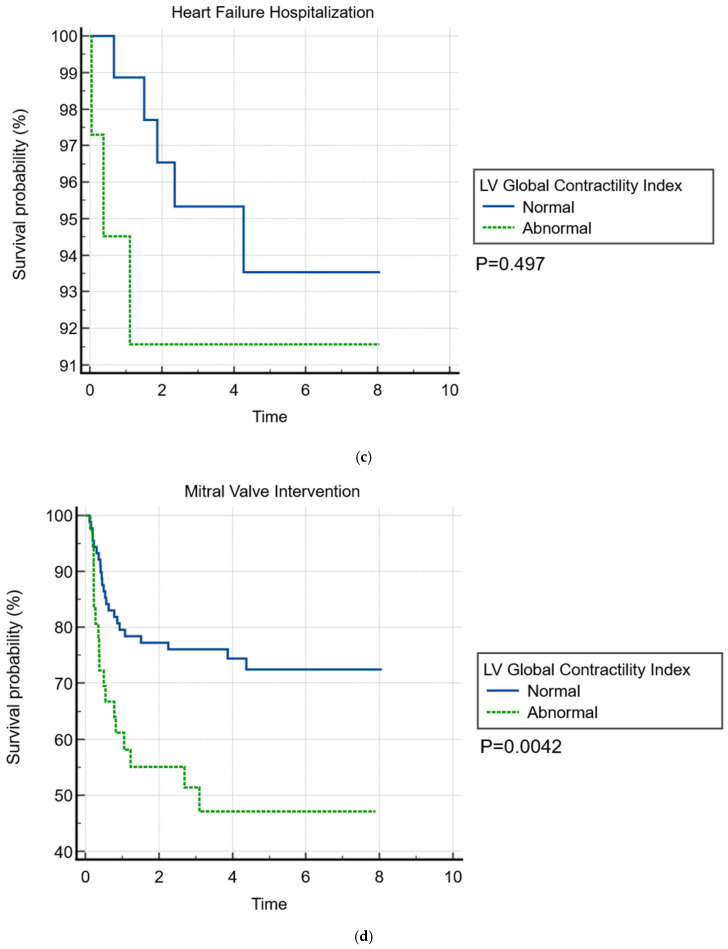 Figure 4
Peer Reviews
No public reviews on file for this paper yet. If you reviewed it on a platform where reviews are public (OpenReview, ICLR, NeurIPS, ICML), you can paste yours below so the community can read it here.
Videos
No videos yet. Explain this paper in a talk, walkthrough, or lecture? Add one.
Taxonomy
TopicsCardiac Valve Diseases and Treatments · Cardiovascular Function and Risk Factors · Cardiac Imaging and Diagnostics